The real pollution: When the mind poisons the earth
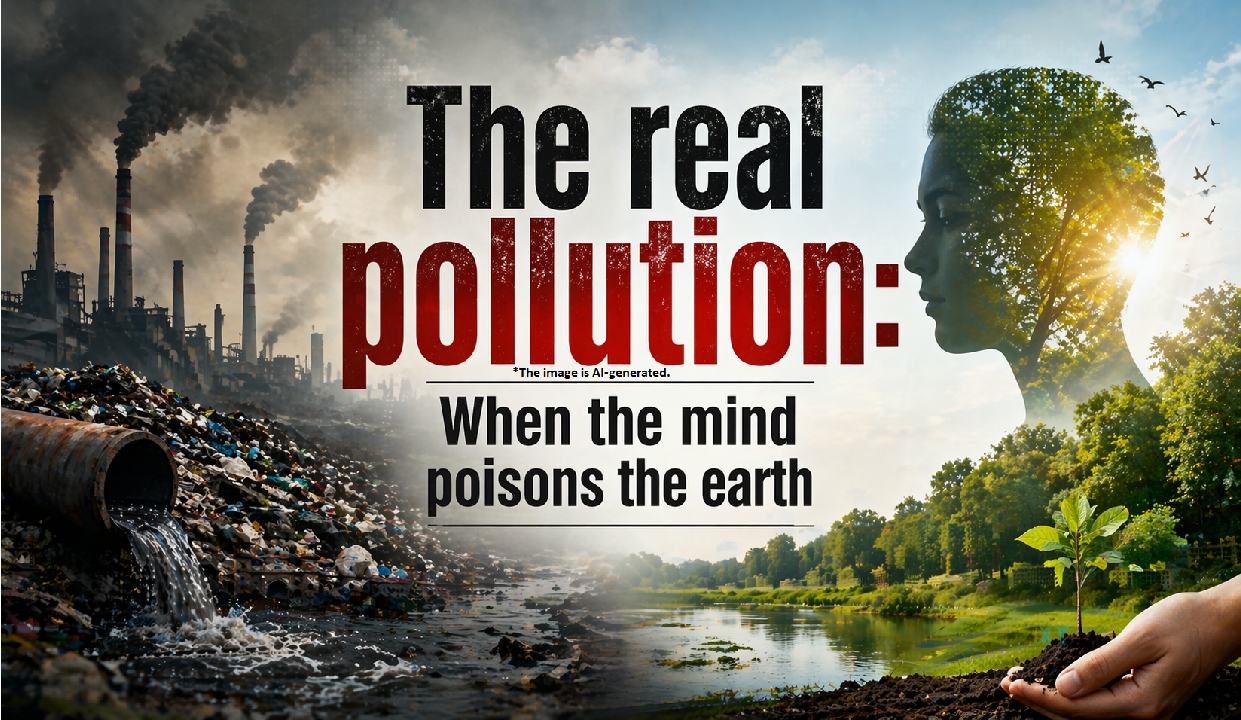
Today, globally, every country is facing the consequences of pollution, contamination, or abuse of air, water, food, and even space on a very large scale, yet they are unable to find a foolproof solution to this dangerous threat to humanity. Environmental pollution, having been the focus of public attention during the last couple of years, is now increasingly being recognised as the result of humanity’s wanton and often cruel treatment of planet Earth, leading to the ravaging and ruin of the atmosphere. The denudation of forests, the poisoning of lakes and rivers with pesticides and industrial waste, the pollution of the atmosphere with smoke from automobiles and factory chimneys, and the overuse of chlorofluorocarbons-resulting in ozone depletion-have brought the world to the brink of environmental disaster. Environmental scientists now warn that the accumulation of CO? in the atmosphere will not only lead to the greenhouse effect but also increase the planet’s average temperature by 3°F to 9°F. This, in turn, could cause sea levels to rise by several feet, flooding coastal areas, destroying vast tracts of farmland, and triggering further calamities. It is therefore being suggested that industries must re-examine their production processes so that industrial waste and emissions are reduced, waste products are recycled, and mass transport systems are encouraged in place of private automobiles.
If we look up the dictionary meaning of the word “pollution”, we may find something like “to destroy the purity of; to contaminate”. However, we as humans are largely aware only of material pollution-the branches of the polluted tree-while disregarding the root cause: thought pollution. Without addressing this root, the source can never truly be purified. It would not be an exaggeration to say that environmental pollution is, in essence, a reflection of the pollution of the human mind, which is often filled with selfishness, jealousy, greed, and anger. The problem of ecological imbalance stems from mental imbalance, and the disequilibrium in nature mirrors the disequilibrium within human consciousness.
Secondly, the problem of pollution is closely linked to rapid population growth. To meet the demands of an expanding population, there is an increasing need for electricity, fuel, energy, automobiles, wood, water, paper, and industrial output-all of which exert significant pressure on the environment. Additionally, modern lifestyles have intensified the demand for energy and consumer goods. As a result, forests are cleared, farmlands are replaced by expanding urban spaces, and industrial waste and emissions of CO2, SO2, and other pollutants continue to rise. Without addressing population growth and transforming lifestyles and attitudes, the problem of environmental pollution cannot be effectively resolved. In this context, spiritual thought plays a crucial role. The solution lies not only in technology or policy but also in self-realisation and understanding our relationship with others and nature. Without moral and spiritual values, no problem can be resolved sustainably.
It is therefore essential to recognise our true nature beyond the physical self. Without this shift, scientific progress without spirituality could lead to serious global crises. Thus, we must combine scientific advancement with spiritual wisdom to cleanse thought pollution and live in harmony with nature.
The writer is a spiritual teacher and a popular columnist; Views presented are personal.