Dowry violence remains India’s ugly reality
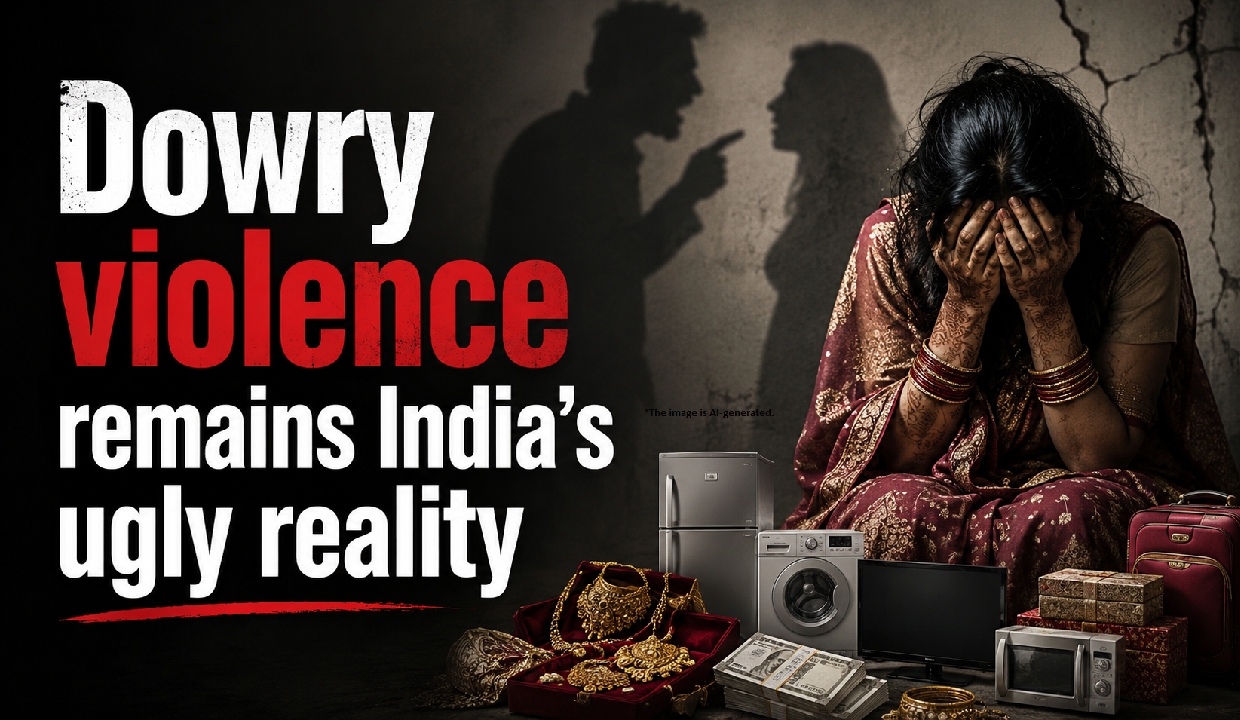
Rising dowry deaths reflect a collective moral failure. Until society challenges the mindset that commodifies women in marriage, laws alone will not end this menace
This is sad and unfortunate, but true. The much-cherished Indian marriage institution is largely becoming transactional, as marriages are more about a give-and-take relationship than the bond between two individuals choosing to spend a lifetime together. Thanks to patriarchy rooted in the Indian psyche, dowry is considered a necessary tradition where the groom receives gifts, often in cash and kind — and the bride’s family complies with the irrational demands of the groom’s family, failing which the girl pays the price through mental torture and, in some cases, with her life. That is the reality today: despite decades of legislation, public campaigns, and growing awareness about women’s rights, India continues to witness a disturbing rise in dowry-related violence and deaths.
Two recent incidents of alleged dowry deaths have once again exposed the continuing menace of dowry-related violence despite strict laws. One of the most disturbing cases is that of Twisha Sharma, a 33-year-old woman from Bhopal whose death triggered nationwide outrage. Reports suggested that injuries were found on her body, leading to demands for a Special Investigation Team (SIT) probe. The incident shows that dowry deaths are not limited to weaker sections but also occur in well-to-do families.
Another shocking case emerged from Greater Noida, where 24-year-old Deepika Nagar died after allegedly being thrown from the terrace of her in-laws’ house. Her family accused her husband and in-laws of demanding `50 lakh and a Fortuner car as dowry. Police arrested the husband and father-in-law while investigations continued. These incidents prove that the scourge of dowry is still very much rampant, though it has vanished from mainstream discourse. According to NCRB data, thousands of women still lose their lives every year because of dowry harassment, exposing deep-rooted patriarchy and greed.
Dowry deaths are registered under Section 80 of the Bharatiya Nyaya Sanhita (BNS). Yet, even with the Dowry Prohibition Act in force since 1961, implementation remains weak and convictions are few. At the heart of the problem lies patriarchy. In many families, daughters are still viewed as financial burdens, while marriage is treated as a means to enhance status through gifts, cash, or property. Rising consumerism has worsened the situation, with demands extending beyond traditional gifts to luxury cars, apartments, and expensive lifestyles. Another major reason is silence.
Many women endure emotional abuse, violence, and coercion in silence.
The way forward requires more than stricter laws. Legal provisions already exist, but enforcement must become faster and more effective. Women’s economic empowerment is another critical step. Greater access to education, employment, and property rights can help women gain independence and resist abusive situations. But most importantly, society must change and create stronger support systems for victims. Ultimately, it is a menace that can only be controlled through a changed mindset, as law alone cannot prevent it.