Rediscovering Delhi’s Central Legislative Assembly
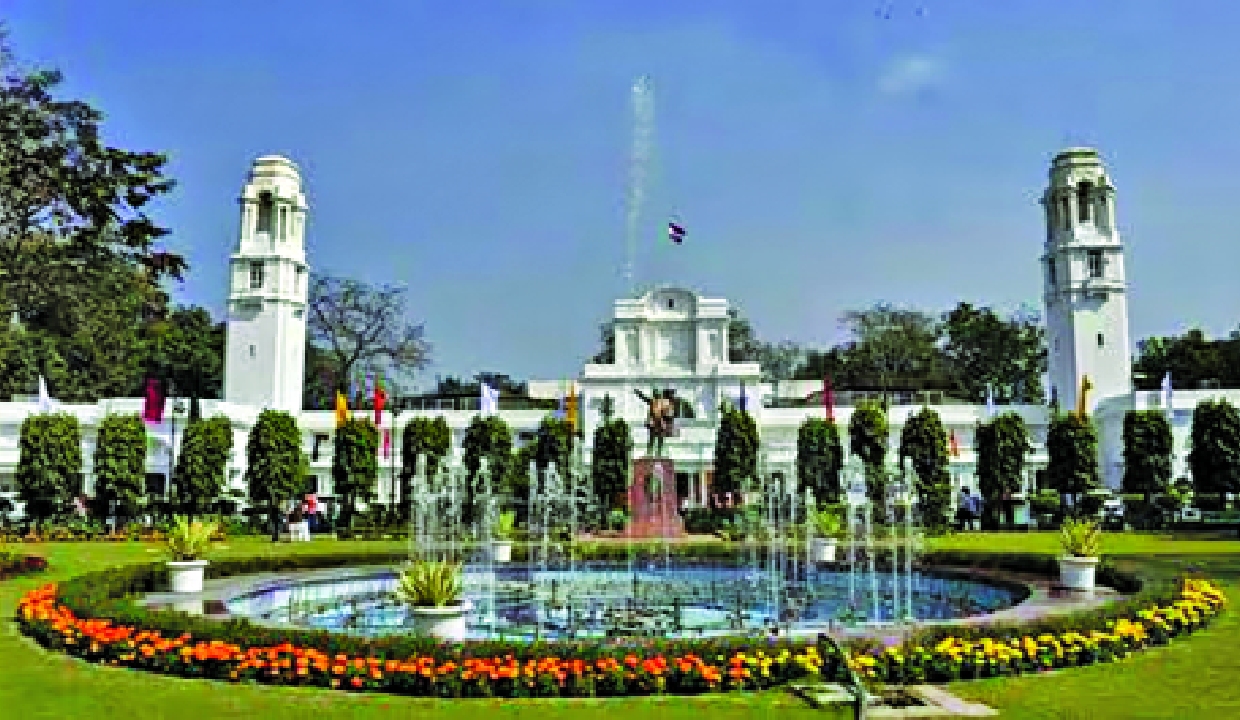
Amid Delhi’s celebrated architectural icons—from the Qutub Minar to India Gate—stands a largely overlooked monument that has quietly witnessed the evolution of India’s democratic spirit: the Central Legislative Assembly
It has been rightly said that history is written on each and every brick of Delhi. However, Delhi is usually known for monuments like Purana Qila, Qutub Minar, India Gate, Parliament House and others, whereas the Central Legislative Assembly building has been evading the historians' eyes. It is a witness to the chequered history of Delhi for a century, covering the Delhi Durbars, building of New Delhi, the present Parliament House, of which the predecessor was this Central Assembly only with also the description of the horrendous laws like, the Rowlett Act, a precursor to the Jalianawala Bagh massacre. This building is witness to the century-old Parliamentary traditions.
Besides, it is also associated with the celebrated freedom fighter, Vithalbhai Patel, whose efforts of excellence and brilliance got shadowed by none other than his illustrious younger brother, Sardar Vallabhbhai Patel, who was one up, as he became free India's first Home Minister and Deputy Prime Minister! The details of the inimitable history of this monument have also been covered in a coffee table book, "Shatabdi Yatra: Hundred Years of Excellence", immaculately curated and authored by Vijender Gupta, the speaker of the Delhi Assembly, who occupied the same seat as Vithalbhai Patel (1925-1930) and who gathered the related documents and pictures from every nook and cranny possible within India and abroad, including Britain. The historic Central Legislative Assembly not only happens to be a glorious history of governance in India but also accommodates the life and times of Vithalbhai Patel, the savant servant and son of the soil, whose immense contribution for Indian freedom struggle, cannot be forgotten despite not being sufficiently covered. As this monument's present speaker seems to be in love with this monument of Indo-Corinthian architecture, quite impeccably, Vijender Gupta has carved into it all the micro and macro details on the walls, galleries and his book that has been published both in English and Hindi. He is authoring another book on the nuances of the World Wars and role of Indian dominion under the British.
While this book on the Central Legislative Assembly was presented to Narendra Modi, the Indian Prime Minister, he stated that it appears to be the intellectual and administrative legacy of Vithalbhai Patel as an astute nationalist leader and the history of excellent governance in India! This almost blatantly neglected monument, marks a historic milestone and duly pays homage to Vithalbhai Patel, a pioneer of secular democratic traditions in India. The environs of the monument serve as both a historical and visual narrative of India’s legislative journey of its excellent governance, that hardly any other country boasts of! It highlights how parliamentary institutions evolved from the manacles of colonial frameworks and clutches of injustice into the vibrant democratic system that has turned India into a bright and brilliant democracy today. The history of this monument is not merely a record of events but a celebration of secular traditions, harmonious society, constitutional values, democratic resilience, and institutional growth.
As one takes a tour of the Central Legislative Assembly, one finds out that while honouring the legacy of Vithalbhai Patel, it also chronicles the evolution of India’s democratic institutions over a century in a very appealing style, accompanied by not only unique but stunning pictures, immensely important historical snippets, like the one of the closeness between Vithalbhai Patel and Subhash Chandra Bose, who he made the sole in charge of his will part of his will and to carry out his last rites at Chaupati, Mumbai (Bombay then). Incidentally, on October 22, 1933, Vithalbhai Patel died in Geneva, Switzerland, with Subhash and many doctors and nurses by his bedside during his last breaths. In a letter of October 2, 1933, Vithalbhai wrote, "In the event of my death in Europe, I desire that Subhash Chandra Bose, take charge of my body and make the necessary arrangements for sending it to Bombay for cremation on the Chaupaty sands alongside the place, where Lokmanya Balgangadhar Tilak's body was cremated."
It seemed that he was aware of his death earlier, though he died on October 22, 1933. The last words of Patel were, "I bless all my countrymen in India and abroad. Before I breathe my last, I pray for the Independence of India." Bose duly obeyed that but the British Raj officers created many boulders for him. Nevertheless, with the help of nationalists, KF Nariman, SA Baveri, T Bhawan, Deepnarayan it Singh and others, he ably carried out the instructions of Vithalbhai. Lamentably, few people remember Vithalbhai Patel, other than a building named after him at Delhi's Parliament Street. Nevertheless, the first Prime Minister of Mauritius, Sir Seewoosagar Ramgoolam, in his book, "Our Struggle: 20th Century Mauritius", writes, "My stay among the Indian students thus provided me with a political apprenticeship, especially as developed close friendship with patriotic students like Sidhanand Sinha, who was an able student leader and organiser. But it was Vithalbhai Patel, the elder brother of Sardar Vallabhbhai Patel, the future Home Minister and Deputy Prime Minister of India, who came to be my personal political guru."
Impeccably carved with all the micro and macro details, "Shatabdi Yatra: Hundred Years of Excellence" by Vijender Gupta has been published both in English and Hindi. He is authoring another book on the nuances of the World Wars and role of the Indian dominion under the British. While the book was presented to Narendra Modi, the Indian Prime Minister, he stated that it appears to be the intellectual and administrative legacy of Vithalbhai Patel as an astute nationalist leader and the history of excellent governance in India!
As one takes a tour of the Central Legislative Assembly, one finds out that while honouring the legacy of Vithalbhai Patel, it also chronicles the evolution of India’s democratic institutions over a century
Firoz Bakht Ahmed is a former Chancellor of Maulana Azad National Urdu University, Hyderabad and grandnephew, Bharat Ratna, Maulana Azad; Views presented are personal.