Year ahead: Politics and policy challenges
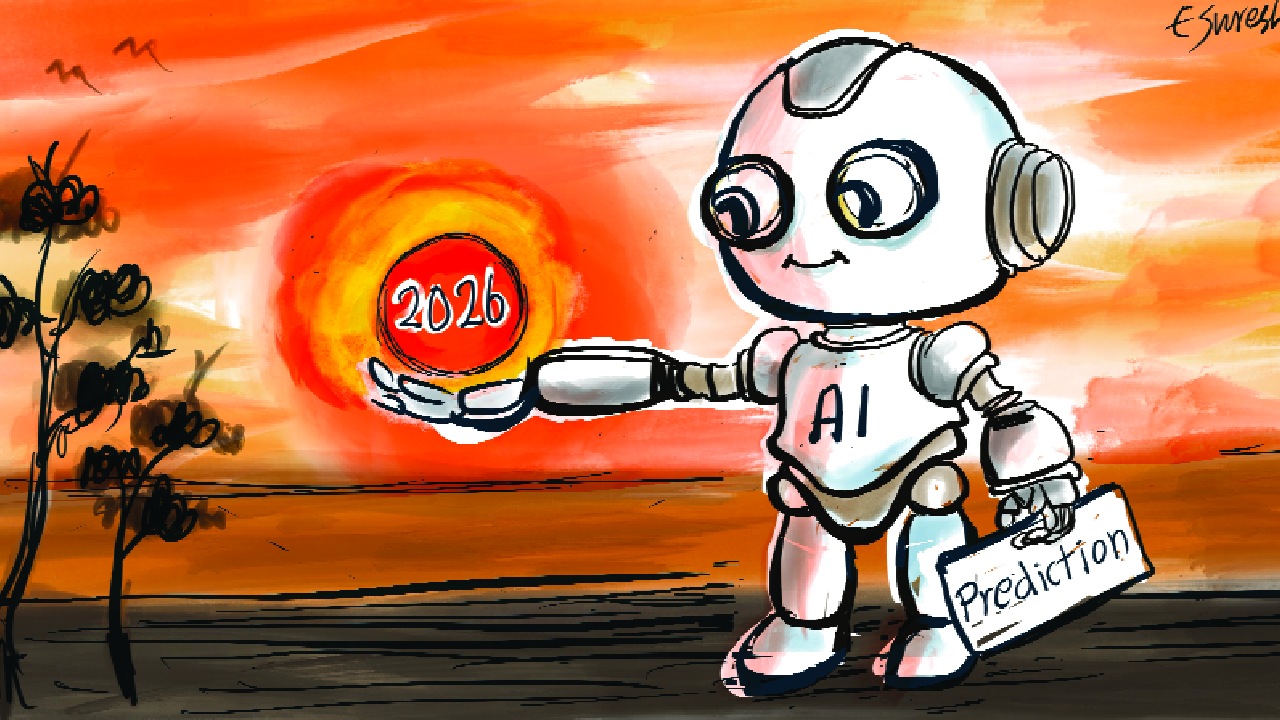
As the year 2025 comes to a close, we stand on the brink of 2026, anticipating what lies ahead. What does the crystal ball say? It reveals the possibility of emerging events and political shifts that could shape the world in the coming year. Notable forecasts, including those attributed to Nostradamus, the famous French seer, have long predicted dramatic global developments.
These predictions have often provoked discussion due to their lack of clarity and inherent ambiguity. They have also sparked debate among historians because of the wide range of interpretations they invite. Nostradamus’s predictions for 2026 forewarn of global unrest. Tensions between the East and the West are said to be escalating, potentially culminating in a major war lasting approximately seven months. He also speaks of possible bloodshed in the Ticino region of Switzerland and refers to a mysterious figure often described as a “man of light”. His prophecies further hint at climate catastrophes and technological advances, with references interpreted as artificial intelligence and a potential figure called “King Donald”, which many associate with Donald Trump.
Another renowned prophet, the Bulgarian mystic Baba Vanga, has warned of a series of catastrophic events. These include earthquakes, volcanic eruptions, and severe climate change, which could trigger floods, tsunamis, and other extreme phenomena. Such events could severely impact agricultural systems, infrastructure, and global disaster preparedness.
In 2026, several crucial elections are expected to take place around the world, including in Ethiopia, the United States, Myanmar, and India. These elections are likely to shape political discourse and citizen engagement globally. However, tensions between Russia and China over resources could intensify, potentially leading to conflict. This scenario mirrors Nostradamus’s warnings about political instability and aligns with Baba Vanga’s insights on shifting international relations. Despite forecasts of a slowing global economy due to trade tensions and demographic shifts-particularly ageing populations in developed nations-overall growth is still anticipated. The US economy is expected to expand by around 2.2 per cent, with several major economies projected to grow faster than previously anticipated, aided by tax reforms, improved financial conditions, and reduced tariffs.
In India, the 2026 Assembly elections in West Bengal, Kerala, Tamil Nadu, Assam, and Puducherry are set to intensify political competition. The BJP is poised to challenge Chief Minister Mamata Banerjee in West Bengal. In Tamil Nadu, the AIADMK-BJP alliance aims to dislodge the entrenched DMK. Kerala remains politically divided between the Left Democratic Front (LDF) and the United Democratic Front (UDF), with the BJP attempting to expand its footprint.
In Assam, where the BJP currently holds power, the impending contest will track the evolving rivalry between the BJP and the Congress as both parties vie for political dominance in the state.
Even as the global economy shows signs of moderation, it is expected to remain resilient, which should help sustain investor confidence. Growth rates could improve with increased investment in artificial intelligence. However, close attention must be paid to monetary policy decisions and the challenge of high public debt across economies.
Inflation in the United States is expected to hover around 2 per cent, while in India it is projected to remain higher, raising concerns about affordability amid ongoing trade frictions and policy adjustments. Artificial intelligence offers significant growth potential, and rising investment in AI, coupled with reduced tariffs, is likely to boost productivity and support economic expansion.
Global tariff shifts and the effectiveness of domestic policy responses will shape India’s economic trajectory for the 2026 fiscal year and beyond. To realise its ambition of achieving developed-country status by 2047, India must strike a balance between stimulating domestic growth, attracting foreign investment, and expanding its presence in global markets. Only then can this ambitious vision be realised.
India’s economic landscape will continue to reflect the interdependence between global trade conditions and the resilience generated by domestic policy frameworks. As one of the world’s fastest-growing economies, India’s performance will be closely watched. At the same time, the country is keen to maintain its strategic autonomy through an independent policy approach.
In 2026, India’s foreign policy is expected to evolve further under its multi-alignment strategy, emphasising the “Neighbourhood First” and “Act East” initiatives. India aims to strengthen strategic partnerships, particularly with the United States through the Quadrilateral Security Dialogue (QUAD), and with Europe-especially Germany-by enhancing defence and economic cooperation. Additionally, India plans to leverage its BRICS chairmanship to amplify the voice of the Global South while managing rivalries among major powers.
India’s foreign policy outlook for 2026 will thus be characterised by assertive diplomacy, robust partnerships, leadership of the Global South, and a firm commitment to national development. The policy framework will prioritise connectivity, digital diplomacy, and climate action to promote strategic autonomy and inclusive growth.
Overall, India’s policy direction for 2026 will focus on sustaining strong economic growth as the world’s fastest-growing major economy, driven by domestic consumption and targeted reforms in energy, education, and technology. Sector-specific policies are already being implemented or are in the pipeline to support this trajectory.
The writer is a popular columnist; views are personal