Passing through the troubled waters
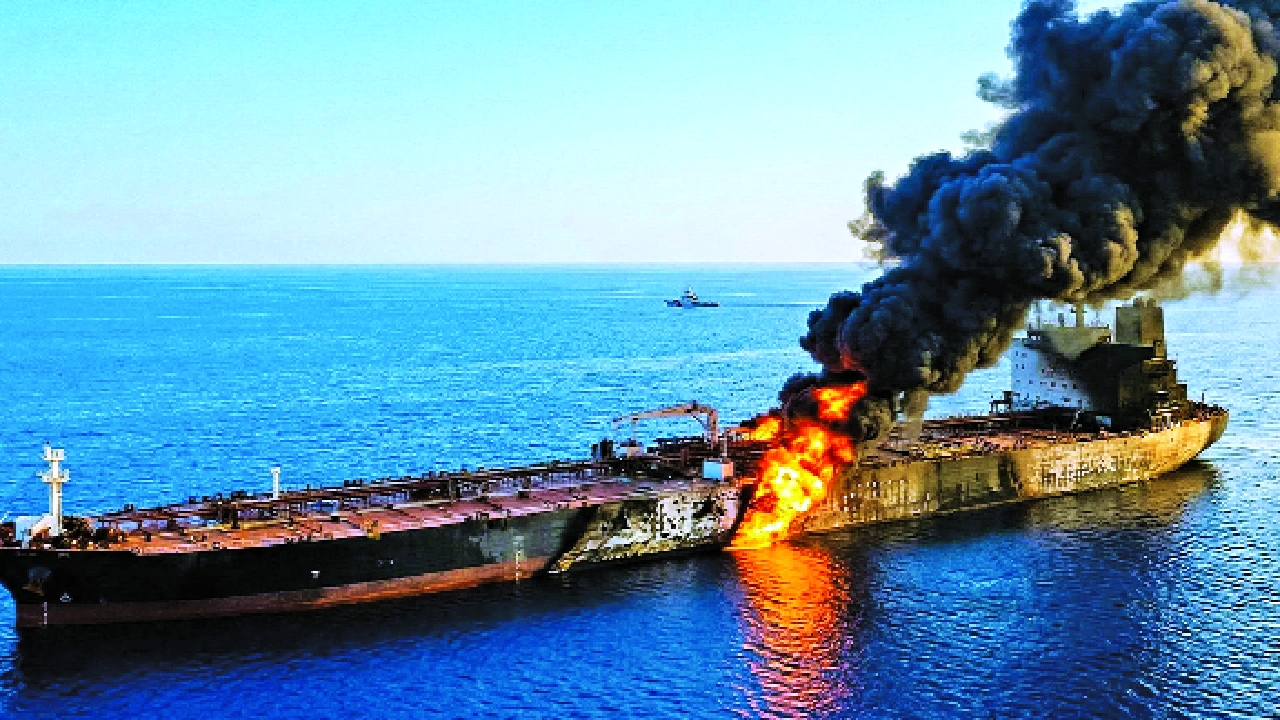
The date on my calendar reads March 10, 2026, but for the nearly 20,000 seafarers currently trapped in the volatile waters of the Middle East, time has shifted into a different, more dangerous dimension. As the military confrontation between Iran, Israel, and the United States reaches a fever pitch, the blue corridors of the Persian Gulf and the Red Sea have been transformed from conduits of global prosperity into a “no-man’s land” of drifting steel and heightened anxiety.
As a former officer who has stood watch in these very waters, I know that behind every news headline about a “targeted strike” is a human story — a merchant sailor scanning the horizon not for weather, but for the silhouette of an incoming drone. Today, that nightmare is a reality.
A chokehold on global trade
The geopolitical “chess match” has moved to the world’s most sensitive maritime chokepoints. Since the escalation began on February 28, 2026, the global economy has felt a seismic shock that dwarfs the energy crises of the 1970s.
The Strait of Hormuz, which normally carries 20 per cent of the world’s oil and 30 per cent of its liquefied natural gas (LNG), is effectively impassable. Reports indicate that tanker traffic has collapsed by nearly 80 per cent.
The impact of the war is clear on oil and gas. Crude oil prices have surged past $110 per barrel. For nations like India, which receives the lion’s share of its crude through these waters, the disruption is not just an economic statistic — it is a threat to national energy security.
Currently, over 200 oil and LNG vessels are anchored or “drifting” outside the Strait, unable to proceed due to a lack of war-risk insurance or the direct threat of kinetic strikes. Major shipping lines have rerouted via the Cape of Good Hope, adding 4,000 miles and three weeks to transits, sending freight rates skyrocketing.
While the world watches the price of gasoline, the families of mariners watch the clock. The psychological toll on the “silent service” is immense.
International maritime bodies, including the IMO, have reported that seafarers are being treated as collateral. On March 6, 2026, the world mourned the loss of four crew members on the vessel Mussafah 2, struck in the Strait. Earlier this month, on 1 March, fatalities were reported on the Skylight and MKD Vyom.
At home, families in Mumbai, Manila, and Colombo wait for a WhatsApp message that may never come. Many vessels have entered “electronic blackout” zones to avoid detection, but this leaves families in a state of agonising silence. As an ex-officer, I know that “crew fatigue” is now “combat fatigue”. Sailors are forced to remain on board for months past their relief dates because crew changes in regional ports like Jebel Ali or Khalifa have become too high-risk.
We are witnessing a profound erosion of the United Nations Convention on the Law of the Sea (UNCLOS). The fundamental principle of freedom of navigation is being treated as a secondary concern to military objectives.
IMO Secretary-General Arsenio Dominguez recently stated: “Seafarers must not be targets. Around 20,000 seafarers remain stranded in the Persian Gulf under heightened risk and considerable mental strain. This is unacceptable and unsustainable.”
The UN guidelines are clear. Under international humanitarian law, civilian mariners and merchant vessels are non-combatants. Yet, the reality on the water is one of GPS jamming, AIS spoofing, and “grey zone” warfare where a merchant ship is misidentified as a hostile asset. The rule of law is being replaced by the rule of force.
The crisis extends beyond missiles. Health services for mariners have reached a breaking point. Restricted access to ports means that injured or sick mariners cannot receive urgent medical evacuations. The World Health Organisation (WHO) has warned that millions in humanitarian health supplies are currently blocked due to the closure of the Strait of Hormuz. The lack of routine medical care and the constant threat of drone strikes are creating a secondary crisis of mental health and chronic illness among crews who cannot be relieved.
The silent lifeline
The current conflict is a grim reminder that our global lifestyle is built on the backs of people we rarely see. The “key makers” of global trade-the mariners — are being used as pawns. From Sri Lanka to India, the spillover of the US-Iran-Israel conflict into the Indian Ocean (including the sinking of the frigate IRIS Dena on 4 March) shows that no corner of the sea is safe. As we look towards the coming weeks, the international community must move beyond “condemnation”.
We need protected corridors and a return to the sanctity of maritime law. If the global lifeline of the merchant navy is severed, the world will find that no amount of military might can fill the empty shelves and dark power grids that follow. We carry the cargo, we carry the risk, and today, we carry the scars of a war we did not choose.
The writer is an Ex-Merchant Navy Officer; views are personal