Nepal’s ‘Ghanti’ govt rings in change
With sweeping arrests, bold administrative resets, and a charged geopolitical backdrop involving the United States, China, and India, Nepal stands at a crossroads where symbolism, disruption, and uncertainty converge
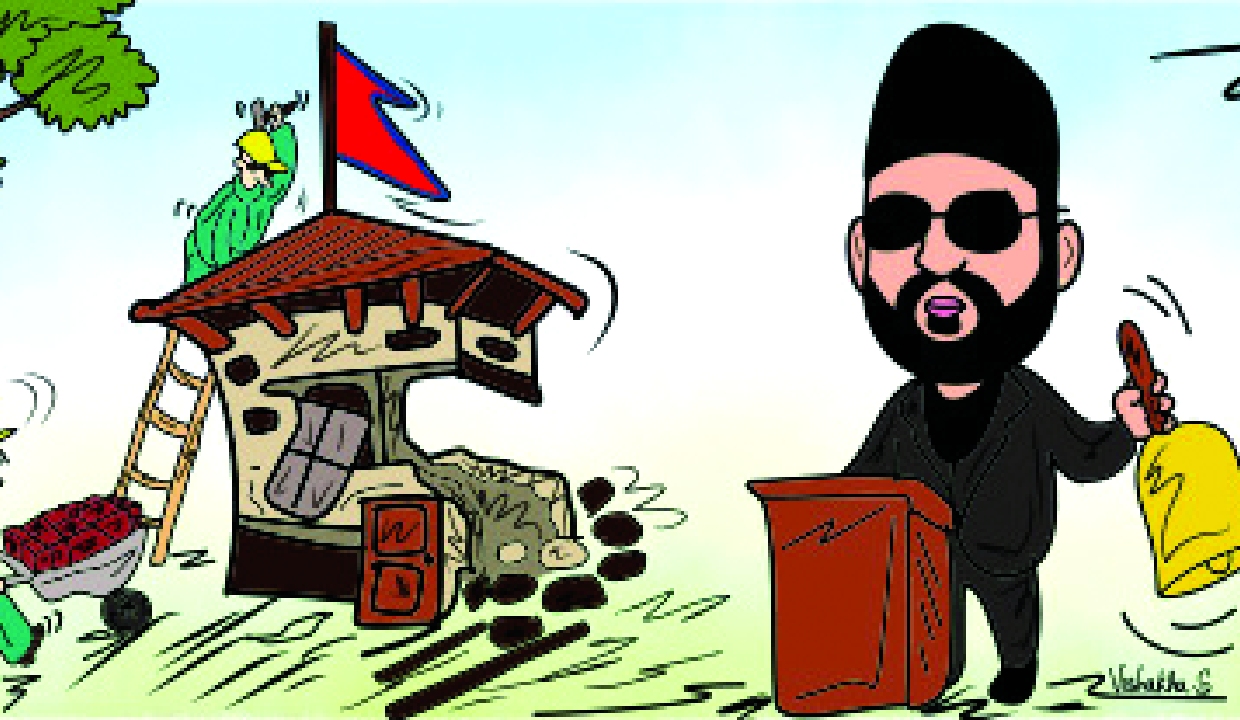
Lame Ahal in Kaski district of Pokhara was a traditional Nepali Congress-voting village; it did not surprise anyone when it voted en masse for the Rashtriya Swatantra Party (RSP). The sound of bells (ghanti, RSP’s election symbol) has enchanted music-loving Nepalis. Last Saturday, more than three weeks after Balen Shah took oath as Prime Minister on March 27, to my question whether Lame Ahal was happy with the Balen government, veteran Yam Bahadur replied: “ekdum! bilkul khushi chha”.
Incidentally, Balen has not spoken a word in public: no meeting with the press; no address to the nation or the newly elected Parliament; no posts on X or other social media. His longest election rally speech was five minutes. He presides in silence, and it works for him, as an RSP PhD scholar at South Asia University, Delhi, told me. All he did was release a five-minute video clip, “Jai Mahakali”, the Gorkha war cry that went viral, establishing his skills as a renowned rapper. For Balen, style is more important than substance.
He has introduced several changes: the diplomatic code of conduct-meeting ambassadors en bloc or in batches, not individually. Former Chinese ambassador Hou Yanqi used to drop in at Sheetal Niwas (the President’s residence) or Baluwatar (the Prime Minister’s residence) without informing the Foreign Ministry. Balen will follow protocol: meet emissaries at the appropriate level without deviation. The test will be on 1 May, when the US super ambassador and presidential envoy to South and Central Asia, Sergio Gor, has sought a meeting with him, and only him.
Home Minister Sudhan Gurung (and one more minister), who has reportedly resigned (?), performed equally spectacularly: he arrested former Prime Minister KP Oli and Home Minister Ramesh Lekhak on March 28, indicating that corruption and misgovernance were his government’s targets. Both have since been released on bail. Investigations were ordered into money laundering allegations against former Prime Ministers SB Deuba, Prachanda, and Oli, while former minister Deepak Khadka and industrialist Shankar Agarwal were arrested. The Deuba family is in Singapore/Hong Kong for medical treatment and has been declared fugitives. A commission will investigate the wealth of individuals, officials, and politicians since 1991. Many hope that the omissions of the Karki Judicial Commission, and the events of 9 September 2025, will also be separately investigated, as they implicate Shah and RSP President Rabi Lamichhane.
Primus inter pares, Lamichhane is the leader, elected to Parliament but currently on bail. He is hoping to be cleared of multiple cases in court on allegations of fraud and money laundering. As a former TV host, he is charismatic, eloquent, and ambitious, with a large following in the party. A clash between Balen and Rabi is likely. The government launched its 100-point reforms-many aspirational, but several already implemented, such as the five-day week, an overhaul of the bureaucracy, and the recall of ambassadors. Shankar Sharma, the cat-with-nine-lives envoy to New Delhi-previously recalled twice and reinstated-will finally say goodbye to diplomacy. The RSP is just five years old and has no experienced civil servants; so it will focus on youth in its selections. Although the focus of the government is internal and domestic, diplomacy has taken centre stage. The first caller in Kathmandu was US Assistant Secretary of State Paul Samir Kapur, who met Foreign Minister Shishir Khanal, Finance Minister Swarnim Wagle, Lamichhane, and Army Chief Gen Ashok Sigdel. He pre-empted any Indian diplomatic visitor, though Foreign Minister S Jaishankar-who was the first to land in Colombo after President Anura Dissanayake’s landslide victory in 2024 — is not a frequent visitor to Kathmandu. He met Khanal during the Indian Ocean Conference in Mauritius this month.
Kapur was on a dual mission: to accelerate the utilisation of the USD 550 million Millennium Challenge Corporation (MCC) Nepal Compact; and the US State Partnership Programme (SPP). The MCC was cleared after strenuous debate in Nepal and is set to expire in August 2028. The SPP, which seeks military cooperation, was rejected in 2022. Kapur also urged Nepal to issue ID cards to Tibetan refugees, as around 20,000 Tibetans of various denominations are present
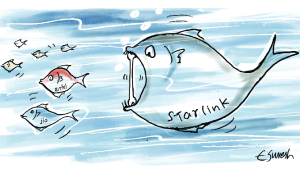
across Nepal. Not to be outpaced by the US, Chinese Deputy Director General of Asian Affairs Cao Jing arrived in Kathmandu. The Nepalese are often wary of the bluntness of Chinese officials. She is said to have warned against the MCC and SPP, and against any tinkering with the Tibetan issue, a highly sensitive matter for Beijing. Cao also warned against any Nepalese official visiting the Tibetan government-in-exile in Dharamsala for the inauguration on 28 May of Penpa Tsering, re-elected Sikyong (Prime Minister) for another five years. The China-US geopolitical rivalry now supersedes India’s primacy in Nepal’s tri-polar contest.Sources in Kathmandu indicate that Balen will visit Delhi either before or after the UNGA in September, but India will be his first foreign visit. Balen or Wagle have not indicated how the primary challenges-jobs and the economy-will be addressed. The economy was growing at 4.5 per cent, and both remittances and foreign exchange reserves were sound. Two million Nepalese work in the Gulf, and another 6 to 8 million in India and elsewhere. The Gulf war over the past two years has hit tourism and remittances, and the economy may slide despite new austerity programmes. Losses due to arson during last year’s Gen Z protests were colossal, running into billions of dollars.
Still, the investment climate is likely to improve now that a politically stable single-party government is in power after three decades. India, as the reputed first responder, has yet to show its cards. The RSP was considering closing the open border and attempting the northern route for trade through Tibet, despite most trade being routed through India. Nationalism has its place. Oli signed a slew of agreements to spite India following the economic blockade (2015). Kathmandu should have learnt its lesson about the North, as the Kodari-Kathmandu railway and North-South BRI corridors remain largely aspirational.
Ordinary Nepalis frequently tell me that they will not survive if the India-Nepal border is closed.
India has never worked with a new political entity like the RSP. But nor had it dealt with the National People’s Power in Sri Lanka, with whom its relations are now among the best in the neighbourhood. The Ghanti is not eternal, as the vanquished can reincarnate. For now, while the US and China shadowbox in Nepal, India can bide its time.
India has never worked with a new political entity like the RSP. But nor had it dealt with the National People’s Power in Sri Lanka, with whom its relations are now among the best in the neighbourhood
The writer, presently in Nepal, is a retired Major General, who served as Commander, IPKF (South), Sri Lanka; Views presented are personal.