AAP’s moment of reckoning
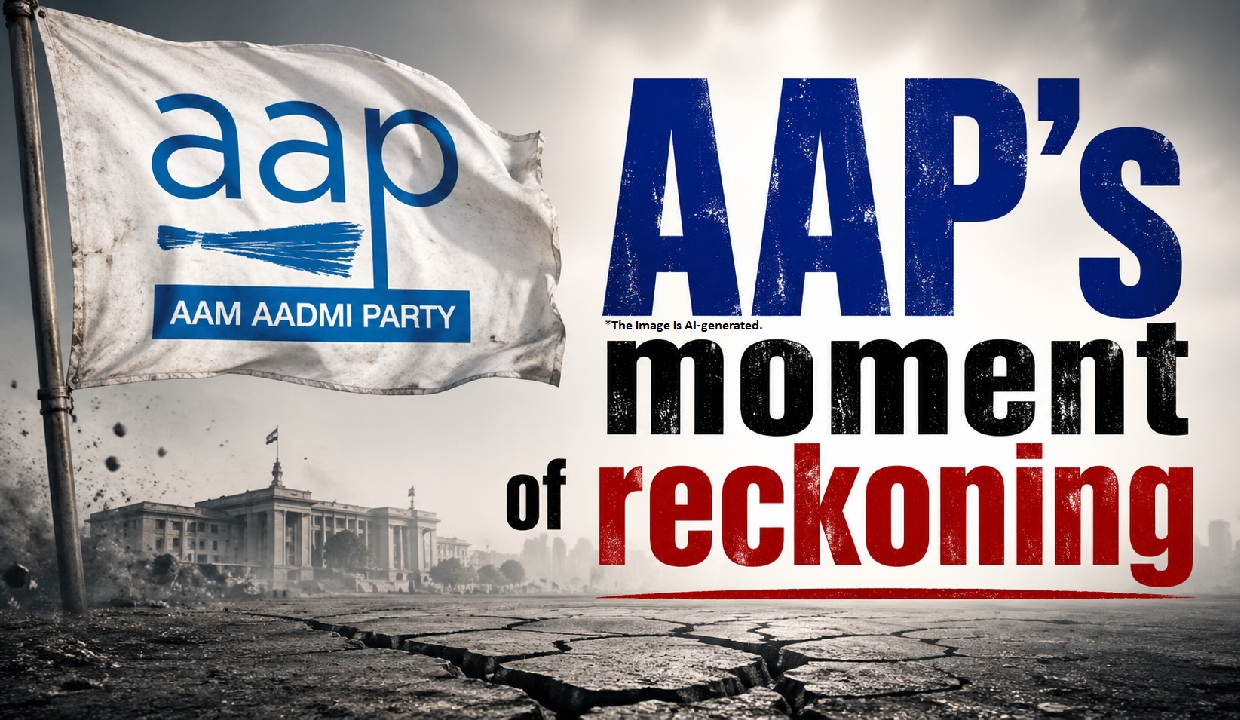
The defection of seven Rajya Sabha MPs from the AAP raises serious questions about its leadership, internal cohesion, and the limits of anti-defection framework
Aam Aadmi Party that had a meteoric rise, is now facing its worst existential crisis. The party that claimed inclusivity and ideological cohesion is splitting down the middle. What began with the rebellion of its Rajya Sabha member Raghav Chaddha, who eventually joined the Bharatiya Janata Party, has snowballed into an enmass defection in Rajya Sabha, eroding its prestige and parliament presence. The defection of seven Rajya Sabha MPs from the Aam Aadmi Party to the Bharatiya Janata Party has triggered more than a political embarrassment—it has exposed the vulnerability of AAP. For a movement born out of anti-corruption protests and positioned as an alternative to entrenched political culture, AAP has increasingly shown that the rank and file of the party are not happy with the party leadership, which is being accused of adopting autocratic-style of functioning. The defection of AAP MPs enmass also triggers a constitutional situation and big question being asked is if the anti-defection law applies to these seven MPs and should they be disqualified? The immediate battle now shifts to the office of C. P. Radhakrishnan, where AAP plans to seek the disqualification of the defecting MPs. The party’s argument leans on the sanctity of the Tenth Schedule of the Indian Constitution, asserting that any defection—regardless of numbers — is unconstitutional. However, the defectors have thought it through.
If two-third of the MPs defect, then it is not defection but a “merger.” So, AAP may not be able to disqualify these seven MPs as they are constitute more than two third of MPs of AAP’s 10 MPs in the Rajya Sabha. This is not merely a legal contest; it is a political reality check. AAP’s leadership, including figures like Sanjay Singh and Bhagwant Mann, has framed the defections as coercive and unethical. Yet, voices from within the breakaway faction tell a different story — one of alienation, inaccessibility of leadership, and dissatisfaction with governance, particularly in Punjab. Allegations of marginalisation of key leaders and the concentration of decision-making suggest deeper organisational fissures. The crisis, therefore, is not sudden; it is symptomatic. AAP’s rapid rise—from Delhi to Punjab—created a structure that is still fragile and vulnerable.
What lies ahead for AAP is a test of political maturity. The party can choose to treat this as an external sabotage, or it can confront uncomfortable internal truths. Rebuilding trust within its ranks, decentralising leadership, and addressing governance concerns—especially in Punjab—will be crucial. The alternative is a slow erosion of credibility. The larger lesson extends beyond one party. India’s anti-defection framework, conceived to ensure stability, has paradoxically legitimised large-scale defections.
It punishes the lone dissenter but rewards the organised rebellion. Until this contradiction is addressed, such political migrations will remain a recurring feature. Besides, it is also a telling reflection of the declining standards of Indian democracy, where money and coercion are deployed by ruling parties to fracture the Opposition—a situation that warrants a serious rethink on the limits of morality and the high standards that once defined Indian politics.