NEET Leak: A national crisis of trust in education
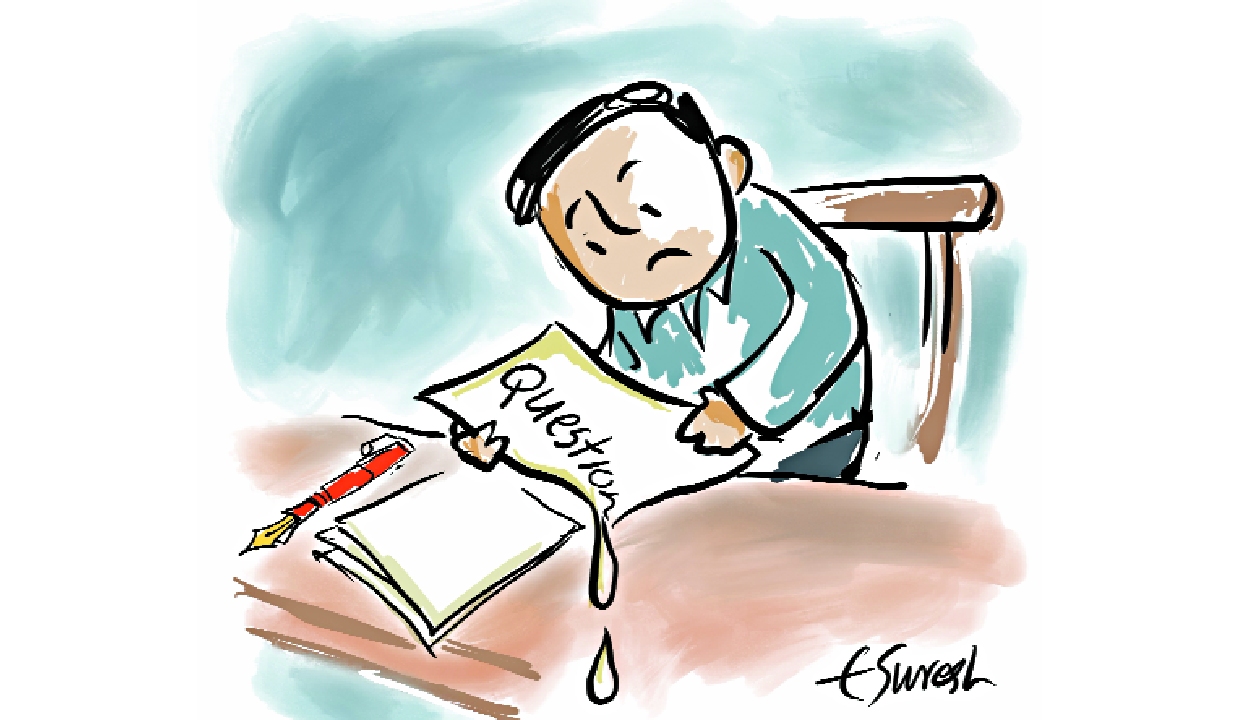
The cancellation of NEET 2026 following allegations of a paper leak has triggered outrage and deep introspection across India. The scandal is a grim reflection of the moral and institutional decline within the country’s education system
Professor Jayant Vishnu Narlikar, one of our most distinguished and decorated scientists, wrote an article on “Declining Work Standards” around fifteen years ago. I find it extremely relevant in comprehending the national anguish and shame being expressed following the cancellation of the NEET examination in May 2026. The learned professor wrote: “Further, our examination system has become so corrupt that we have come to accept malpractices as routine. With copying condoned even at the highest level, the examinations conducted by boards, colleges and universities are losing their credibility as a means of assessing the candidate’s performance. No government, state or central, has either the will or courage to restore a sense of discipline in the system. Because of this, many specialised institutions have introduced their own entrance tests.”
The National Testing Agency (NTA), created in November 2017, is one of several such bodies established during the last two to three decades. There have been serious issues of paper leakage earlier as well, including NEET-UG 2024, UGC-NET 2024, and JEE-Main 2021. The 2024 paper leak was investigated by the Central Bureau of Investigation (CBI), which enjoys nationwide credibility. Parents and the public remain unaware of what happened to the guilty and how many of them received exemplary punishment. The CBI is conducting the same exercise again for the 2026 paper leak. Media reports indicate that it has successfully unearthed the conspiracy, and that criminality will eventually be established.
Mention is being made of professors who acted as paper-setters. It must serve as an eye-opener to every teacher and academic, from schools to higher education institutions. Sadly, the entire scenario reaffirms the fact that “professions suffer credibility erosion only because of their own professionals”. The credibility crisis surrounding the majority of regulatory bodies confirms this beyond any doubt.
The leakage of the NEET examination paper prior to its scheduled date of May 3, 2026, has attracted the attention of both the young and the old alike. The plight of 22.7 lakh young aspirants was indeed shocking. Most of these aspirants belong to families that could never imagine securing admission for their wards in private medical colleges. They had done their utmost in mobilising resources to enable their children to join tuition centres, coaching classes, and other support systems that claim expertise in preparing students for competitive entrance examinations. Obviously, most of these are private commercial ventures. They are well equipped with the tricks of the trade and techniques of extracting the maximum from hopeful young people and their families. There are numerous examples of entire families relocating to cities with well-advertised coaching centres. They do all of this in the hope of securing a bright future not only for the admission seeker but for the family as a whole. The inadequacy of school education is acknowledged at every level. Consequently, parents trust private ventures as the only alternative capable of kindling hope for success, often unaware that it is ultimately a business — and business today has its own “morals and ethics”. Unfortunately, this aspect hardly finds mention even in serious deliberations on how to conduct clean examinations.
Over the years, India’s youth have suffered numerous instances of paper leaks, not only in examinations for admission to coveted professional courses but also in recruitment examinations for jobs. Imagine the damage that the profession and the nation would have suffered had those who purchased the paper successfully enrolled for medical degrees. The nation is generally aware of the numerous factors and forces that
indulge in such immoral and unethical practices year after year, and why the system repeatedly fails to punish the guilty. Dependence on coaching institutions has increased steadily.
The neglect of quality and excellence in the majority of schools run on public finances is squarely responsible for the growth of private schools and the coaching industry. Young adolescents, after completing their first ten years of schooling, gradually realise how intense the competition will be in securing admission to reputed and affordable professional institutions. The majority of parents one interacts with remain worried and uncertain, often for several years. This does not refer to the privileged classes who are sufficiently equipped to send their wards to institutions in Western countries. There is also a subgroup that prefers institutions in Ukraine, Mauritius, and a few other destinations.
The first two or three decades after Independence were characterised by the presence of a generation that was admired throughout the country. Their lives reflected immense sacrifice and suffering endured for the freedom of the nation and for the dignified future of generations to come. As young people in the 1950s and 1960s, many of us had the privilege of meeting freedom fighters who refused to accept pensions announced for them by governments. We learnt invaluable lessons about the nation and our obligations to society and future generations.
Those of us who received our schooling and university education during that period never experienced the anxiety of a possible paper leak before examinations. Tuitions were considered infra dig, and it was unimaginable that a college or university teacher would teach in a coaching centre. Every teacher was always willing to assist students needing support. Gradually, however, generations changed, Gandhian values receded into the background, and elected representatives — exceptions apart — who tasted power developed their own values and norms. Adolescents and young people in schools and higher education institutions found before them a new set of icons: teachers busy with tuition classes, coaching systems, and even side businesses, while neglecting their basic moral obligations.
Most candidates appearing in entrance examinations for professional courses do so after completing school education. The undue anxiety and excessive concentration on securing higher scores often leads to insufficient emphasis during school years on the aspects necessary for holistic growth — from an innocent individual “person” into a complete “personality”.
India deserves schools that embody an exemplary, morally imbued work culture. It deserves conscious teachers who remain ever aware that they themselves are the “true textbook for the pupils” and who continue as active lifelong learners. In such institutions, the entry of unscrupulous elements would become impossible. This is not a utopian wish; such schools and teachers still exist in India today.
The story of Japan’s reconstruction after the Second World War demonstrates how focus on social, cultural, and moral dimensions in schools and teacher preparation institutions created professionals committed to being “true to their salt”. The government and society both played their roles sincerely: schools possessed the necessary infrastructure, appropriate teacher-student ratios, and adequately trained teachers. Unfortunately, this is still not the case in India.
Those entrusted with finding better ways and means to conduct clean NEET and other entrance examinations have a difficult task ahead. It would be a humble suggestion to them to study carefully the implications and imperatives of Paragraph 15.2 of the National Education Policy 2020: “According to the Justice JS Verma Commission (2012) constituted by the Supreme Court, a majority of the stand-alone TEIs — over 10,000 in number — are not even attempting serious teacher education but are essentially selling degrees for a price.”
Teachers and teacher education institutions must ensure competence, commitment, and high-level performance as the basic essentials for moving towards a morally strong education system — one that India’s children and young people truly deserve.
The author is an educationist, a Padma Shri awardee, and works in religious amity and social cohesion; Views presented are personal.