How human connections redefine workplace stress
It is my firm belief that workplace stress has been around in one form or another for ages. However, what has changed over time is its structure and intensity - the beast has starkly metamorphosed. Today, amplified by technology-driven jobs and laggard employment rates, stress has become a constant hum of fatigue, dissatisfaction, and the pressure to remain perpetually available.
These anxieties rarely stay within the four walls of the office; rather, they sneak out surreptitiously into the outside world, magnifying personal, emotional, and physiological fault lines like never before. I have witnessed all these changes during my nearly four decades of corporate life experience.
My career — like those of many others - has had its share of tranquillity and turbulence, highs and lows, shaped by hierarchies, interpersonal dynamics, and the often not-too-subtle currents of power and politics. At times, professional strain collides headlong with personal worry, thereby creating an atmosphere of acute self-doubt, as happened with me during the COVID-19 pandemic, when my hypertension spiked sharply, as my daughter, Mehak, a young doctor, took her position on the front lines of the raging war across the seven seas.
The ambiguity took a palpable toll on my health, to an extent that medication that had long been stable had to be increased suddenly.
It was in this state of apprehension that I took up a new assignment — after the lockdown had eased — anticipating the familiar, uncertain phase of adjustment. Instead, I was surprised by what I encountered — something that altered my understanding of workplace stress. There was, to begin with, an unusual lightness in the environment. And although work was taken seriously, the edge of fear that often accompanies it was absent.
Soon, I fathomed that the difference lay largely in leadership, as the team lead laid emphasis on brevity and humility, preferring these over pomposity, exaggeration, and hype. Expectations were clear, but they were not enforced through intimidation, something that resulted in a culture of trust rather than anxiety.
These positively charged winds received a further boost recently during a posting I worked on. It was here that I truly understood the equally important role of relationships.
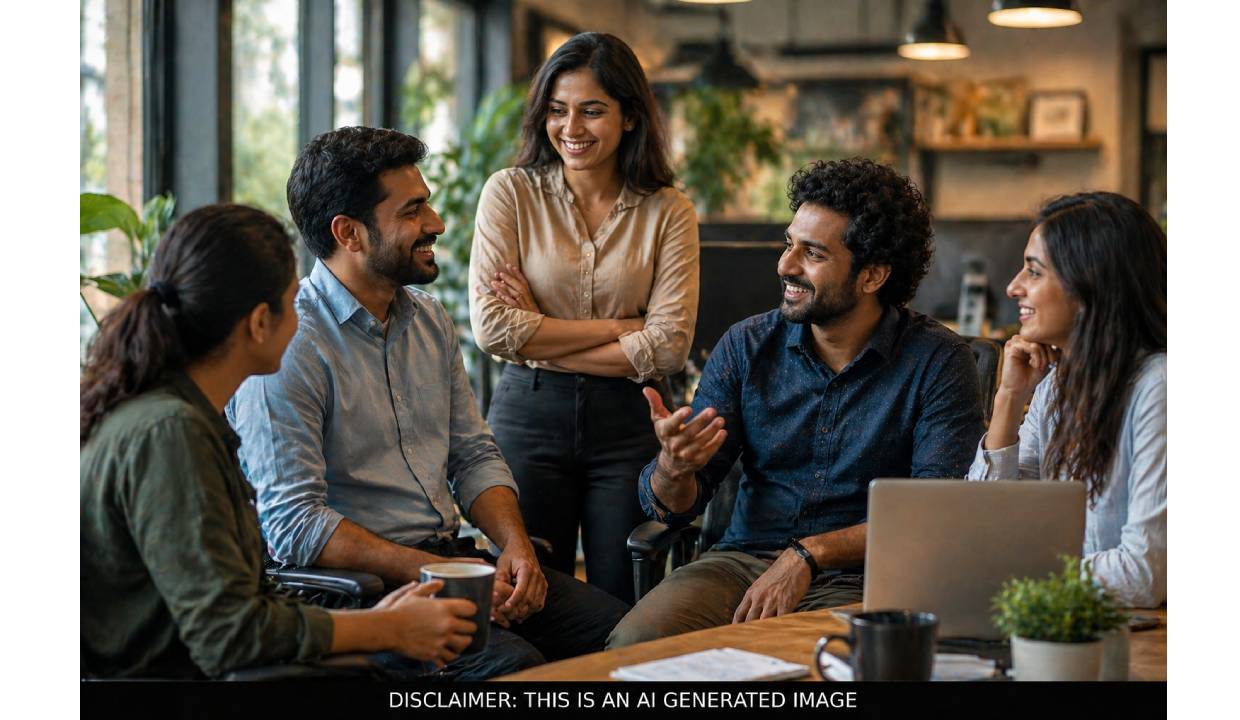
Within months of taking over, I established close bonds with a small group of colleagues at a similar stage in their careers as me - rushing speedily towards what in common parlance is referred to as 'senior citizen'. What began as shallow banter grew into genuine camaraderie — conversations that extended into shared experiences and reflections.
These connections created a sense of ease long missing in my professional life. Amid this came an unexpected - and most welcome - change: a routine medical check-up showed my blood pressure had dropped below normal levels, requiring reduced medication, while my diabetes indicators recorded their best readings in over a decade.
These are not mere coincidences but pointers to something of greater import - often overlooked in discussions on stress management, which tend to focus on individual coping mechanisms such as mindfulness, exercise, and time management.
While these matter, they are only part of the picture. The environments we work in, the leadership we experience, and the relationships we build play an equally decisive role. Workplace stress may be inevitable, but the way it shapes our lives is not.