India expands its European footprint
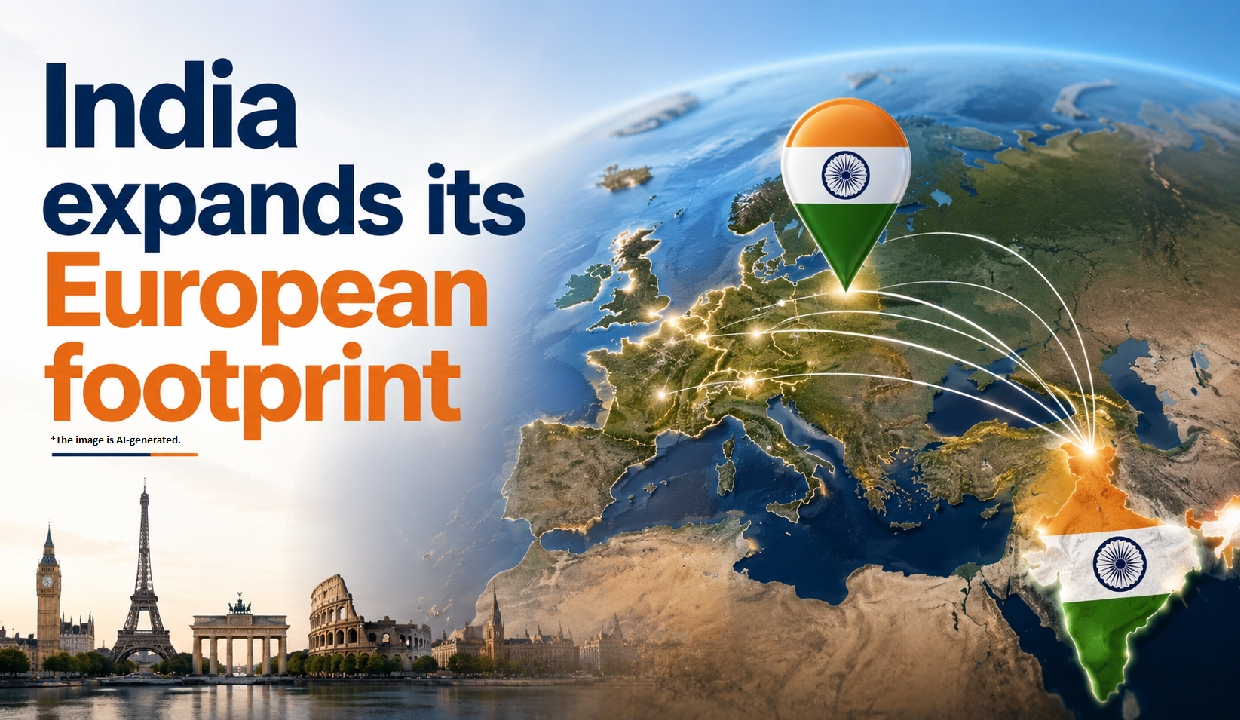
By strengthening ties with Italy, India is securing economic opportunities, strategic connectivity and diplomatic leverage to shape its global standing
Prime Minister Narendra Modi’s five-nation tour finally took him to Italy, which marks far more than another diplomatic engagement. The visit is a concerted effort to deepen economic, technological, and geopolitical partnerships with Western Europe, of which Italy is a key constituent. PM Modi’s talks with Italian Prime Minister Giorgia Meloni would immensely benefit India in terms of trade, connectivity, defence cooperation, and India’s strategic positioning.
The decision to elevate India-Italy relations into a “special strategic partnership” is not only a big step towards cementing relations but also an effort to move beyond the realm of given groupings and alliances. Both countries are seeking long-term cooperation in critical sectors such as defence manufacturing, clean energy, critical minerals, technology, maritime security and infrastructure. One of the major strategic discussions during the visit revolved around the India-Middle East-Europe Economic Corridor (IMEC), the Indian answer to the Chinese Belt and Road initiative. This project aims to link India with Europe through ports, rail networks and digital infrastructure across the Middle East. Italy’s support is especially valuable because of its geographic location as a gateway to Europe and the Mediterranean region. Economically, the visit opens fresh opportunities for Indian businesses and exporters. Bilateral trade between India and Italy has already crossed €14 billion, and both countries are aiming for €20 billion by 2029. Modi’s tour also involves business leaders from both sides. The talks on investment flows in manufacturing, green technologies, automobiles, defence production and innovation sectors could be a game-changer for India and Indian companies get an edge by collaborating with their Italian counterparts to upgrade technology and get access to a larger European market. This could generate employment and support India’s ambition of becoming a global manufacturing hub. Europe is increasingly looking toward India as a reliable democratic partner amid geopolitical tensions, disruptions in supply chains and concerns over excessive dependence on China. For India, closer ties with Italy can help broaden its influence within the European Union and accelerate cooperation in areas such as artificial intelligence, climate action and food security. But this visit was not just about strategic and economic outreach, as it had cultural undertones to it. Modi’s references to the civilisational connection between Rome and Varanasi highlighted the cultural depth shared by both nations. Such symbolism builds emotional and historical bridges alongside strategic interests.
Critics may dismiss the optics and personal chemistry between Modi and Meloni as political theatre. However, modern diplomacy is all about personal rapport to ease difficult negotiations and fast-track partnerships. Behind the headlines and social media moments lies a serious strategic recalibration— it is India’s transition from a regional power to an increasingly influential global actor.