The slow death of peacekeeping
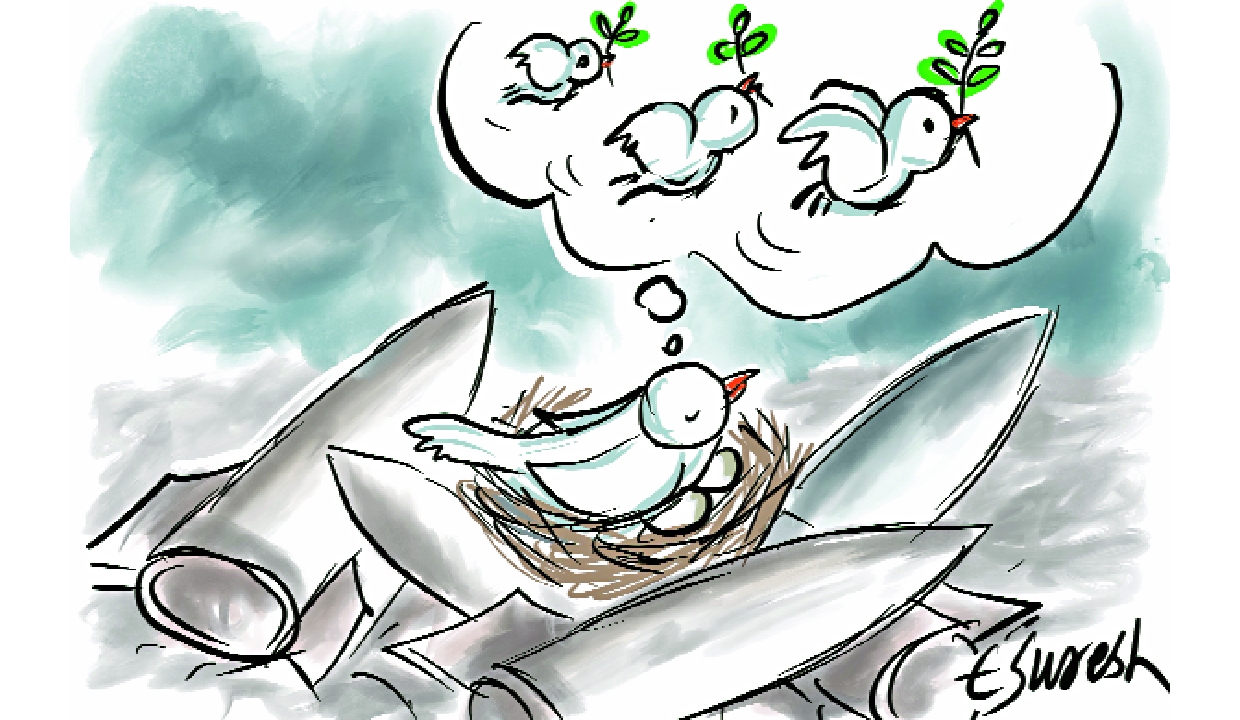
The peacekeeping system the world built to prevent its worst instincts from running unchecked is dying — not in a single dramatic moment, but through the slow bleed of empty budgets, absent troops and political indifference
The international system built to keep the world’s most fragile regions from descending into chaos is quietly falling apart. Not through dramatic collapse, but through slow, steady exhaustion — shrinking budgets, fewer troops, weakened mandates and fading political will. A forthcoming report from the Stockholm International Peace Research Institute (SIPRI) lays bare the scale of this retreat: personnel deployed to peace operations worldwide have fallen to just 78,633, the lowest figure in at least 25 years and barely half the number seen in 2016.
This is no temporary setback or administrative hiccup. It is evidence of a structural contraction in the willingness of states to honour their collective security commitments - a signal that the multilateral ideals underpinning modern peacekeeping are losing their grip on the real world.
From optimism to exhaustion
Peacekeeping operations once embodied the defining optimism of the post-Cold War era. The belief that nations could set aside their rivalries and cooperate through international institutions to contain conflict and protect civilians seemed, for a time, genuinely achievable. That belief is now badly depleted. What survives is the shell of a once-ambitious system - kept alive more by institutional inertia than by any coherent strategic vision.
The United Nations, at the centre of this system, is operating under severe financial and political strain. SIPRI points to persistent liquidity shortfalls driven by delayed or unpaid contributions from major member states. A funding gap approaching two billion dollars within a single peacekeeping cycle is not merely an accounting problem — it is a political statement. It signals that several influential powers no longer regard collective security as an urgent shared responsibility.
International leaders continue to invoke the language of solidarity and multilateralism at global forums. But the practical foundations that once gave those words meaning are weakening. The gap between rhetoric and operational reality has become impossible to ignore.
A council that can no longer agree
Much of this paralysis flows from the United Nations Security Council, originally designed as the stabilising core of the post-war international order. Today, it increasingly mirrors the very fragmentation it was created to manage. Strategic rivalry among major powers, the repeated use of vetoes and the rise of transactional diplomacy have crippled consensus-building. Even routine mandate renewals for ongoing peacekeeping missions have become arenas of obstruction and geopolitical competition.
The post-Cold War assumption — that global powers could, at minimum, agree on basic standards of international stability — has largely collapsed. Disputes over mandate language covering human rights protections, climate impacts and gender provisions have become flashpoints, revealing how far the international community has drifted from any shared normative framework.
Africa bears the cost
The human consequences of this retreat are most visible in Sub-Saharan Africa, which hosts the majority of peacekeeping missions yet is simultaneously experiencing some of the steepest reductions in deployed forces. Peacekeepers are withdrawing not because stability has been achieved, but because sustaining long-term international deployments has become politically inconvenient and financially burdensome for contributing states.
The vacuum this creates is rarely filled by calm. Instead, fragmented alternatives are filling the space: ad hoc coalitions, bilateral security arrangements and regionally limited interventions driven by narrow strategic interests rather than universal mandates. Countries such as Rwanda, United Arab Emirates and Uganda are increasingly deploying forces abroad through bilateral deals shaped by national interest and geopolitical influence. These interventions may not be illegitimate, but they differ fundamentally from traditional peacekeeping in both purpose and accountability.
A model built for a different world
The conceptual crisis runs as deep as the operational one. Modern peacekeeping was built on assumptions that no longer reliably hold — that external forces could stabilise conflicts where all parties retained some interest in restraint, and that armed groups would respect international presence even without coercive backing. In today’s most volatile conflict zones, those assumptions are routinely confounded. Armed actors indifferent to international norms are unlikely to be deterred by lightly equipped missions operating under restrictive mandates.
Meanwhile, those mandates have grown ever more ambitious — encompassing civilian protection, governance support, human rights monitoring and counterterrorism assistance — while the political backing required to deliver on such expansive responsibilities has steadily eroded. Missions are asked to stabilise increasingly complex crises without adequate resources, military capability or diplomatic consensus. The result is peacekeeping that risks becoming little more than a symbolic presence.
The erosion of a shared belief
Perhaps the most profound shift is normative. The idea that peacekeeping represents a shared moral and political obligation of the international community is losing force. States increasingly treat participation as optional, shaped by domestic political calculations rather than enduring international duty. What is disappearing is not just funding or troops, but the underlying belief that nations - despite their rivalries — have a collective responsibility to preserve a minimum standard of human security.
Kofi Annan, in one of his final interviews before his death in 2018, described himself as a “stubborn optimist” and insisted that international cooperation remained indispensable. He argued that there could be no security without development, no development without security, and neither without human rights. That vision now feels distant. The institutions he represented still survive rhetorically, but much of their operational substance has been hollowed out.
What is ending is not peacekeeping itself, but the coherence of the global system that once gave it legitimacy and shared purpose. In its place is emerging something more selective, transactional and uneven — a fragmented landscape of interventions that may contain individual crises, but no longer reflect any unified vision of international responsibility. The decline of peacekeeping, in this sense, is also the decline of a broader idea: that the world, at its best, can still act together.
Kofi Annan, in one of his final interviews before his death in 2018, described himself as a “stubborn optimist” and insisted that international cooperation remained indispensable. He argued that there could be no security without development, no development without security, and neither without human rights
The author is a columnist based in Colombo; Views presented are personal.