Xi-Putin meet: A new axis in the making?
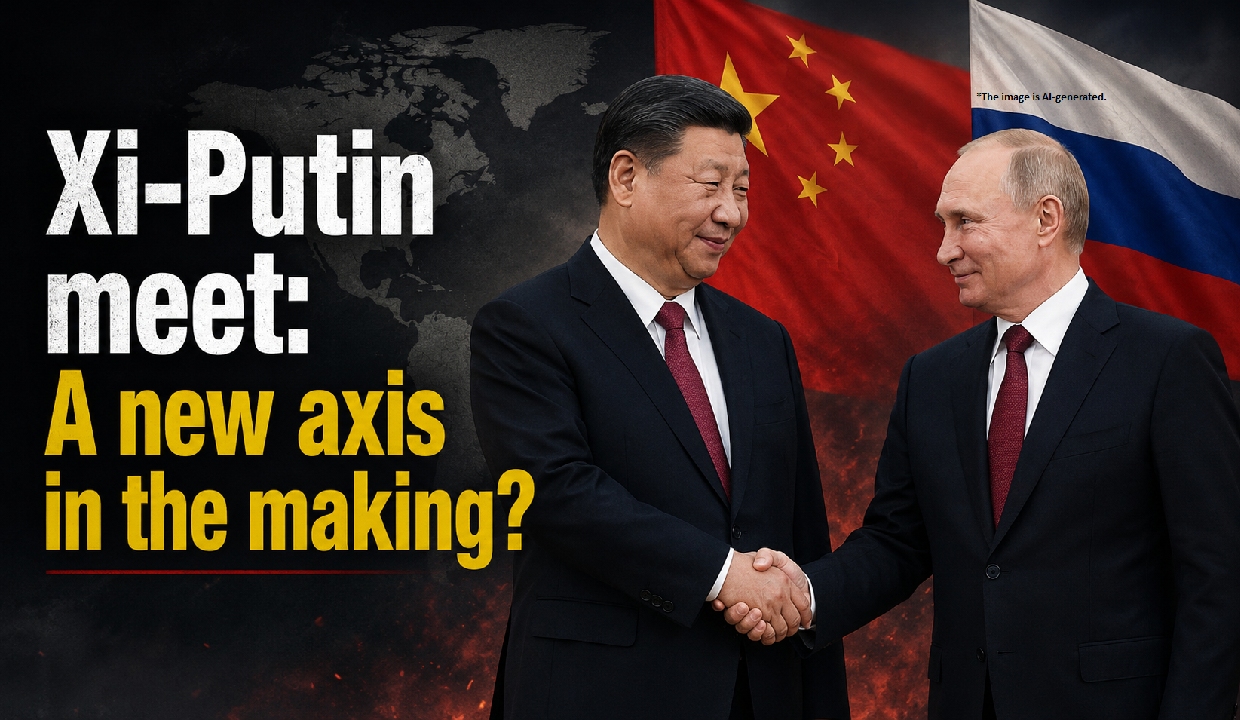
Days after hosting Donald Trump, Chinese President Xi Jinping welcomed Russian President Vladimir Putin, reinforcing China’s emergence as a global power
There is a certain theatre to summitry, and Beijing staged it masterfully. First, Donald Trump arrived, then Vladimir Putin - each travelling thousands of miles to sit across from Xi Jinping in Beijing, now at the centre of geopolitics. The optics were unmistakable: China is now the world’s indispensable interlocutor, and Xi its undisputed convener-in-chief.
The agenda of the Xi-Putin summit, held on Wednesday, was broad in scope and strategic in intent. The two leaders signed documents spanning trade, technology, scientific research and intellectual property, while extending their foundational treaty of “good neighbourliness and friendly cooperation” - first inked a quarter of a century ago. They spoke warmly of cooperation in artificial intelligence and even the conservation of rare tigers and pandas. But beneath the ceremonial warmth lay substance that matters greatly for the rest of the world.
“The global agenda of peace and development is facing new risks and challenges, with the danger of fragmentation of the international community,” the Xi-Putin joint declaration stated in clear terms. The centrepiece of their joint statement was a pointed condemnation of United States. Both leaders warned of a world drifting back towards the “law of the jungle” — a deliberate rebuke of American foreign policy, directed squarely at the Trump administration’s unilateralism, its pursuit of a “golden dome” missile defence system, and its decision to allow a nuclear arms treaty to lapse in February. Whatever the diplomatic niceties, this amounted to a declaration of an alternative world order — one centred on Beijing.
Yet the summit also revealed limits. Russia and China failed to finalise a long-anticipated gas pipeline agreement that would have doubled Moscow’s fossil fuel exports eastward. Pricing disagreements reportedly blocked a deal - a reminder that even the warmest partnerships have hard commercial edges. Currently, China sits at the forefront of global geopolitics. It can pick and choose partners and dictate the terms of engagement. Putin needs China far more than China needs Russia, and Beijing knows how to use that leverage quietly. However, it is unmistakable that the two powers are drawing closer, and the synergy is evident.
First, the Russia-China axis has deepened beyond rhetoric: from military exercises to — according to European intelligence agencies — covert training of Russian soldiers, Beijing’s “official neutrality” on Ukraine is increasingly difficult to sustain as credible. Second, Xi’s carefully choreographed reception of both Trump and Putin in the same week underlines China’s rare position as a power that neither the United States nor Russia can afford to alienate. Third, and perhaps most consequentially, the joint warning against American “unilateral bullying” signals that Beijing and Moscow intend to shape the architecture of whatever post-American international order may be emerging together.
Whether the world should find that prospect stabilising or alarming is, perhaps, the defining geopolitical question of our era.