Dual challenge: El Niño and global tensions
In recent weeks, El Niño has re-entered public discourse, frequently appearing in weather updates and policy conversations. While it originates in the equatorial Pacific Ocean, its influence stretches far beyond, altering atmospheric patterns that directly affect India’s monsoon. For a country where nearly 70 per cent of annual rainfall is delivered during the monsoon season, even subtle disruptions can have far-reaching implications.
At its core, El Niño refers to the abnormal warming of surface waters in the central and eastern Pacific Ocean. This warming weakens the trade winds that typically push moisture-laden air towards the Indian subcontinent. As a result, the monsoon-India’s climatic lifeline-can become erratic. Rainfall may arrive late, pause unpredictably, or fall in short, intense bursts rather than being evenly distributed.
Such variability often proves more damaging than an outright deficit. Agriculture, water management, and rural livelihoods depend not just on how much rain falls, but when and how it does. A delayed monsoon can disrupt sowing cycles, while prolonged dry spells followed by sudden downpours can damage crops and reduce yields.
India’s historical experience with El Niño underscores its significance. Several major El Niño years-including 1965-66, 1972-73, 1987-88, 2002, 2009, and 2015-16-were associated with drought-like conditions, reduced agricultural output, and economic stress. The 1987-88 episode, for instance, led to one of the most severe droughts in recent history, affecting vast regions and exposing vulnerabilities in water and food systems.
However, the relationship is not always deterministic. The strong El Niño event of 1997-98 did not translate into a severe drought in India, thanks to the interplay of other climatic factors. This variability highlights an important point: El Niño increases risk, but does not guarantee a crisis.
As 2026 unfolds, early indicators-rising temperatures and uneven pre-monsoon rainfall-suggest the possible development of El Niño conditions. Agencies such as the India Meteorological Department and the World Meteorological Organization have flagged a heightened probability, though the final outcome remains uncertain. This uncertainty makes preparedness crucial. The first and most immediate impact of a weak or erratic monsoon is felt in agriculture. A large share of India’s farmland remains rain-fed, leaving farmers highly dependent on timely rainfall. Crops like rice, pulses, and oilseeds are particularly sensitive to rainfall variations.
A disrupted monsoon can lead to lower yields, reduced farm incomes, and cascading effects on food supply and prices. Water resources face parallel stress. Reservoirs, rivers, and groundwater levels depend heavily on monsoon replenishment. A deficient or poorly distributed monsoon can result in water shortages, affecting both rural communities and urban centres. Cities may resort to rationing, while villages struggle with access to drinking water and irrigation.
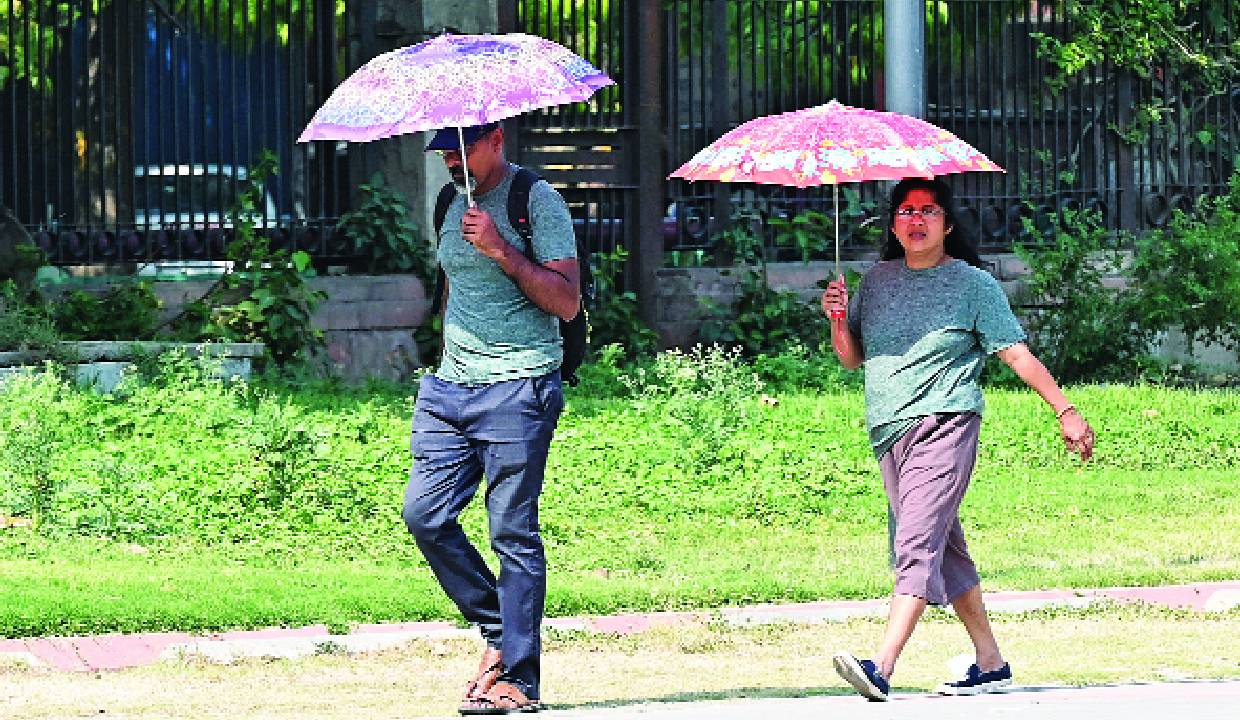
El Niño is linked to rising temperatures, with more frequent and intense heatwaves that affect public health, energy demand and labour productivity, especially in outdoor sectors like agriculture and construction. Another emerging concern is the rise in forest fires. Data from early 2026 indicates a sharp increase in both the frequency and intensity of fires, with some regions witnessing an over 80 per cent surge compared to previous years. Areas like the Aravalli Range and the Nilgiri Hills have experienced repeated fire incidents, often exacerbated by prolonged heat and reduced moisture.
Environmental degradation has further amplified this vulnerability. Fragmented forest landscapes, combined with rising temperatures and declining humidity, create conditions where fires can ignite and spread rapidly. The result is not only ecological damage but also a loss of biodiversity and increased carbon emissions.
=Compounding these climate-related challenges are geopolitical tensions unfolding across the globe. Conflicts involving major players such as the United States, Israel, and Iran have the potential to disrupt global energy markets. While these tensions are unrelated to El Niño, their economic consequences can intensify its impact. India’s heavy reliance on imported crude oil makes it particularly sensitive to fluctuations in global energy prices. Any disruption in supply chains can drive up fuel costs, affecting transportation, manufacturing, and overall inflation. When combined with a weak monsoon that pushes up food prices, the result can be a broad-based rise in the cost of living.
This dual pressure-climate-driven supply shocks and geopolitically driven cost increases-creates a complex economic scenario. Farmers may face higher input costs alongside reduced yields, while consumers grapple with rising prices for essential goods. The combined effect can dampen rural demand and strain public finances. Yet, there are reasons for cautious optimism. Over the decades, India has strengthened its capacity to manage such challenges. Advances in weather forecasting allow better anticipation of climatic events. Expanded irrigation networks reduce dependence on rainfall, while improved foodgrain storage ensures buffer stocks during lean periods. Disaster management systems have also become more responsive and coordinated. Going forward, a comprehensive approach is essential. Water management must be prioritised through conservation, efficient irrigation, and better storage.
Agriculture needs to become more climate-resilient, with crop diversification, drought-resistant varieties, and sustainable practices. Reducing dependence on imported fossil fuels through renewable energy adoption can also mitigate the economic impact of global tensions. Preparedness is not solely the responsibility of governments. Communities and individuals play a crucial role in building resilience through conserving water, using energy efficiently, and adopting sustainable practices. It is equally important to maintain perspective.
Not every El Niño results in a severe drought, and not every geopolitical conflict leads to economic disruption. India’s experience shows that with strong institutions and proactive planning, uncertainties can be managed effectively. Ultimately, the likely emergence of El Niño in 2026 should be viewed as a warning rather than a crisis. It underscores the need for early action and long-term resilience, as preparedness remains firmly within reach.