Nepal: A Strategic Opportunity for India
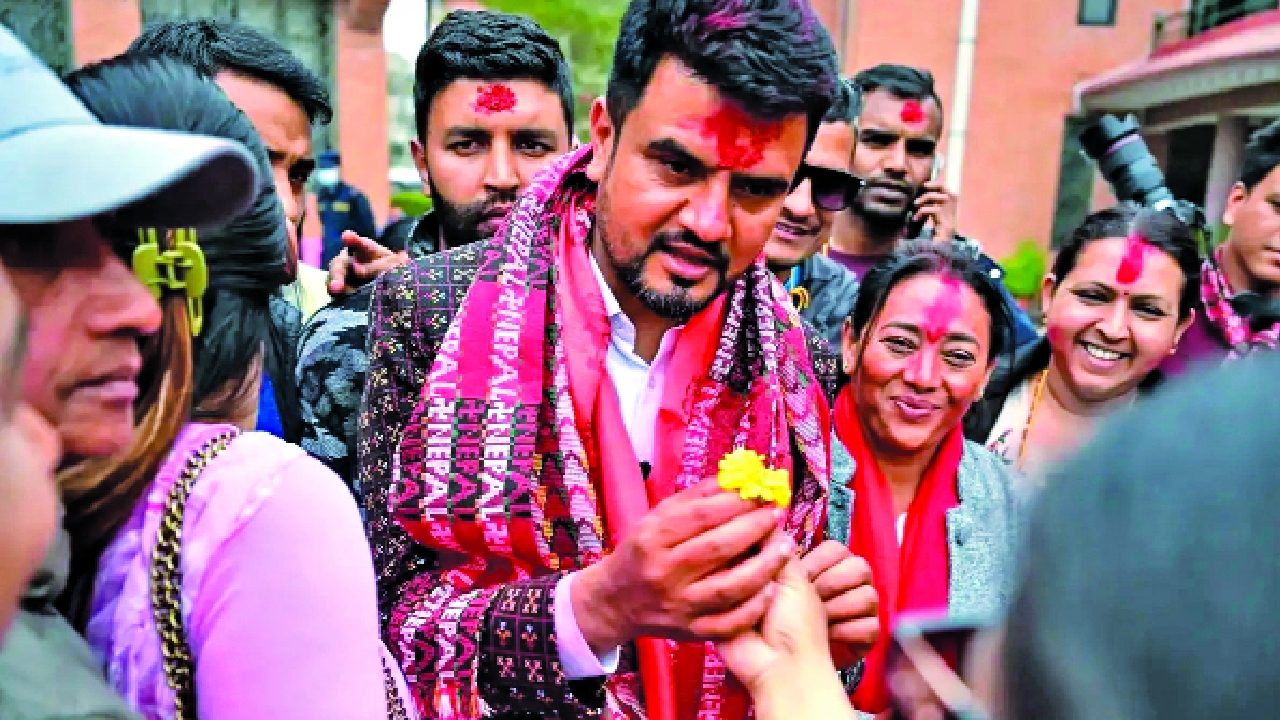
Nepal’s 2026 parliamentary elections have produced one of the most dramatic political upheavals in the country’s democratic history. The reformist Rastriya Swatantra Party (RSP), led by the 35-year-old Kathmandu mayor Balendra Shah, has surged past Nepal’s traditional political establishment and emerged as the central force in the country’s new parliament.
The result represents far more than a routine change of government. It reflects a generational political revolt driven by young voters frustrated with corruption, stagnation, and decades of unstable coalition politics. The election follows the youth-led protests of 2025 that forced the resignation of the previous government and exposed deep dissatisfaction with Nepal’s political elite. For India, Nepal’s political upheaval raises a critical strategic question: is this a moment of uncertainty - or a rare opportunity? The answer may depend less on events in Kathmandu than on how New Delhi chooses to respond.
A generational revolt against the old order
The scale of the political shift in Nepal is striking. Established parties that dominated the country’s politics for decades, including the Nepali Congress and the Communist Party of Nepal (Unified Marxist-Leninist), have suffered major setbacks.
Perhaps the most symbolic moment of the election was Balendra Shah’s defeat of former Prime Minister K. P. Sharma Oli, a towering figure of Nepal’s political establishment.
The result captures a broader mood among voters: a rejection of entrenched elites and a demand for a new political culture centred on accountability and governance. The rise of leaders like Shah reflects the growing influence of urban voters, diaspora networks, and digitally connected youth. Campaigns were organised through social media and grassroots mobilisation rather than traditional party machinery.
For India, this shift carries an important implication. New Delhi has historically relied on long-standing relationships with established political leaders in Nepal. Those networks may now matter far less in shaping Kathmandu’s political direction.
Why Nepal matters strategically for India
Nepal occupies a uniquely important place in India’s foreign policy landscape. The two countries share an open border stretching nearly 1,800 kilometres, extensive cultural and religious ties, and deeply integrated economies. Millions of Nepali citizens live and work in India, and bilateral trade forms a central pillar of Nepal’s economy.
At the same time, Nepal sits at the heart of a sensitive geopolitical triangle between India and China. Over the past decade, Beijing has steadily expanded its presence in Nepal through infrastructure investments and connectivity initiatives.Nepali governments have traditionally sought to balance relations with both neighbours, a strategy that is likely to continue under any leadership. However, the nature of that balance can vary significantly depending on political circumstances in Kathmandu. The emergence of a new political leadership therefore comes at a particularly important moment for India’s neighbourhood diplomacy.
A new leadership focused on governance
One of the most striking features of Nepal’s new political wave is its pragmatic orientation. Unlike earlier political movements shaped by ideological rivalries, the current generation of leaders appears focused primarily on governance reform and economic development. Their legitimacy rests on delivering tangible improvements in everyday life-better infrastructure, jobs, and economic opportunity. This focus aligns closely with areas where India can play a decisive role. India remains Nepal’s largest trading partner and its
principal transit route to global markets. Cross-border energy trade, particularly hydropower exports from Nepal to India, holds enormous potential for both economies. Connectivity projects-from rail links to integrated check posts-could further deepen economic integration. If the new government prioritizes development, India is uniquely positioned to become its most natural partner.
The opportunity for a reset
Paradoxically, Nepal’s political upheaval may offer India an opportunity to reset its engagement with Kathmandu. In recent years, bilateral relations have occasionally been strained by political controversies, border disputes, and lingering suspicions within Nepal about Indian influence.
A new political leadership creates space to move beyond those tensions. Rather than framing the relationship primarily through a geopolitical lens, India could emphasise practical cooperation in areas that directly benefit Nepal’s citizens: infrastructure, energy, tourism, digital connectivity, and cross-border trade. Such an approach would resonate with the priorities of Nepal’s younger political generation.
India’s next move matters
For India, the challenge is not to shape Nepal’s political choices but to adapt to them. Nepal’s democracy is entering a new phase driven by younger voters and new political actors. Attempts to influence domestic politics would likely provoke backlash and undermine goodwill. Instead, India’s engagement should be guided by patience, respect for Nepal’s sovereignty, and a clear focus on mutually beneficial economic cooperation. The most effective strategy for India is simple: become the partner that helps Nepal succeed. For policymakers in New Delhi, the lesson from Nepal’s election is straightforward.
A new political generation has emerged in Kathmandu-one that is less tied to the political networks of the past and more focused on governance, development, and opportunity. India cannot assume that historical ties alone will sustain the relationship. This moment calls for early engagement, faster delivery of economic projects, and a diplomatic tone that emphasises partnership rather than influence.
If India responds with strategic imagination and humility, Nepal’s political transition could mark the beginning of a stronger and more modern partnership between the two countries. The message from Kathmandu is clear: Nepal’s politics are changing. India must ensure its approach changes with them.
The writer is President, Chintan Research Foundation (CRF); views are personal