India’s women rewriting workplace narratives
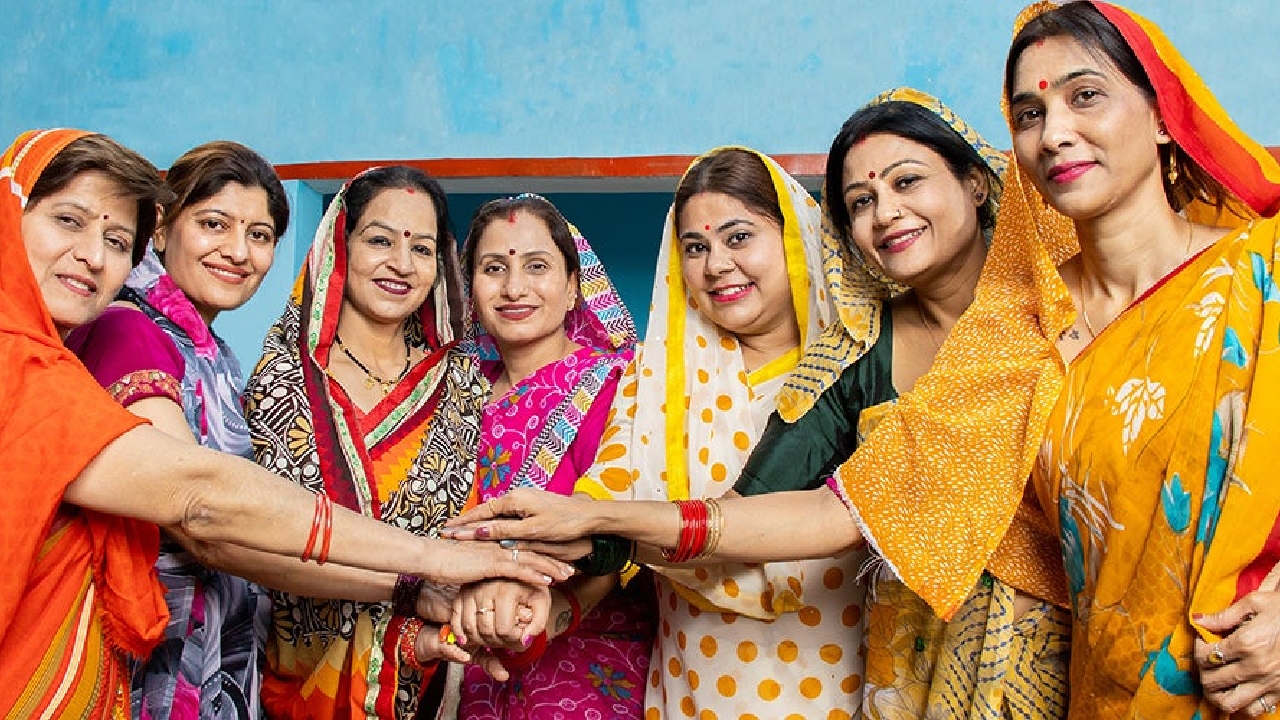
For decades, the Indian workplace had a predictable face. It was overwhelmingly male. Offices, factories, construction sites, and technical trades were spaces where men were expected to lead, earn, and dominate. Women, even when highly capable, were often encouraged to channel their energy within the walls of the home. Society had quietly written a script: men would build the economy, and women would build the family.
But somewhere along the journey of modern India, that script began to change. Today, if you walk through offices, research labs, airports, or even construction sites in cities like Mumbai, Delhi, or Bengaluru, the landscape tells a different story. Women are not merely present; they are leading teams, managing operations, driving cabs, repairing electrical systems, and running businesses. Domains that were once described as “a man’s world” are slowly transforming into spaces defined by competence rather than gender.
This shift is not sudden. It is the result of years of quiet cultural evolution. Education played a crucial role. As more families began investing equally in the education of daughters, women started entering professional fields once considered unconventional for them. Disciplines like Electrical Engineering and Mechanical Engineering, which once had very few female students, are gradually seeing greater participation. But the real transformation has been psychological. For generations, financial independence for women was often viewed as optional, sometimes even unnecessary. Today, it is increasingly seen as essential - not only for economic stability but also for personal identity. A salary cheque for many women is no longer just income; it represents dignity, agency, and the freedom to make choices about one’s own life. Economic realities have also played their part. Rising living costs in urban India have made dual-income households less of a luxury and more of a necessity. Yet what began as economic practicality has evolved into something far deeper — a recognition that women’s aspirations deserve equal space in the public sphere. Policy support and social awareness have further strengthened this shift. Legislative measures such as the Maternity Benefit (Amendment) Act, 2017 have reinforced the idea that workplaces must adapt to support women rather than expect women to withdraw from their careers.
Equally powerful has been the influence of visible role models. Leaders like Indra Nooyi, Nirmala Sitharaman, and Falguni Nayar have demonstrated that leadership is not defined by gender but by vision and resilience. Their journeys have quietly expanded the horizon of what young women believe is possible.
Perhaps the most beautiful aspect of this transformation is that it is not about replacing men. It is about redefining partnership. The emerging narrative is not of competition but of collaboration — where both men and women contribute to building families, businesses, and the nation’s economy.
Cultural shifts rarely happen overnight. They unfold slowly through changing attitudes in homes, classrooms, and workplaces. What we are witnessing today is not merely an increase in the number of working women; it is a deeper reimagining of gender roles in modern India.
And in that reimagining lies a simple but powerful truth: empowerment does not arrive through declarations. It grows quietly when society begins to believe that a woman’s place is not confined to one space — but wherever her ambition chooses to take her.
The writer is a freelancer who writes on social and gender issues; views are personal