IRIS Dena: The fragile order of the Indian Ocean
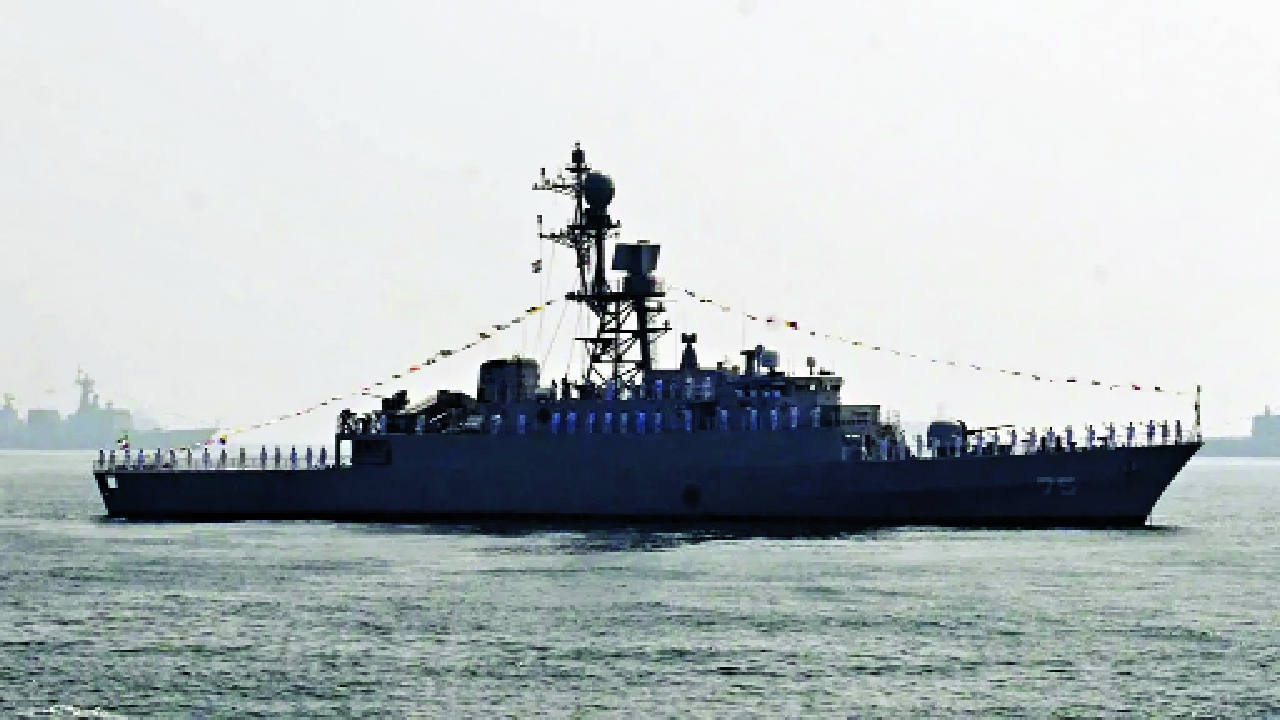
“Whoever rules the waves rules the world”— Alfred Thayer Mahan
The sinking of the Iranian frigate IRIS Dena near Sri Lanka has sent ripples far beyond the Indian Ocean. It is not merely a military incident; it is a stark reminder that the world’s oceans urgently require a stronger rule-based order. When warships clash near busy maritime corridors, the stakes extend beyond geopolitics to global trade, maritime security and international law.
On 4 March 2026, the Iranian warship was torpedoed by a US submarine in waters close to Sri Lanka while returning from naval exercises hosted by India. The vessel had recently participated in a multinational naval event and was sailing back when the attack occurred roughly 40 nautical miles off the Sri Lankan coast. Rescue operations by Sri Lanka recovered dozens of bodies and saved several survivors, while many sailors remained missing.
Strategically, the incident is historic. It is the first time since the Second World War that an American submarine has sunk an enemy warship in combat. The Indian Ocean, long seen as a theatre of strategic competition among global powers, has suddenly become a site of direct naval confrontation. But beyond the tragedy and geopolitics lies a deeper question: who governs the oceans?
For centuries, the seas were treated as open highways of commerce and power. In the early twentieth century, US President Woodrow Wilson articulated the idea that the seas should belong to all humanity, not just to naval powers. The principle of freedom of the seas became a cornerstone of international diplomacy. However, freedom without rules often leads to confrontation.
The modern attempt to create a legal framework for maritime governance is the United Nations Convention on the Law of the Sea (UNCLOS), adopted in 1982. The convention establishes the legal order of the oceans, defining maritime zones such as territorial waters, exclusive economic zones, and the high seas. It sets rules for navigation, resource use, environmental protection, and dispute settlement. In essence, UNCLOS functions as a constitution for the world’s oceans. It provides the backbone for maritime governance and establishes the rights and responsibilities of states in ocean space.
Yet the irony is glaring: the very country that often champions a “rules-based international order,” the United States, has never ratified UNCLOS. Although Washington generally follows many of its provisions, it remains outside the treaty framework. This contradiction weakens the global maritime legal architecture and complicates enforcement.
The sinking of IRIS Dena illustrates precisely why global maritime rules matter. The waters around Sri Lanka and India are among the most strategic sea lanes in the world. Nearly one-third of global shipping passes through the Indian Ocean. Energy flows from the Persian Gulf to East Asia, container traffic moves between Europe and Asia, and naval forces from multiple powers operate in the region.
When armed confrontation occurs in such waters, it creates legal and diplomatic ambiguities. Was the strike carried out in international waters? Did it violate the exclusive economic zone of a coastal state? What rights do neutral countries have when military actions take place close to their shores?
UNCLOS attempts to answer these questions through clear legal frameworks. It distinguishes between territorial seas, contiguous zones, exclusive economic zones (EEZs), and the high seas. Within these zones, states have specific rights and responsibilities regarding navigation, security, and resource exploitation. Without such a framework, maritime power risks reverting to what scholars once described as “gunboat diplomacy.”
The relevance of maritime law is even more apparent when we consider recent developments in the Indian Ocean. Reports have surfaced about American vessels approaching sensitive zones near India’s Lakshadweep region in earlier episodes, raising questions about maritime jurisdiction and freedom of navigation. These incidents demonstrate how fragile maritime stability can be in a region where multiple naval powers operate simultaneously. History offers an important lesson. Maritime dominance has long shaped global power. Mahan famously argued that sea power determines the fate of nations. Control of sea lanes once defined the rise of empires from Britain to the United States. Today, the same principle continues to shape the geopolitics of the Indo-Pacific. Yet in the twenty-first century, sea power must coexist with sea governance.
The oceans are not merely arenas for naval competition; they are lifelines of global civilisation. Nearly 90 per cent of world trade travels by sea. Fisheries feed billions. Undersea cables carry the internet that connects our digital world. Maritime conflict therefore threatens not just states but the functioning of the global economy.
This is why strengthening UNCLOS and the broader rule-based maritime order has become essential. The treaty provides mechanisms for dispute resolution through institutions such as the International Tribunal for the Law of the Sea. It also promotes peaceful navigation and cooperation among states. In a world where strategic rivalry is intensifying-from the South China Sea to the Indian Ocean-legal norms must act as stabilising anchors.
The tragedy near Sri Lanka should therefore serve as a wake-up call. When warships sink within sight of busy sea lanes, the message is clear: without robust global rules, the oceans could once again become theatres of unrestrained power politics.
And if the twenty-first century is indeed the century of the Indo-Pacific, then the future of international stability may well depend on whether humanity can transform the oceans from arenas of rivalry into spaces governed by law. As Mahan reminded the world more than a century ago, those who control the seas shape history. In our time, however, the greater challenge is not merely controlling the seas - but governing them.
The writer is a Professor at the Centre for South Asian Studies, School of International Studies and Social Sciences, Pondicherry Central University; views are personal