Winning without waging war
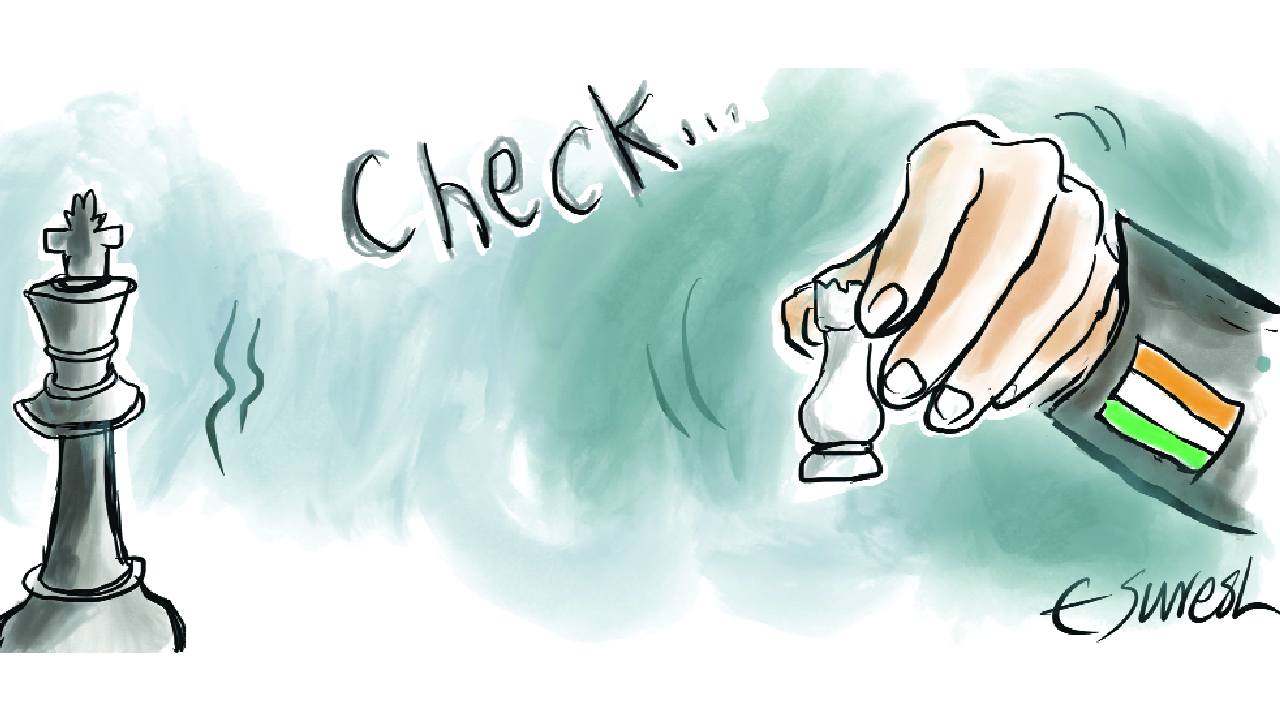
In an international system increasingly defined by conflict, coercion, and camp politics, India’s diplomatic journey over the last decade stands out for a different reason. It has expanded influence without intimidation, asserted national interest without isolation, and projected power without provoking fear. Under Prime Minister Narendra Modi, India has quietly scripted one of its most successful foreign policy chapters-one rooted in strategic autonomy and amplified by soft power, compassion, culture, and credibility.
Traditionally, global power has been measured through military strength, economic dominance, or alliance politics. Yet the Modi era has demonstrated that trust, consistency, and empathy can be equally powerful diplomatic currencies. India’s engagement with the world since 2014 reflects a conscious effort to align civilisational values with contemporary statecraft. The ancient idea of Vasudhaiva Kutumbakam — the world as one family-has moved beyond rhetoric to become a guiding principle in action.
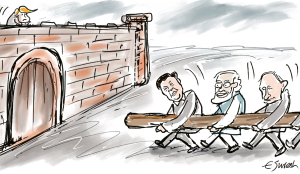
One of the most significant achievements of this decade has been India’s ability to maintain strategic autonomy in a sharply polarised global order. As rivalry intensified between major powers, many nations were forced into rigid alignments. India resisted this pressure. It deepened its partnership with the United States and Europe, preserved its long-standing ties with Russia, engaged actively with West Asia, strengthened the Quad, remained central to BRICS, and emerged as the principal voice of the Global South. This multi-aligned approach did not dilute India’s position; instead, it enhanced its credibility. India came to be seen not as a swing state, but as a stabilising force-capable of dialogue across divides.
This autonomy was reinforced by decisive diplomacy. Whether on energy security, defence procurement, or geopolitical crises, India took positions shaped by national interest and regional stability rather than external pressure. Far from alienating partners, this clarity earned respect. In a world of uncertainty, India’s predictability and restraint became assets.
Yet what truly distinguished India’s rise was its soft power surge-anchored in compassion and people-centric diplomacy. The COVID-19 pandemic was a defining moment. As vaccine nationalism took hold and supply chains collapsed, India stepped forward as the “pharmacy of the world”. Humanitarian assistance and disaster relief further cemented this image. From earthquakes in Nepal to cyclones in the Indian Ocean region, from evacuations during conflicts in Ukraine, Sudan, and West Asia to emergency aid in Africa and Asia, such outreach created goodwill at the grassroots level, strengthening people-to-people bonds that outlast political transitions.
India’s maritime diplomacy added another layer to this transformation. The doctrine of SAGAR-Security and Growth for All in the Region-redefined India’s role in the Indian Ocean as that of a net security provider. Rather than projecting dominance, India emphasised cooperation, capacity-building, and collective security. Small island nations and littoral states increasingly viewed India as a dependable partner rather than a distant power. Complementing this outward vision was the Sagarmala project, which strengthened India’s port infrastructure, coastal connectivity, and logistics. Together, SAGAR and Sagarmala linked diplomacy with development, trade, and security, reinforcing India’s blue economy ambitions and sustainable ocean governance.
Climate diplomacy became another arena where India led by solutions rather than sermons. The International Solar Alliance, launched with France, addressed the shared challenge of energy access for tropical and developing countries. Instead of imposing conditions, India offered technology, finance, and cooperation. This practical leadership resonated across the Global South and reshaped India’s image from a climate negotiator to a climate problem-solver.
Cultural diplomacy also experienced a revival rooted in India’s civilisational heritage. Yoga emerged as a global phenomenon, with the International Day of Yoga celebrated worldwide, symbolising wellness, balance, and harmony.
Diaspora engagement amplified this soft power organically. The Modi government transformed diaspora diplomacy from symbolic outreach into sustained engagement. Large-scale interactions, crisis evacuations, and consistent communication fostered a sense of belonging among overseas Indians.
The culmination of this diplomatic momentum was visible during India’s G20 presidency. By placing the Global South at the centre of the agenda, India amplified voices long marginalised in global governance. Development, digital public goods, climate finance, and inclusive growth took precedence over narrow power politics. India did not posture as a benefactor but spoke as a representative-drawing from its own developmental journey. This approach enhanced its legitimacy as a bridge between developed and developing worlds.
International recognition followed. Reflecting on India’s global role and leadership under Prime Minister Modi, French President Emmanuel Macron remarked, “India has shown that leadership today is about responsibility, credibility, and the ability to bring the world together around solutions.” The statement captured the essence of India’s diplomatic evolution-power exercised with purpose.
Critics often argue that compassion and realism cannot coexist in foreign policy. India’s experience over the last decade disproves this assumption. Humanitarian outreach, cultural diplomacy, and development partnerships did not weaken national interest; they strengthened it. Trust became a strategic asset. Credibility expanded India’s diplomatic space. Soft power reinforced hard choices.
Challenges remain. Resource constraints, rising global expectations, and geopolitical pressures will continue to test the sustainability of compassion-led diplomacy. To remain credible, outreach must be timely, transparent, and institutionalised rather than episodic. Yet the broader impact is undeniable. In an age marked by distrust, fragmentation, and conflict, India has emerged as a stabilising and empathetic actor. By blending strategic autonomy with humane engagement, power with purpose, and realism with responsibility, Modi’s India has not merely enhanced its global image-it has reshaped how influence can be exercised in the 21st century.
The writer is Professor at Centre For South Asian Studies, School of International Studies & Social Sciences Pondicherry Central University; views are personal