Why India’s MSME miracle is not working

In an age when MoUs are signed in astronomical numbers and youngsters brainstorm ideas to become entrepreneurs, UNFOLDED: What Ails India’s MSME and Startup Ecosystem? reads as a diagnosis of a chronic ailment along with a prescription for a cure. With his stint in the Ministry of MSME as a Joint Secretary, P Sesh Kumar, who also served as Director General of the Comptroller and Auditor General (CAG) of India, reveals his empathy for millions of entrepreneurs who battle odds to keep the engines of enterprise humming across India.
The easy path for a youngster in India is to find a government job. That takes care of even post-retirement financial needs. This explains why an MBBS or an MBA stands in a queue for police constable recruitment in a state. The tough path, on the other hand, is to hit the ground with passion and create an enterprise. For successful endeavours, rewards for risks outweigh hardships. But statistics reveal, as underlined by Kumar in the book, that most such dreamers are pushed into despair.
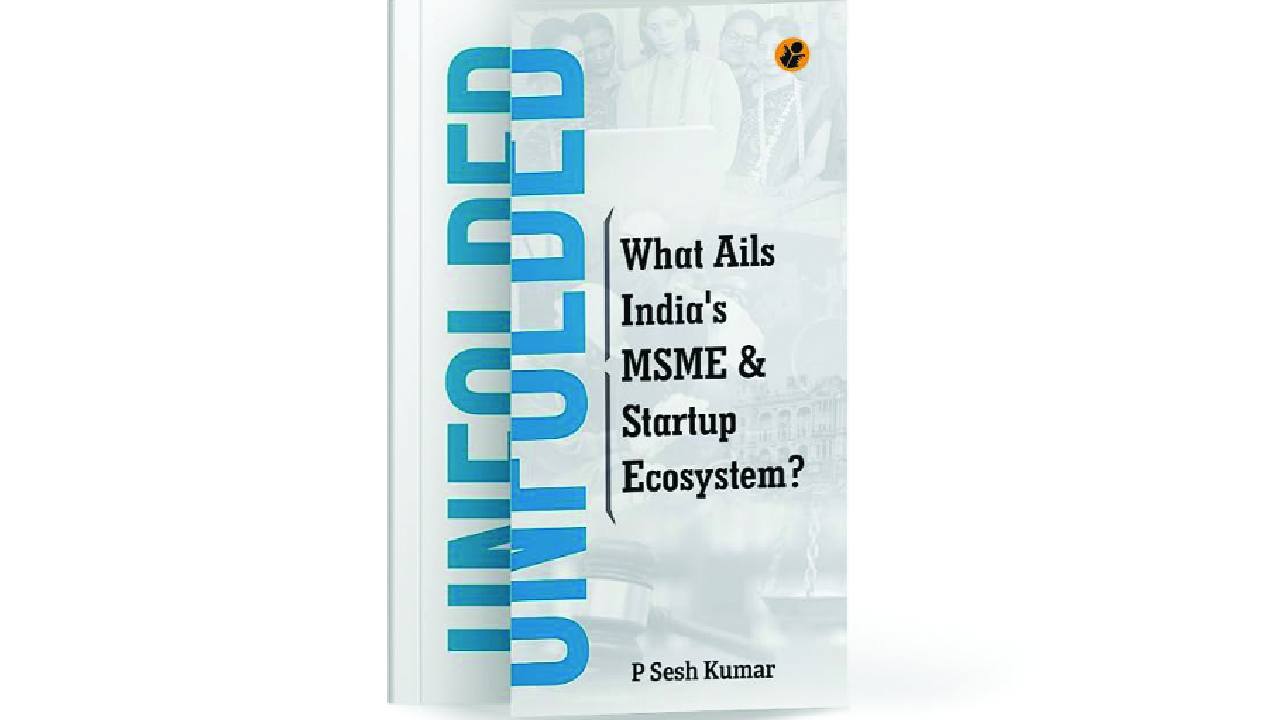
Kumar stays unbiased and bares the full script — of success and despair. He dissects successes and diagnoses systemic inbuilt faults that turn dreams into nightmares. Across 26 chapters, spread over 391 pages and accompanied by substantiating references, Kumar has produced a rare book that opens up the MSME world to common readers in language that is simple and lucid. Before I read Kumar’s scholarly work, a Bengaluru-based technocrat with over 20 years of professional experience in the US shared his disappointment with “the system”. He believes India seriously lacks skilled manpower in the semiconductor sector. After working for over 35 years with large semiconductor MNCs, he wanted to contribute by imparting knowledge to youngsters. A Chief Secretary in a state called him for a meeting after receiving his email proposal. But after he completed one-fourth of his presentation, the bureaucrat asked: how much are you going to invest? He had an idea backed by experience, but no corpus of hundreds of crores. The Chief Secretary ended the meeting promising to call him the next day. That call never came.
In the book, Kumar lists lack of skilled manpower as a serious challenge for MSMEs. The same holds true for start-ups. The author cites studies from the US to India to show that finding skilled workers remains daunting. Access to credit is another chronic roadblock. Compliance, he says, is the mother of all burdens for MSMEs. To succeed amid such monstrous challenges, one must be fired with inextinguishable passion and insatiable hunger. Kumar dispels doubts by citing examples like Zerodha, a tech giant in stock broking that met legacy competition and even dwarfed some institutions in scale — without funding. Kumar credits its success to innovation. In FinTech, he notes the success of UPI and the rise of large payment solution providers. UPI is now India’s showpiece success story, spawning numerous enterprises. But Kumar also recounts the fall of EdTech. Many firms surfaced during the Covid-led lockdown but vanished
just as quickly, leading to layoffs and disruption.
Kumar acknowledges exponential start-up growth and spread into Tier II and III cities, which should please policymakers. States such as Maharashtra and Tamil Nadu have created enabling frameworks. Yet the book reveals that MSMEs and start-ups still lack a uniform support system across the country.
Kumar also gives insider accounts from his MSME Ministry days. Top bureaucrats serve briefly and have low stakes. Boards often get politically parachuted chairpersons without expertise. This may explain why China and Germany have excelled in MSME support while India still aspires.
Large corporations gain from write-offs when they fail. MSMEs do not. They face delayed payments, lack of credit and little compensation for shocks like Covid or demonetisation.
India’s MSMEs contribute roughly 30 per cent of GDP, 40 per cent of exports, and employ about 110 million people. Kumar calls for a leap of faith from policymakers to unlock suppressed potential. Published by The Browser, the book outlines steps to make MSMEs India’s true growth engines.