Why India Needs Joint Military Reform
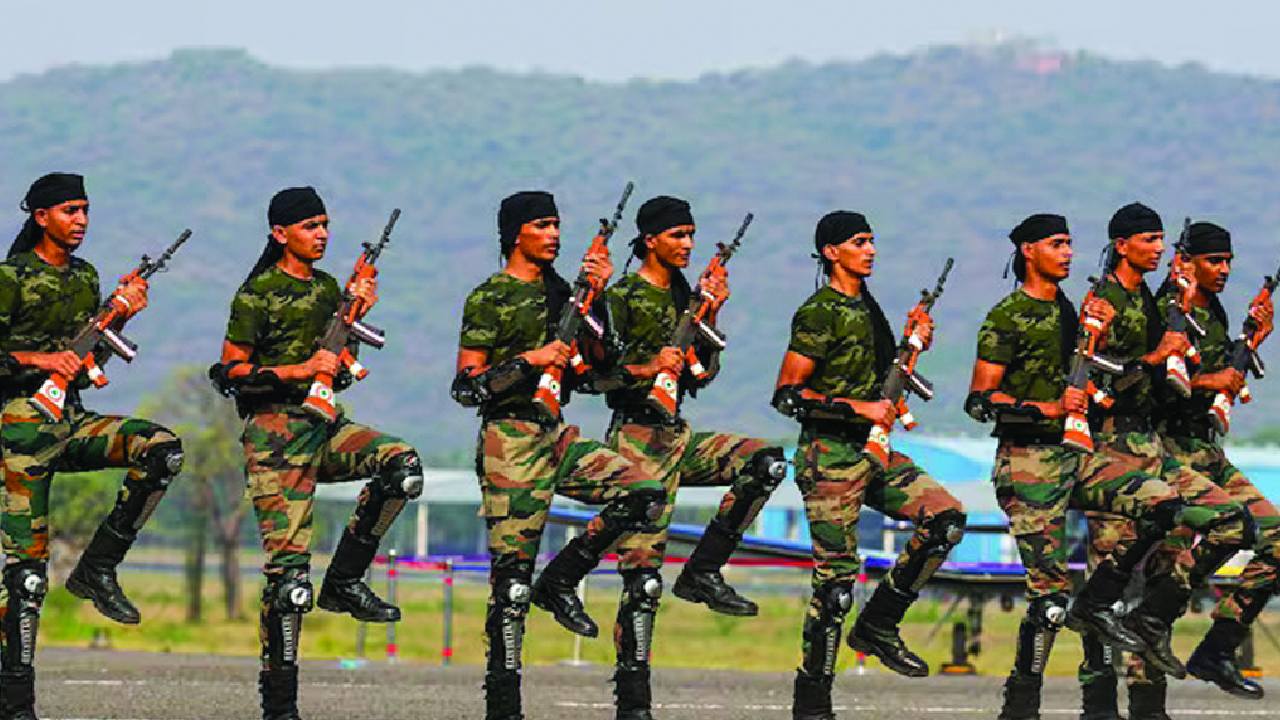
Terrorists killed or terror HQs destroyed are critical to bringing normalcy and prosperity in Jammu and Kashmir. However, the key is damage to the Pakistani military and a strategic message of intent that retaliation will go into Pakistan’s heartland and its military bases.
Also, it is necessary to bust the belief of the Pakistani people that they have a formidable army that defends no matter what. We all know the Pakistani Army is a thoroughly corrupt organisation. However, these two messages, part of a larger narrative, have not gone to the world.
The momentum of battle changed in India’s favour on May 10 when we hit PAF bases, including Nur Khan. It also took the Pakistani people by surprise. However, the ceasefire came prematurely. We let go of the strategic advantage we had gained; however, the lessons need to be drawn and then implemented in letter and spirit.
The narrative building was almost unclear from a strategic point of view. Only facts were bluntly put forward, and since we did not choose to share all the facts, the ones shared could not carry the weight they deserved.
In future, we would like to be better prepared and convey our strategic intent clearly. Obviously, the Directorate of Strategic Communication of the Indian Army did a fabulous job; however, the bigger picture of strategic messaging achieved via our punitive action was missing.That needs to come through in future battles or even during peacetime. Ultimately, the DGMO of the three forces had to hold fort. We need to be better prepared for the future.
When we talk about synergy and jointmanship, it is felt that the Directorate of Strategic Communication should be a tri-service command function. The Additional Directorate of Strategic Communication cannot continue to function as an army-only arm after Op Sindoor.
Continuous strategic communication mandates the three arms to have a joint strategic communication cell. Towards that end, a Joint Strategic Communication Cell may come up under the CDS with a three-star officer in charge.
The Strategic Communication Directorate may talk about strategic matters only.And obviously strategic matters are tri-service in nature. Also, it is felt that the overall discussion on the evolution of warfare (after studying the Russia-Ukraine war or Israel-Hamas conflict) is not amalgamated with strategic communication.
The Strategic Communication Directorate should then directly go under the CDS and should not operate under the VCOAS.DG Strategic Communication should be a three-star officer, preferably from the Air Force. Strategic communication obviously needs a bird’s-eye view, which the Air Force may be able to provide.
Coming to another critical aspect, connecting the tactical battlefield and strategic decision-making requires AI in modern-day warfare.This is largely dependent on satellites and bandwidth. AI can also suck you into a mosaic of warfare if the adversary has made the first AI move.
So staying ahead of the curve is important. For that, we need thousands of military satellites to be put in space at the earliest. We are at the stage of C5IR; however, we need to go to C5IR star 2. This star 2 refers to the AI integration of data.The Indian Army has announced 2026 and 2027 as the years to focus on strengthening the ‘networking’ of the force, with 2026 specifically declared as the “Year of Networking & Data Centricity”.
This initiative is part of the Army’s broader ‘Decade of Transformation’ (2023-2032), which aims to shift from isolated, platform-centric systems to a modern, data-driven, and fully integrated force. Now, to involve AI in this, we need to share data; we are generally reluctant to do that. However, that may be the key towards modern-day warfare and our expertise in it.It is critical also to now talk about the raising of a Rocket Force under the CDS. A localised missile force under Artillery may not serve a strategic purpose. Russia decided to have a separate Rocket Force like China after it burnt its hands in the Russia-Ukraine war. Pakistan has already announced its plans to have the same, so it is critical to have a separate rocket force which is under the direct command of the CDS.
Coming to Integrated Battle Groups, they may require integration with the Air Force as well to protect them from the diverse kinds of drones that are available to various armies of the world. IBG is being used as a test bed in the Mountain Strike Corps. A speedy induction may be of importance.Our nuclear doctrine needs a fresh look after Operation Sindoor.
Second use of nuclear weapons is no good deterrence against a country like Pakistan. Also, while our delivery systems are among the best in the world, we need to carry out more nuclear tests to develop suitable tactical weapons in the future. So not signing the CTBT is only of use if we exercise the freedom associated with it.
The writer is a defence analyst and writes extensively on geopolitics and strategic affairs; views are personal