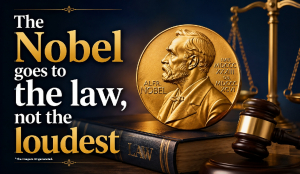
When power trumps principles
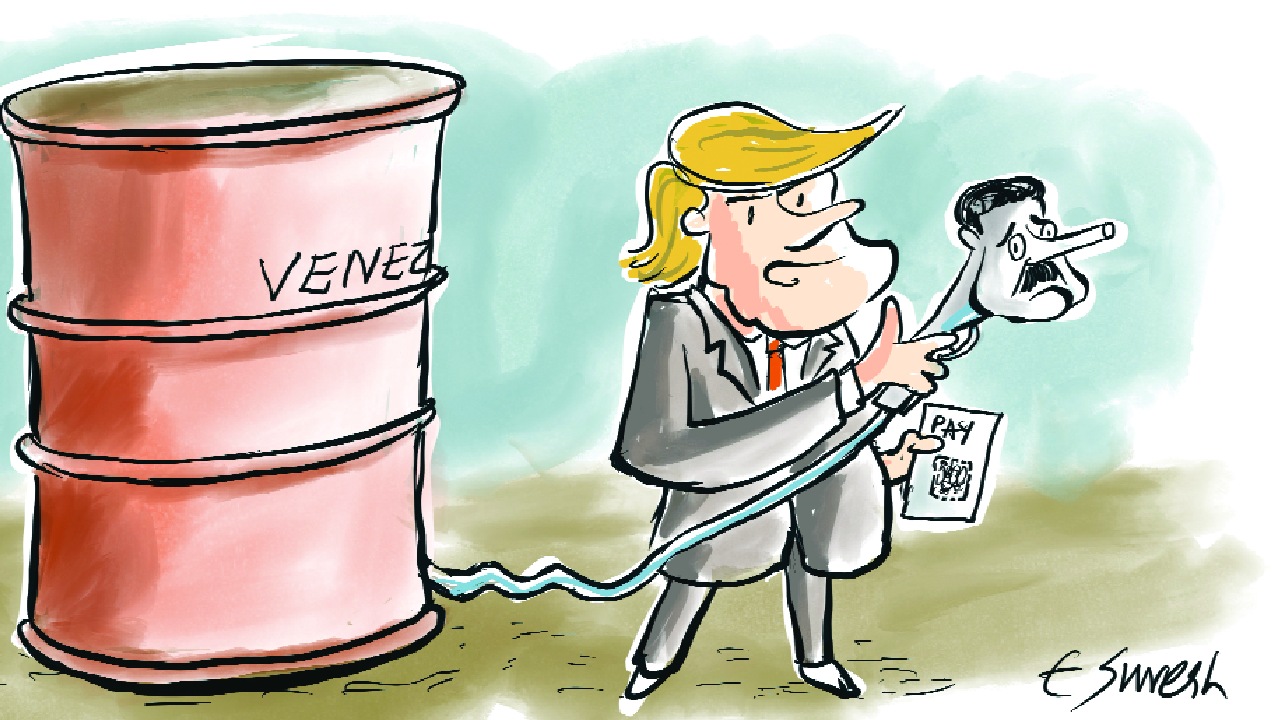
In the first weeks of January 2026, the United States executed one of the most audacious extraterritorial operations of recent decades. In a surprise move in Caracas, U.S. forces detained Venezuelan President Nicolás Maduro and First Lady Cilia Flores and transported them to New York to face federal criminal charges. The operation, carried out without the consent of the Venezuelan state or authorisation from the United Nations, was swiftly justified by Washington as a necessary step against alleged narco-terrorism networks and illicit trafficking.
Yet the shockwaves from this action have been felt far beyond Venezuela. By deploying military force inside a sovereign country to seize its sitting head of state, the United States has reopened uncomfortable questions about the nature of global order. If international law can be overridden by unilateral power, critics argue, then its value as a shared framework collapses into selective rhetoric.
At stake is not merely Venezuela's political future but America's own standing as the chief proponent of a rules-based international system. For decades, Washington has positioned itself as a guardian of global norms, urging restraint, legality, and multilateralism - especially when criticising rivals such as Russia and China. The Caracas operation, however, appears to contradict those principles. It suggests that the rules apply firmly to others but flexibly to the most powerful.
The United States has a long history of employing extraordinary measures in the name of security and justice. From the "kill or capture" campaigns in Iraq to drone strikes across West Asia and South Asia, Washington has often argued that exceptional threats require exceptional responses. Even the invasion of Afghanistan after September 11, initially framed as self-defence, gradually expanded into a prolonged occupation justified under counter-terrorism imperatives. Over time, the line between legitimate self-defence and interventionism became increasingly blurred.
The Venezuelan case represents a sharper departure. This was not a non-state militant leader or an insurgent commander operating beyond any recognised authority. Maduro, however contested his legitimacy, remained the de facto head of state, recognised by several governments. U.S. officials pointed to sealed indictments and alleged ties to the so-called Cartel of the Suns - designated by Washington as a terrorist organisation in late 2025 - to defend their actions. Critics counter that criminal charges issued under domestic law cannot legitimise the use of force on foreign soil, especially against a sitting president.
Across Latin America, the response was swift and unusually unified. Governments from Mexico to Argentina condemned the operation as a blatant violation of sovereignty and the UN Charter. Mexico's President Claudia Sheinbaum categorically rejected any precedent that could justify U.S. military action in the region. Colombia's President Gustavo Petro ordered heightened military readiness along the Venezuelan border, warning that similar actions against his country would provoke resistance. Brazil, Chile, and others echoed these concerns, stressing that unilateral interventions threaten regional stability.
Global unease extended well beyond the Americas. At an emergency session of the UN Security Council, even close U.S. allies expressed discomfort. France and Denmark criticised the operation as a breach of international law, though Washington's veto ensured that no binding resolution followed. This hesitation among European partners revealed deeper anxieties within the Western alliance about an increasingly unilateral United States and the erosion of collective decision-making.
The episode also exposed a striking double standard. European capitals have consistently condemned Russia's invasion of Ukraine and warned against China's coercive posture towards Taiwan. Yet had Moscow abducted Ukraine's president under the pretext of criminal prosecution, or Beijing seized Taiwan's leadership citing domestic law, the Western response would almost certainly have been swift and severe. In the Venezuelan case, reactions were notably restrained, reflecting Europe's dependence on U.S. security guarantees and its difficulty in confronting American overreach.
Russia and China were quick to exploit this contradiction. Moscow denounced the U.S. action as unlawful even as it continues its own war in Ukraine, while Beijing framed it as hegemonic aggression despite its assertiveness in the South China Sea. Their criticism may ring hollow, but it underscores a deeper truth: major powers increasingly invoke international law selectively, discarding it when it constrains their interests. In doing so, they collectively weaken the system they claim to defend.
The broader implications are troubling. By sidelining established norms, Washington risks creating precedents others may follow. China could cite the Venezuelan operation to justify coercive actions in the Indo-Pacific, while Russia may use it to further erode U.S. moral authority. What was once a cynical observation - that power ultimately dictates outcomes - now appears increasingly descriptive of international politics.
The United Nations, conceived to restrain unilateral aggression, has repeatedly been marginalised by its most powerful members, from Iraq in 2003 to Venezuela today. The selective application of international law has hollowed out the post-war order, leaving smaller and middle powers vulnerable to coercion.
For countries like India, the Venezuelan episode is a sobering reminder of the fragility of global norms. As New Delhi navigates strategic autonomy amid intensifying great-power rivalry, it highlights the risks of relying on any single power to uphold international law consistently. It also underscores the urgency of strengthening multilateral institutions and reviving non-aligned diplomacy that prioritises dialogue over force.
Ultimately, the United States faces a paradox of its own making. By asserting unilateral power under the banner of law enforcement, it undermines the very legal frameworks that sustain global stability. If international law continues to be treated as an instrument rather than an obligation, the world risks sliding towards an order where force prevails over principle - and sovereignty becomes conditional. Whether nations can reverse this drift and rebuild a genuinely rules-based system remains one of the defining challenges of our time.
The writeris an author, political analyst, and columnist; views are personal