When politics had moral role models
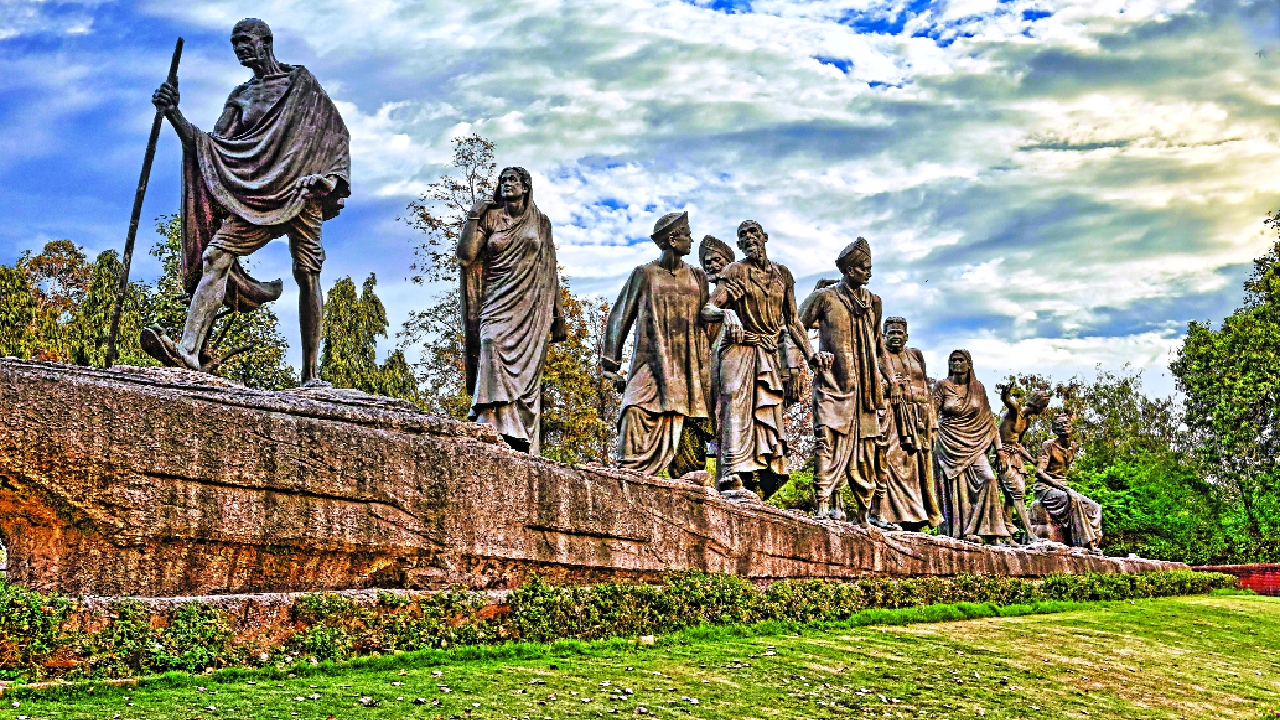
There are many quotes attributed to Mahatma Gandhi that often require verification-whether it is “An eye for an eye makes the whole world blind,” or the idea that when someone slaps you on the right cheek, you offer the left. Yet perhaps one of the most relevant principles associated with Gandhi today is simpler and more direct: The best politics is right action.
At a moment when the world appears increasingly unstable-conflicts escalating in regions such as the Middle East, threats of military retaliation, and the looming possibility of wider war-the need for moral leadership feels more urgent than ever. When global politics seems driven by power, retaliation, and strategic interests rather than human consequences, the world longs for leaders who remind us that peace is essential for survival and flourishing.
There was a time when figures like Mahatma Gandhi and Martin Luther King Jr. served as moral role models for political leaders. Their ideas shaped a generation that believed politics could be guided by ethics as much as by ambition. Leaders looked to such figures not for perfection but for principles-lessons about courage, restraint, and justice.
Today, however, we live in an age of relentless scrutiny and “cancel culture”, where historical figures are often judged solely by their flaws. Certainly, no individual is beyond criticism, and honest historical reflection is necessary. Yet in our eagerness to expose mistakes, we sometimes forget the moral frameworks these leaders provided. Their influence once encouraged politicians to measure themselves against ethical standards that seem increasingly absent in contemporary politics.
One Indian politician who embodied many of Gandhi’s ideals was Shankar Dayal Singh, who, as a young man, had the rare opportunity to meet Gandhi in 1947, leaving a lasting impression. Though Gandhi would be assassinated within a year, the values he represented-simplicity, moral courage, and service-remained deeply etched in Singh’s outlook. In 1971, Singh joined the Congress and was among the youngest members to serve in the Fifth Lok Sabha. He conducted himself with dignity and integrity, as a dynamic yet idealistic politician untouched by moral and financial corruption, mirroring Gandhi’s teachings.
Much like Gandhi, Singh demonstrated defiance towards those in power. However, in Singh’s case, it was the Congress leadership under scrutiny. During the Emergency, Singh quietly helped in sheltering political figures such as Krishan Kant despite his own proximity to the leadership, which reflected a moral courage rarely seen in political circles and reaffirmed Gandhi’s philosophy: The best politics is right action. With Gandhi acting as his moral compass, Singh gave weight not to ambition and power, but to idealism and the dignity of doing what is right for the general public.
In one of his notable works, Emergency: Fact and Fiction, Singh drew a striking contrast between Indira Gandhi and Mahatma Gandhi, arguing that the two figures represented opposing moral visions of India. He wrote that while Mahatma Gandhi sought to uplift and live among the poor, Indira Gandhi’s politics increasingly distanced itself from those ideals. He argued that Mahatma Gandhi wore hand-spun khadi and attempted to dissolve divisions of caste and religion, while Indira Gandhi’s politics deepened social and political lines.
The contrast extended symbolically to lifestyle and philosophy: Singh advocated throughout his life for khadi, swadeshi goods, and the promotion of Hindi as a unifying cultural language. Yet his advocacy was rooted not in exclusion but in a broader respect for India’s religious and cultural diversity. Despite his contributions as a parliamentarian, writer, and advocate of Gandhian ethics, figures like Shankar Dayal Singh have gradually faded from public memory. Our age tends to remember scandals and controversies more readily than integrity and service. In an era of social media, where public service is curated and admiration is carefully manufactured, this was an organic affection-free of transaction or calculation, born simply from Singh’s lifelong commitment to moral integrity and virtue of character.
Gandhi himself has been the subject of intense criticism in recent years. Yet acknowledging his flaws does not erase the transformative power of his ideas. His philosophy of non-violence and civil resistance shifted the balance of power away from weapons and towards the collective strength of ordinary people.
Perhaps the deeper question we must ask ourselves today is this: too often, we vote based on narrow calculations, choosing what seems like the “lesser evil” rather than asking larger moral questions. We may ask whether a politician will benefit us personally, but rarely do we ask whether their actions will be just for others, for the environment, or for future generations. The world today could benefit from a return to such idealism. As Gandhi reminded us, the best politics is right action. And right action begins with the choices we make as citizens.
Rachita Ramya is an author and public health researcher; views are personal