Vehicle taxation can be an effective policy lever to control pollution
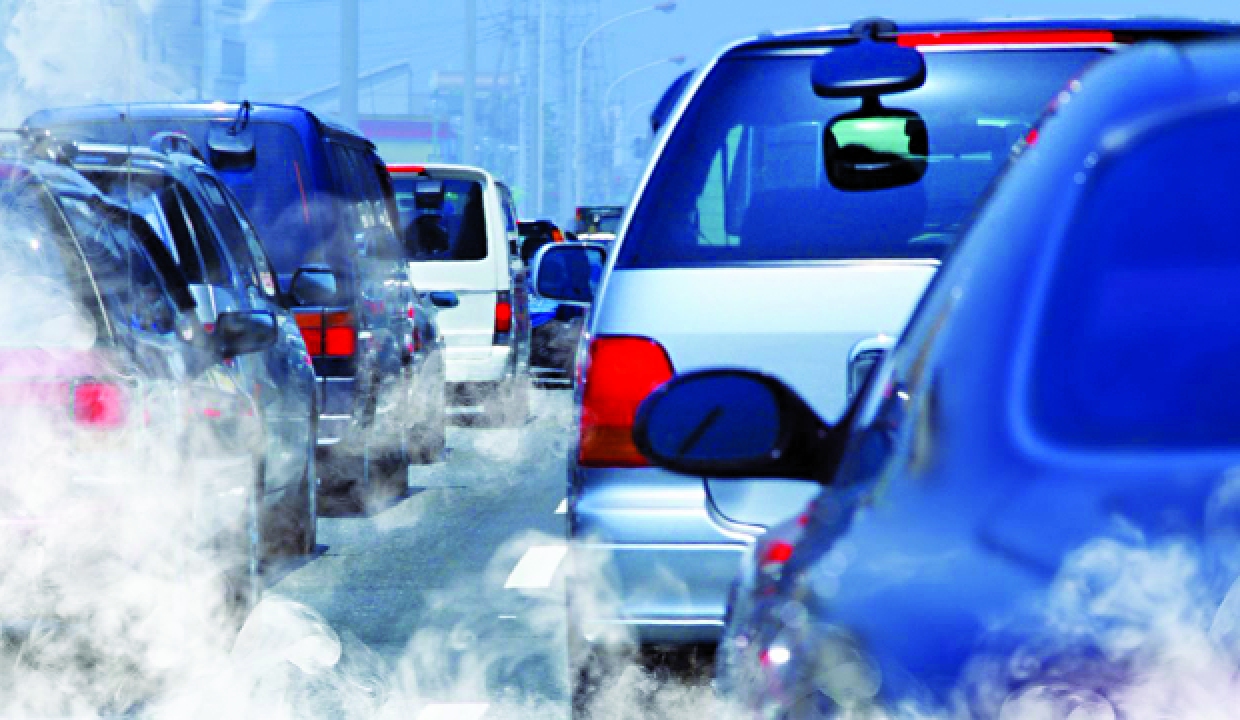
India’s auto policy debate has a familiar flaw: it loves grand objectives and then settles for blunt instruments. If the goal is cleaner air, lower emissions and a faster transition to better mobility, then a graded GST structure on vehicles is far more sensible than pretending every technology deserves the same treatment. The tax system should reward the vehicles that pollute less in the real world, not the ones that merely look cleaner on a certification sheet.
That is the core problem with the current debate. We keep talking about electric vehicles as though they are the only answer, hybrids as though they are a compromise, and conventional vehicles as though they are the enemy. Reality is messier. India is not going to jump from a fossil-fuel-dependent fleet to a fully electric one overnight. Nor should policy pretend otherwise. What the country needs is a tax framework that recognises the transition, accelerates the cleanest options, and stops rewarding high-emitting vehicles with the same fiscal generosity as cleaner ones.
The European Union already understands this logic. Across Europe, vehicle taxation is routinely linked to emissions, especially carbon dioxide. According to the European Automobile Manufacturers’ Association, 24 EU member states levy car taxes partially or totally based on CO2 emissions and/or fuel consumption. That does not mean Europe has found a perfect formula. But it does mean it has accepted a principle India still hesitates to embrace. Several European countries have taken this approach in practical, not ideological, ways. France uses a malus system that penalises higher-emission vehicles at the point of registration. The Netherlands has long linked car taxation to environmental performance. Ireland and Spain, too, have used emissions-based structures in registration and annual taxation. The details differ, but the principle is consistent: taxation can be used to nudge the market toward cleaner choices.
India should take that lesson seriously, especially now that its own regulatory framework is tightening. The next phase of corporate fuel economy norms, CAFE-III, is expected to push fleet-average CO2 emissions sharply lower over the coming years. Draft proposals and recent reporting indicate that the regime may begin around April 2027 and extend through March 2032, with much tougher fleet-average targets than earlier norms. That matters because CAFE-III will force manufacturers to think harder about efficiency, electrification and mass reduction. But regulation alone is only half the story. Taxation has to pull in the same direction. That is where a graded GST system makes sense. Start with the lowest possible baseline for zero-emission battery electric vehicles and hydrogen vehicles. Then move upward through plug-in hybrids, strong hybrids, efficient petrol vehicles and, eventually, the highest rates for the most polluting vehicles. The sequence should be transparent and rational.
The key, though, is that emissions cannot be measured on carbon alone. CO2 matters for climate, and there is no point pretending otherwise. But urban air quality is shaped just as much by nitrogen oxides, particulates, carbon monoxide and unburnt hydrocarbons. A car that looks respectable on a CO2 metric can still be quite damaging in the conditions in which Indian vehicles actually operate. That is why the tax conversation has to broaden beyond carbon.
This is also why real-world testing must be central. Laboratory certification is useful, but it is not enough. Vehicles behave differently in congestion, in hot weather, on poor roads, during repeated accelerations and braking, and across mixed driving cycles. If India wants a credible graded tax system, it cannot rely only on a test cycle that manufacturers can optimise around. It needs a metric that reflects actual use. Indian roads are not European roads. A policy that works on paper but fails in traffic is not policy; it is theatre. If the government is going to link GST rates to emissions, then those emissions should be measured in a way that captures real-world performance, not merely laboratory compliance.
The beauty of a graded GST framework is that it would create a clear market signal without needing constant administrative improvisation. Buyers would know exactly what they are being rewarded for. Manufacturers would know exactly what they need to improve. And the state would stop pretending that all “clean” vehicles are equally clean. A plug-in hybrid that is regularly charged and driven mostly on electricity is one thing. A large hybrid that quietly relies on its petrol engine most of the time is another. A battery EV or hydrogen vehicle with no tailpipe emissions is in a different category altogether. Tax policy should reflect those distinctions, not flatten them.
It would also avoid one of India’s recurring policy mistakes: treating technology labels as moral categories. The problem with that approach is that it ignores usage. An EV charged on a coal-heavy grid still needs a careful policy framework, even if its tailpipe is clean. A hybrid may be far better than a conventional petrol car in the near term. A plug-in hybrid may be a sensible bridge technology. None of these realities fit neatly into the simplistic language of winners and losers. A graded tax structure is much better suited to the real transition India is undergoing. There is also fiscal logic here. India cannot afford to give away revenue without a rationale, especially when road transport imposes huge public costs through pollution, congestion and health damage. If the tax system is going to forgo revenue on one class of vehicles, it should do so because those vehicles are delivering demonstrably cleaner outcomes. That is why the baseline for zero-emission vehicles should be the lowest, but not because they are fashionable. It should be low because they impose far less local pollution. The same logic should apply, in descending order, to hydrogen, plug-in hybrids, strong hybrids and efficient combustion vehicles.
The temptation in Delhi is always to believe that the next policy announcement will solve everything. It will not. But a graded GST system, tied to real-world emissions and not just carbon, would at least be a serious attempt to align tax policy with environmental reality. It would acknowledge that climate and air quality are related but not identical problems. It would recognise that the transition to cleaner mobility has stages. And it would reward the vehicles that actually help, rather than those that merely sound progressive. If India wants to clean its air without distorting its market, it should stop thinking about vehicle taxation as a blunt revenue tool. Tax the polluter more. Tax the cleaner vehicle less. Measure emissions honestly. Include NOx and particulates, not just CO2. And build the structure so that the cleanest vehicles begin with the lowest GST rate and the dirtier ones climb progressively higher. That is not radical. It is simply the minimum standard of common sense.
The writer is Director and the Printer & Publisher of The Pioneer; Views presented are personal.
Leave a Comment
Comments (1)
This idea could work for India. However, it demands strong integrity from policymakers; if they downplay the seriousness of this issue, corruption will intrude at some point in the process.