Even Caesar did not send a lie to the Senate
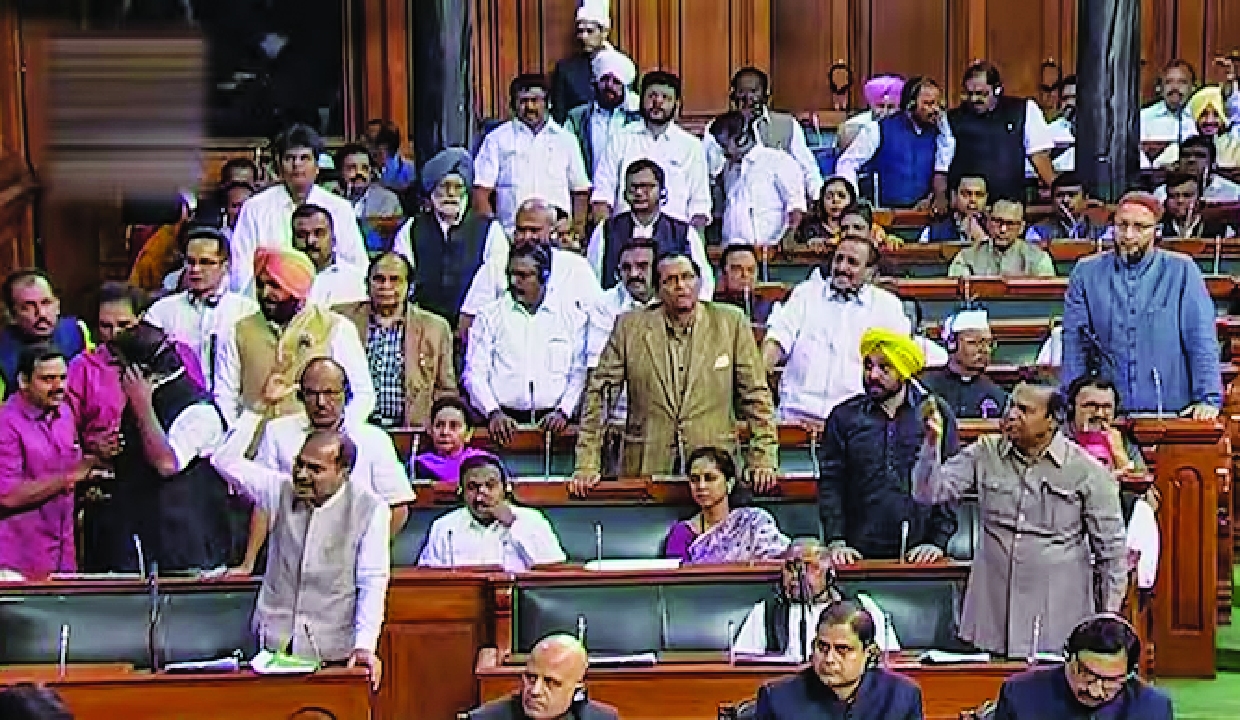
The ensuing Monsoon Session of Parliament is bound to be turbulent, as the Congress seeks privilege proceedings against Defence Minister Rajnath Singh, alleging that he misled Parliament over Operation Sindoor about the six soldiers who laid their lives in the line of duty. The Speaker, Lok Sabha, may seek the comments of the Minister or refer it to the Committee on Privileges for enquiry and report. The Speaker has the inherent power to close a matter if satisfied with the explanation tendered. The veracity or otherwise of the allegation will be ascertained after due procedural enquiry. However, the central question is what consequences would visit if a minister deliberately misled the Parliament.
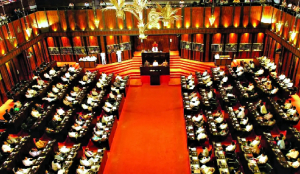
The veracity of statements made in the legislature by the members, including ministers, is a fundamental postulate of a deliberative democracy. Ordinarily, it is presumed that the statements made or answers given in Parliament by ministers are sacrosanct, unless proved otherwise. Parliament can function efficiently and effectively as the supreme deliberative body of the nation if accurate and complete information is furnished to it. The Council of Ministers is accountable to the Parliament and the information that they give to Parliament must be correct and complete, without which the doctrine of accountability would become a myth. Accountability of the executive to the legislature is the linchpin of our parliamentary democracy and therefore, it is incumbent upon the ministers to furnish correct and complete and timely information to Parliament and its Committees.
Truth, honesty and integrity are quite integral to the proper and effective functioning of Parliament. Not only the ministers and the members, even the witnesses deposing before parliamentary committees are deemed to be under oath to speak truth, and complete truth. It is invariably made known to the witnesses that the deposition which they shall make shall be true, that nothing will be concealed and that, no part of their testimony shall be false. Suppression of truth, giving convoluted answers or to mislead Parliament or its committees constitutes a breach of privilege. Therefore, greater responsibility is cast on a minister sworn to bear true faith and allegiance to the Constitution and to discharge his duties faithfully and conscientiously as a Minister for the Union.
An inaccuracy or chance mistake may inadvertently creep in the statements made or replies given by a minister in Parliament. The Rules of Procedure and Directions of Parliament provide that in case any inaccuracy or mistake is detected in any answer given or statement made by a Minister, the same shall be pointed out as soon as it is detected and the mistake rectified with the permission of the Speaker. There are many instances of the Ministers making the correcting statements, especially of the answers given to questions. But making a misleading statement deliberately or concealing information from Parliament constitutes breach of privilege, unless the Minister invokes the plea of national interest. But making a false or deliberately misleading statement is grossly unethical, against sacrosanct parliamentary conventions and unpardonable. Untruthful or misleading statements undermine parliamentary democracy.
'Satyae Meva Jayatae' and 'Yato dharma tato Jaya' are the foremost ideals of India's great civilisational heritage. Many consider India as the mother of Democracy, and justifiably, with reference to Vedic texts and post-Vedic literature. The Indian civilisational texts of great antiquity lay immense stress on truth and righteousness. There are inscriptions in the old Parliament Building taken from the Mahabharata and the Manusmriti reminding that members of the Assembly must speak with righteousness, and the righteousness must be based on truth, and truth is not truth if it leads to deceit. Further, one must not enter either an assembly hall, or he must speak there with all the righteousness, for one who does not speak or one who speaks falsely does himself in the sin involve equally.
Even in the republics of Ancient Greece and Rome, truth was considered as the cornerstone of the rule of law, justice and public trust. Honest speeches were viewed as necessity of informed decision-making. In the eponymous play of Shakespeare, when the wife of Julius Caesar beseeches and entreats him not to attend the Senate as she fears for his safety and asks him to send a message to the Senate that 'he is sick', Caesar questions, 'Shall Caesar send a lie?' to the Senate. He declines to say that he 'cannot come today' to the Senate' as that would be false, and prefers to say 'I will not come today'. Eventually, instead of sending a lie, he prefers to go to the Senate.
There is no Indian instance of a Minister resigning on the ground of misleading the Parliament, though many ministers have resigned earlier on ground of corruption. In the United Kingdom, there are many instances where ministers resigned for misleading the Parliament, once it was so established. In the British parliamentary usage, officials rather use the term 'mislead' instead of 'lied', because the charge of 'lying' is much serious, as it requires to meet more rigorous test. In the year 2023, Boris Johnson resigned as an MP after learning he faced sanctions. Earlier, he had resigned as PM in 2022 after wide public pressure.
The Privilege Committee of the House of Commons had found that he had deliberately misled Parliament over statements related to Partygate. In 2018, the Home Secretary resigned, admitting that she had unintentionally misled the House over immigration removal targets. Yet another historical example is of John Profumo, Secretary of State for War, who resigned from the government and Parliament in 1963, as he had misled the House of Commons, first denying that he had scandalous relations with someone but later admitted that his statement was untrue. These instances show that the convention of resignation for misleading the Parliament deliberately is political as well as procedural. The resignations were forced by sensitivity to public pressure, pressure from within the party and the outcry by the media. However, it has become an entrenched and salutary parliamentary convention in the UK that if a minister deliberately misleads the Parliament, he will lose his ministry as well as his membership of Parliament.
There is no doubt that the Ministry of Defence will place the full and accurate facts before the Parliament to remove all the misgivings, as it is inconceivable that the Hon'ble Defence Minister, a veteran Parliamentarian of long standing, of fair image and deeply immersed in parliamentary and constitutional conventions, would think even remotely to mislead the Parliament, undermining the supreme sacrifice of our gallant soldiers. Let the facts speak for themselves once the matter comes on the floor of the House.
The author is ex Additional Secretary, Lok Sabha & a member of the Supreme Court Bar Association; Views presented are personal.
Leave a Comment
Comments (1)
The author has brilliantly and pain staking ly chronicled inter alia the Parliamentary provisions , instances in British House of Commons from time to time where the Minister not only lost his job and Membership too on apprising the House wrong position . However the power of Hon’ble Speaker, (the Referee in this case between the involved Minister and Opposition en masse ) of permitting the former to deposit a Statement correcting the his reply in issue virtually exonerates the Minister. I agree in toto that Committee on Previledges is also there sitting without work at another corner In Parliament to go into the cases of infringement of Parliamentary Previledges (enjoyed by Parliamentarians of getting true position in this case about lives lost in Op Sindoor) through out the football game in Parliament. These are my personal views