Viksit Bharat needs skilled India, not just certified India
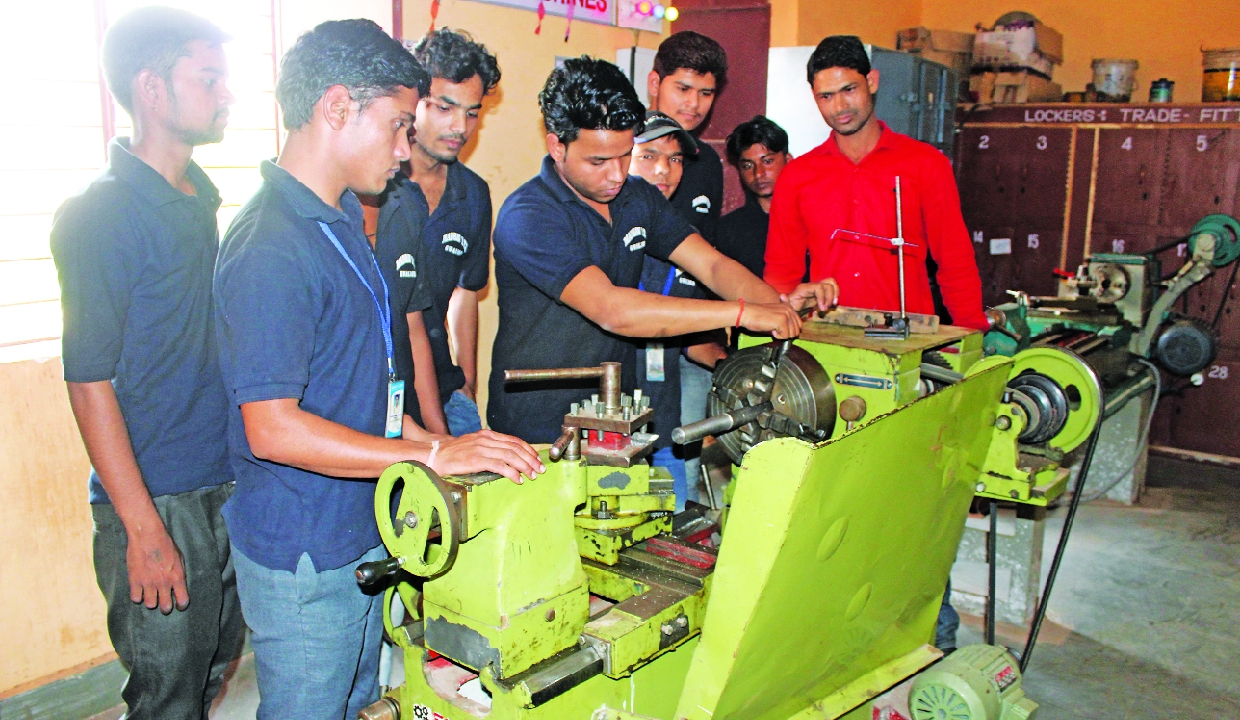
India today faces a striking paradox. Educated youth are struggling to find meaningful work, while firms are struggling to find job-ready technicians, mechanics, electricians, machine operators, repair workers and supervisors. This is not merely an unemployment problem; it is a capability mismatch. Degrees have expanded faster than usable workplace skills, and certificates have often grown faster than employer confidence. As Skill India completes eleven years on July 15, 2026, the central question is no longer whether India can train at scale. It is whether training can translate into productivity, wages, dignity and real bargaining power in the labour market.
What India did gain from Skill India
Skill India’s most visible achievement has been its large scale. Under PMKVY, from 2015 to 31 December 2025, 1.64 crore candidates were trained or oriented, while 1.29 crore were certified. Women’s participation has also been notable, with 74.29 lakh women trained by 30 June 2025, accounting for nearly 45 per cent of total candidates. In the first three phases, where placement tracking was linked mainly to the Short-Term Training component, 56.89 lakh candidates were certified and 24.3 lakh were reported placed, reflecting a placement rate of about 42.8 per cent. PMKVY 4.0 has moved beyond basic placement reporting towards wider career pathways, including self-employment, wage employment, on-the-job training and digital linkages. By 31 December 2025, it had trained 27.09 lakh candidates and certified 18.79 lakh. Its focus on future skills is visible through over 600 industry-aligned courses in AI, 5G, cyber security, green hydrogen and drones.
Yet the core criticism has become sharper: Skill India did better in mobilising candidates, issuing certificates and building scheme visibility than in transforming the labour market. PLFS 2025 shows why. Only 4.2 per cent of Indians aged 15-59 had received or were receiving formal vocational or technical training; among 15-29-year-olds, the share was just 5.0 per cent. The Economic Survey, using PLFS 2023-24, also noted that 65.3 per cent of the workforce had no vocational training, while only 4.1 per cent had formal training. The skilling architecture expanded, but its real penetration into the workforce remains shallow.
Quality has been an equally serious concern. The 2025 CAG audit of PMKVY found that 6.54 lakh certified candidates across 705 job roles did not meet the minimum entry age at the start of training. Many others were certified despite not meeting educational or technical eligibility norms. Field inspections found closed training centres, weak attendance compliance, and gaps in placement strategy, monitoring and recognition-of-prior-learning certification. The larger message was clear: India created a large certification system without fully protecting the credibility of certification.
Employer linkage remains the weakest link. NITI Aayog found that 94 per cent of surveyed employers were willing to hire more PMKVY-trained candidates, and IIPA reported that 70.5 per cent of surveyed candidates were placed in their desired skill sector. Yet placement tracking was mainly linked to PMKVY’s first three phases, not PMKVY 4.0. When tracking weakens, accountability also weakens. This is worrying for MSMEs, which need trusted hiring signals and easy apprenticeship routes, not just more course completions. The rural-urban divide also persists. PLFS 2025 shows youth unemployment at 8.3 per cent in rural India and 13.6 per cent in urban India. Secondary education attainment was 61.9 per cent in rural areas and 79.7 per cent in urban areas. Skill India has widened access, but structural gaps in schooling, connectivity, migration networks and local employer density remain unresolved. India’s skilling strategy should not be based on a single model viewed only through the lens of a foreign system. Germany shows the importance of tying classroom instruction to practical workplace training. Almost 89 per cent of vocational upper-secondary students participate in programmes that blend school-based learning with on-the-job experience. In this way, some 94 per cent of recent vocational graduates get a job within two years. South Korea, meanwhile, demonstrates how robust academic rigour, institutional rigour and competent quality assurance can enhance results, even when vocational education attracts comparatively fewer students.
Another key lesson from Singapore is to not see vocational education as a lesser or second choice. The Institute of Technical Education and the broader SkillsFuture ecosystem have given vocational skills more social recognition, career mobility and lifelong relevance. The Philippines shows how a national mechanism can broaden the horizons of competency-based assessment and certification, with 13.76 lakh enrolments and nearly 10.81 lakh workers certified in 2024.
The importance of legally supported apprenticeship programmes is underscored by Brazil. By April 2026, the nation boasted 7,26,025 active young apprentices, suggesting the efficacy of a system in which employers participate in workforce development. India does not have to follow the entire path of any of these models. The big takeaway is that we are going to need a trusted skilling system that enables meaningful employer involvement, stronger apprenticeships, portable qualifications, high-quality standards, and job outcomes - not just enrolment and certification numbers.
Viksit Bharat is not only a GDP target; it is a productivity target. India cannot become a major manufacturing hub, high-value services exporter, green-transition economy and digital public infrastructure leader when only about 4 to 5 per cent of its people are formally vocationally trained. Manufacturing needs technicians, machine operators, quality controllers, maintenance workers and supervisors. Services need coders, cloud-support staff, logistics workers, care workers, sales teams and hospitality professionals. Green growth will require solar technicians, EV maintenance workers, building-efficiency specialists and workers for recycling, waste management and industrial retrofitting. PMKVY 4.0’s shift towards electronics, IT-ITeS and future skills is therefore welcome, but India needs a much wider base of applied workers, not only a small class of elite engineers.
AI can support this transition, but it cannot replace basic institutional reform. For most workers, the need is not advanced AI-building skills, but stronger digital ability, data awareness and problem-solving. AI should be used for personalised learning in Indian languages, adaptive practice and better matching of learners with jobs and apprenticeships. Used well, AI can improve assessment quality and make reskilling continuous; used poorly, it will create one more dashboard without creating one more employable worker. India now needs hard but practical reforms. PMKVY 4.0 should restore compulsory tracking of placement, wages and retention, publish district-wise outcomes, and link public payments more closely with verified employment results. Apprenticeships must become simpler for MSMEs through pooled agencies, standard contracts, digital stipend support and shared trainers. In the medium term, vocational education must enter schools, ITIs, polytechnics and universities as a mainstream pathway, with portable credits under NCrF. Skill India’s first decade proved it can certify at scale. Its second must prove that skills improve young Indians’ bargaining power.
The writer is an Associate Professor at Atal School of Management, JNU; Views presented are personal.