US-Iran peace talks fail: Lasting peace in West Asia remains as elusive as ever
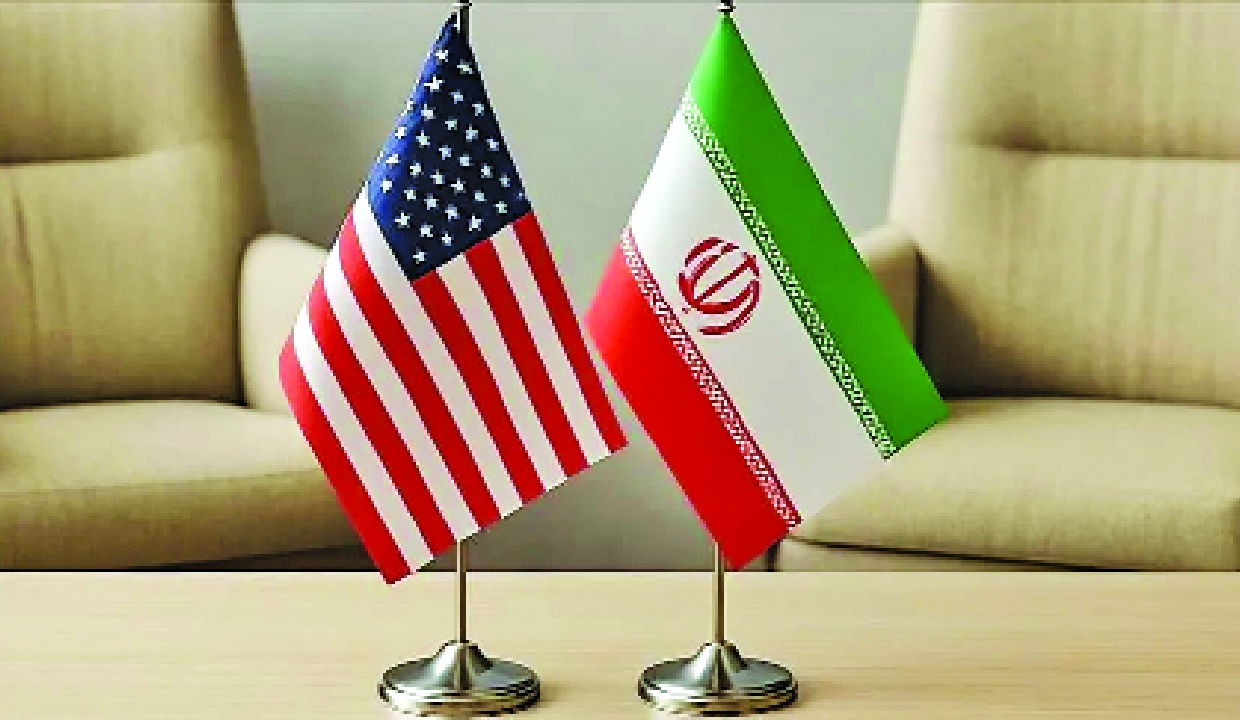
The fragile US -Iran peace process that followed the Memorandum of Understanding at Bürgenstock and Lucerne has collapsed following July 8, 2026, Iranian strike on three commercial vessels in the Strait of Hormuz, including a Qatari LNG tanker and a Saudi crude oil super tanker. The United States retaliation with overwhelming force, hitting more than 80 Iranian military targets underscored the poor trust, broken commitments, competing threat perceptions and strategic irreconcilability of the stakeholders that has defined the peace process right from the beginning. President Trump declared at the NATO summit in Ankara that the ceasefire had “finished”. He described the MoU as “a waste of time” and labelled Iranian leaders as “liars” and “sick people.” Meanwhile, oil prices surged over 5%, convulsing the global markets.
Iran has defended the attacks as assertion of sovereignty in quest for a “new Iranian order” in Hormuz. Despite enduring serious losses in leadership, infrastructure, and civilian lives, Tehran appears emboldened and the theocratic regime has entrenched itself further. This was manifest in global diplomatic acknowledgment in form of large-scale representation from major powers. Iran clearly appears to be exploiting limits of conventional US-Israel military power to conclude the war in a complex geopolitical theatre, where Iran has so far appeared to enjoy advantages in asymmetric warfare.
It is intriguing that a regime that appeared poised to end its half-century-long global isolation with removal of all sanctions and offer of a major economic reconstruction programme is seeking squander this opportunity. While an accidental re-ignition of conflict was always expected in the prevailing ambience of distrust, such deliberate confrontation indicates deeper underlying causes. Despite progress on formation of technical working groups on sanctions relief for Iran, agreement on nuclear issues through a closer inspection, and mechanisms to secure maritime traffic through the Strait of Hormuz, as well as de-escalation of tensions in Lebanon, deeper security, ideological and geopolitical fault lines that fueled the war had remained unresolved. It is clear failure of stakeholders to stretch their capacity, commitment and innovation to translate the “agreement on a 60-day roadmap toward a final settlement” into an endurable peace and stability in the region.
American firepower with its formidable surveillance and precision strike capacity, stealth technology, logistics network and overall force projection, backed by Israel’s high-tech intelligence prowess, has so far failed to vanquish Iran. Iran has largely held its ground, despite losing almost its entire top political-military leadership, thousands of trained IRGC personnel, almost half of its air, naval and ground military assets, besides suffering tens of thousands of civilian casualties. Massive infrastructure damage, assessed in hundreds of billions of dollars, and big hits on key economic installations and ports also failed to dent Iran’s spirit. Low-cost, high-impact Iranian drones, manufactured and deployed in very large numbers with flexibility, compelled US-Israeli forces to expend interceptor missiles costing 50 to 500 times more.
While direct U.S. military losses are estimated only around $50 billion, with cumulative losses assessed at $100 billion, the overall threat to American credibility and goodwill in the region and beyond appears profound. Energy production disruptions and infrastructure damage is assessed to have caused estimated GDP contraction to the tune of 3-6 percent for American allies in the Gulf. Yet it appears that Iran’s success in low-cost war, terms of MoU in Switzerland and global response to Khamenei’s funeral has emboldened Iran to indulge in an audacity that has tested the patience of Trump.
Why Sustainable Peace Shall Be Difficult
Iranians had always suspected that Trump may use diplomacy as a smokescreen to topple the Iranian regime. Such apprehension is grounded in experiences of the past. US had initiated this war in February, just a day after Omani Foreign Minister had declared that an understanding had been reached between the two sides on all key issues. It appeared that Americans were preparing for the war using diplomacy as a distraction. Even in the current US retaliation, there appears detailed planning. Simultaneously, President Trump’s frequent recourse to high-risk deception, bluff, bullying and unpredictability may be effective bargaining strategy in tactical corporate deals. But these have dented his credibility as a responsible statesman. Iranians cannot be faulted from apprehending a possible reneging of Trump from terms of MoU signed at Switzerland.
Simultaneously, Netanyahu has been the most potent threat to US-Iran peace. His intermittent attacks even after signing of MoU, only corroborate this. The very character of Iranian regime poses an existential threat to Israel. But Netanyahu needs to keep the pot boiling in Iran to deflect his potential indictment in corruption charges. He may attempt a more audacious strike on Iran, further doom the fate of peace in the region. Further, a degree of indirect Chinese support to Iranian regime is assessed to have bolstered the latter’s capacities to challenge the combined US-Israeli might. China has appeared clear about its strategic objective to expel US and NATO from whole of Asia. Its proximity with Iran, and even others in West Asia, complicates the search for an endurable peace.
Simultaneously, Iran’s adversaries remain sceptical of Tehran’s long-term intentions. Iranian attacks on the Strait of Hormuz is likely to further deepen this distrust, making the peace more elusive. Many Iranian regime insiders have continued to openly state that a nuclear weapon alone offered a credible deterrence against future aggressions. These are only going to exacerbate anxieties for other Gulf states in the region. India and the Emerging Strategic Landscape As one of the world’s largest energy importers, India remains vulnerable to disruptions and instability in the Gulf, which impact energy prices, economic growth and inflation at home. It has not been able to leverage its wider acceptability across internal divides in the region. As a large nation with serious constraints, India needs stronger strategic capabilities, greater institutional agility and a deeply calibrated approach to influence and shape its external surroundings to a certain level. This is an existential necessity in an increasingly interconnected world where geopolitical conflicts and tensions deeply impact development and security far beyond theatres of conflict.
The writer is Geo-strategic thinker, former civil servant, Head of Intelligence Training; Views presented are personal.