Beyond E20: Making India’s ethanol transition truly sustainable
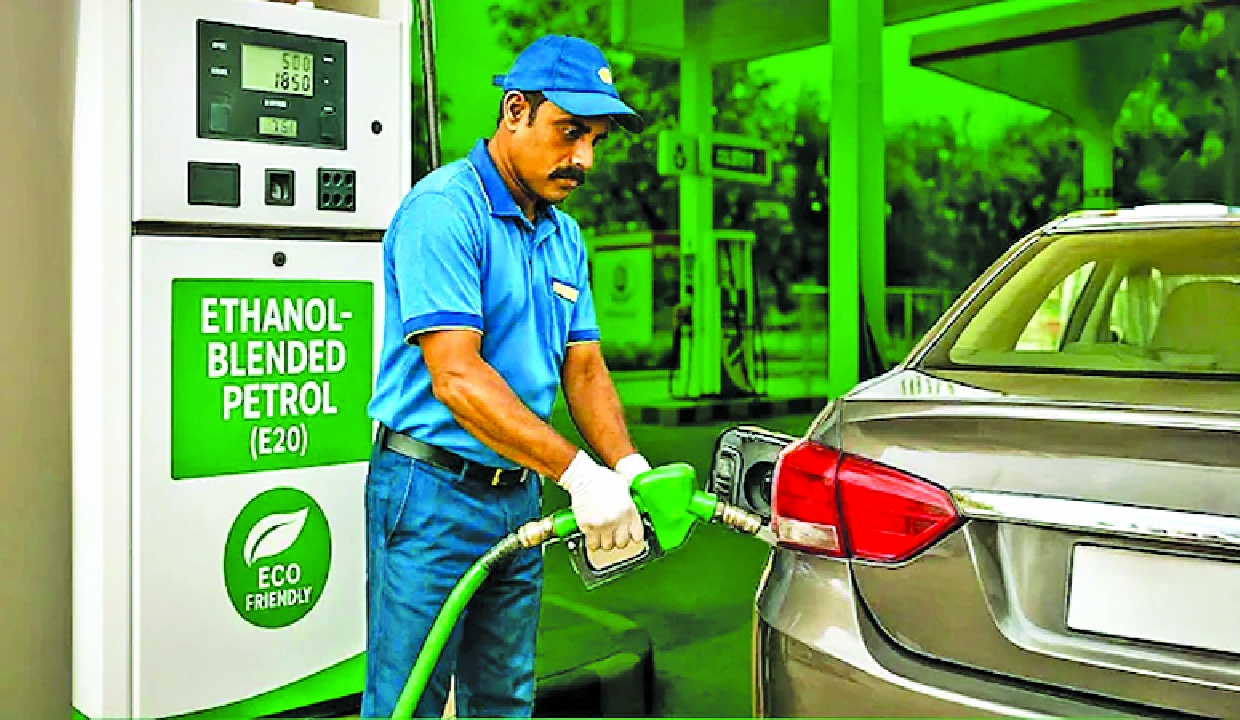
As blending targets rise, the focus must shift beyond percentages alone. The long-term success of India’s ethanol strategy will depend on balancing energy independence with water security, agricultural sustainability, environmental safeguards, vehicle compatibility, and food security
India’s ethanol-blending programme has evolved rapidly over the last decade from a limited effort to blend with petrol to now one of the central pillars for India’s energy security and clean mobility strategy. The country has already achieved E20 blending ahead of schedule, increasing it gradually from 1.5% in 2014. The central government is now preparing for higher blends through the recent notification and recent launch of flex-fuel vehicles (FFVs).
The rationale for ethanol blending has been to reduce fossil oil imports and thus provide a degree of insulation from global oil price volatility, supply shocks and geopolitical disruptions. According to government reports, this transformation has helped save over Rs 1.84 lakh crore in foreign exchange over the years and substituted more than 300 lakh metric tonnes of oil imports. Ethanol blending has thus been positioned as a strategic tool to reduce fossil oil consumption, lower foreign exchange outflows, build domestic fuel resilience and at the same time create additional income for farmers. However, the blending has also been questioned by critiques citing many challenges and thus they need to be addressed for better acceptance of the programme.
On the consumer side, an often-cited challenge is the issue of fuel efficiency and impact of fuel blends on the engine. As ethanol has ~30% lower energy density than petrol, ethanol blends reduce vehicle mileage, particularly for vehicles that are non-E20 compliant. Furthermore, the hygroscopic property of ethanol can lead to moisture accumulation, corrosion of fuel system components, and potential breakdowns of non-compliant vehicles. In this scenario, the recent FFV notification is an important policy step. By introducing engine compliance standards, the government has recognised that higher blending requires compatible vehicle systems.
On the supply side, India’s ethanol ecosystem today remains dominated by first-generation (1G) feedstocks, particularly sugarcane, maize and broken rice. This has generated important gains for the farmers, as sugar mill arrears, historically a major source of farmer distress, have reduced significantly. Because of the rising demand from the distilleries, maize cultivation has expanded. For policymakers, ethanol has become an instrument that simultaneously addresses energy security, rural income generation, and agricultural market stability.
While a higher blend beyond E20 for the FFV has the potential to further reduce our fossil oil consumption and thus foreign exchange outflows, the next phase of India’s ethanol programme must be evaluated through a broader ‘systems’ perspective that considers not only energy security but also ecological sustainability and long-term resource resilience. Sugarcane is among the most water-intensive crops cultivated in India and is often grown in regions already experiencing groundwater stress. Its cultivation is supported by significant electricity subsidies for irrigation and high fertiliser inputs.
Maize is also increasingly entering the fuel economy as ethanol demand rises. As more maize is diverted towards ethanol production, domestic availability for poultry feed, starch and other industrial uses becomes tighter, increasing pressure on food-feed-fuel allocation and, in some years, contributing to higher imports. The larger concern here is whether India’s ethanol transition is substituting crude oil import dependence with growing dependence on subsidised groundwater, electricity for irrigation, imported fertilisers and, potentially, feed grain.
Furthermore, while ethanol may reduce tailpipe emissions, a rigorous comparative life cycle assessment (LCA) is essential to account for the full production chain, including fertiliser manufacture and use, groundwater extraction, electricity consumption for irrigation, transportation, distillation energy, land-use changes associated with feedstock cultivation, waste generation and treatment, and emissions across the value chain. Only such a cradle-to-grave assessment can determine whether higher ethanol blends deliver genuine net environmental gains under Indian conditions.
The environmental assessment must also extend beyond feedstock cultivation to include waste management. Distilleries reportedly generate large volumes of effluent with significant pollution potential if inadequately treated. Although regulatory norms mandate treatment and reuse through bio-methanation, concentration or composting, a rapid expansion of ethanol production will proportionately increase waste volumes.
A major concern is also on the long-term impact on agricultural patterns. If ethanol demand continues to incentivise sugarcane and maize cultivation, what happens to crop diversification and soil resilience? Monoculture expansion may improve short-term farmer incomes, but over time weaken ecological stability and increase resource stress, thereby impacting the farmers themselves. There is also an implicit food security dimension. The current policy support still disproportionately favours rapid expansion of 1G infrastructure because it is easier to scale quickly. That may help India achieve blending targets and reduce foreign exchange outflow, but it risks locking into a resource-intensive biofuel pathway with longer-term impacts on soil and groundwater. While surplus and waste IG feedstocks should be used to produce ethanol, any expansion through additional cultivation must be preceded by a comprehensive and rigorous life cycle assessment (LCA).
This is precisely why India must work on prioritising second-generation (2G) biofuels. India generates up to 500 million tonnes of agricultural residues annually, much of which is burned, contributing to severe air pollution. Converting crop residues, municipal waste, and non-food biomass into ethanol offers a far more sustainable pathway than indefinite expansion of first-generation feedstocks. However, 2G ethanol remains commercially challenging due to high capital costs of pre-treatment and lower yields. Going forward, the policy should simultaneously focus on enabling 2G systems through targeted financial incentives, innovation support, technology partnerships, and long-term procurement certainty. The objective should not merely be increasing ethanol percentages but creating a genuinely sustainable low-carbon fuel ecosystem.
While India’s ethanol programme has undoubtedly supported rural incomes, its next phase should be guided by a ‘systems’ perspective rather than blending targets alone. Energy security cannot be separated from groundwater stress, fertiliser dependence, agricultural resilience, waste management, and long-term resource sustainability and security. International experience, particularly Brazil’s, offers valuable lessons but should be interpreted in context. Much of Brazil’s sugarcane cultivation is rain-fed and takes place under agro-climatic conditions that differ from India’s, where irrigation and groundwater extraction play a larger role. Also, Brazil vehicle ecosystem for using blended fuels was simultaneously developed. India’s biofuel strategy must be tailored to its own resource constraints and conditions. Ultimately, the next phase of India’s ethanol transition should be evaluated not only as an energy security initiative but also as a resource security strategy without impacting the vehicle users.
While India’s ethanol programme has undoubtedly supported rural incomes, its next phase should be guided by a ‘systems’ perspective rather than blending targets alone. Energy security cannot be separated from groundwater stress, fertiliser dependence, agricultural resilience, waste management, and long-term resource sustainability and security
Dr. Akanksha Jain is a Research Associate and Dr. Debajit Palit is the Centre Head at the Centre for Climate Change and Energy Transition at Chintan Research Foundation; Views presented are personal.