The Tata legacy is India’s pride
The House of Tata is the grand vision of India’s ethical Parsi business community: a legacy of trusteeship, integrity, and nation-building that must remain rooted in its founding values to continue serving India’s long-term national interest.
The turbulence within the Tata Group and its holding structure, Tata Sons, is no ordinary corporate dispute. It concerns the future of one of India’s greatest industrial institutions, a conglomerate built over more than 150 years through vision, philanthropy, discipline, and national commitment. Founded by legendary Jamsetji Tata and elevated to global stature under J. R. D. Tata, the Tata name became synonymous with ethical capitalism and nation-building. The institution survived colonial rule, socialist India, liberalisation, and global competition because it possessed something beyond commercial strength: moral legitimacy and civilisational trust.
That moral capital, however, has faced repeated strain in the last decade. Many observers believe the abrupt and unceremonious removal of Cyrus Mistry in 2016 marked a defining rupture in the Tata ethos. Mistry, despite representing the Shapoorji Pallonji family that held nearly 18.4% of Tata Sons, was widely regarded as one of the most capable and understated corporate leaders of his generation. His removal triggered a bitter legal and emotional battle that eventually reached the Supreme Court. While the courts ruled in favour of Tata Sons, the larger damage was reputational. For the first time, India’s most respected business house appeared vulnerable to opaque boardroom politics and personality-driven governance.
The return of Ratan Tata after Mistry’s exit restored temporary stability, but the controversy permanently altered public perception. Ratan Tata remained an immensely admired public figure, yet critics increasingly questioned whether emotional decision-making and excessive centralisation weakened institutional processes within the group. The tragedy deepened further after Cyrus Mistry’s untimely death in 2022, which transformed a corporate dispute into a lingering moral question within Indian industry. Today, after Ratan Tata’s passing, the Tata establishment faces another difficult phase. Internal tensions have emerged within Tata Trusts, the philanthropic entities that control roughly 66 per cent of Tata Sons. Disagreements over governance, succession, board appointments, and strategic direction have increasingly spilled into the public domain. Reports suggest divisions among trustees, including Noel Tata, N. Chandrasekaran, Mehli Mistry, Venu Srinivasan, Darius Khambata and others over board representation and the future structure of governance. The conflict has intensified over questions such as whether Tata Sons should eventually be listed, how the Trusts should exercise authority, and who should shape the future of the conglomerate. Noel Tata reportedly raised concerns regarding losses in businesses such as Air India and Tata Digital, while debates over trustee appointments and succession planning have further widened internal fault lines. The exit and sidelining of Mehli Mistry, a long-time confidant of Ratan Tata and cousin of Cyrus Mistry, has also sharpened perceptions of factionalism inside the Trusts.
These developments are troubling not merely because they involve boardroom rivalries, but because the Tata Group is systemically important to India itself. The conglomerate contributes roughly 4 per cent of India’s GDP through its vast ecosystem of over 100 companies. Its listed firms collectively command a market capitalisation exceeding $365 billion: larger than the GDP of nations such as Finland, Greece, Qatar, and Pakistan. The group employs hundreds of thousands directly and supports millions indirectly. Giants like Tata Consultancy Services, Tata Steel, Tata Motors, Titan Company, Trent and Air India are not merely corporations; they are strategic national assets. This is precisely why the current turbulence cannot be treated as an internal family quarrel alone. The Tata Group represents India’s corporate credibility before global investors. Prolonged instability at the top can affect market confidence, employment sentiment, foreign investment perception, and long-term strategic projects, including semiconductors, aviation, digital infrastructure, and manufacturing expansion.
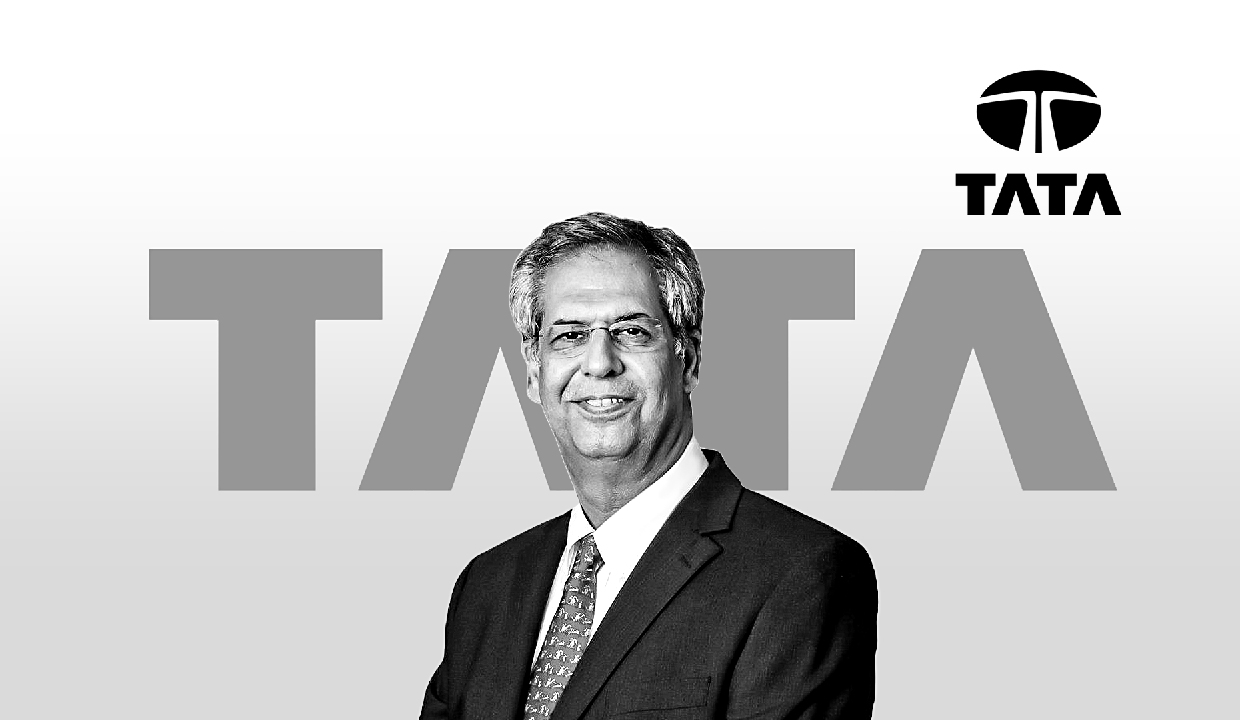
In this context, Noel Tata emerges as perhaps the most natural and institutionally acceptable successor to anchor the future of the Tata empire. Unlike external technocrats or transient executives, Noel Tata carries both family continuity and deep operational experience. Over decades, he quietly built successful businesses within the group, especially through Trent and Tata International. He lacks the flamboyance associated with some corporate leaders, but that may actually be his strength. The Tata Group historically flourished under understated stewardship rather than personality cults.
Equally important is the symbolic dimension. The Tata institution was built upon a distinct Parsi legacy of philanthropy, moderation, trusteeship, and long-term thinking. Many within the community and the wider business ecosystem believe the continuity of that ethos matters deeply to preserving the soul of the institution. Noel Tata possesses both lineage legitimacy and managerial maturity, making him uniquely placed to restore equilibrium between the Trusts, Tata Sons, minority shareholders, and the broader public.
The government of the day and India’s business establishment, therefore, have a larger responsibility. This does not mean interference in private enterprise but rather encouraging stability, transparency, and institutional continuity in a conglomerate whose health is intertwined with India’s economic confidence. Reports already suggest senior government figures have informally encouraged reconciliation among competing factions.
The roadmap forward must involve three critical reforms. First, governance structures within Tata Trusts and Tata Sons must become more transparent and rules-based, reducing the scope for personality-driven conflicts. Second, a stable succession architecture should be institutionalised to avoid recurring uncertainty. Third, strategic focus must return to operational excellence rather than internal factional battles.
India cannot afford to see its most respected corporate jewel descend into prolonged instability. The Tata Group is bigger than individuals, larger than boardroom camps, and far more important than transient egos. Preserving its legacy requires reconciliation, institutional discipline, and leadership rooted in continuity and trust. At this crucial moment, Noel Tata appears best positioned to provide precisely that stabilising anchor for the future of corporate India.
The Tata Group is bigger than individuals, larger than boardroom camps, and far more important than transient egos. Preserving its legacy requires reconciliation, institutional discipline, and leadership rooted in continuity and trust
The writer is Chairman & Editorial Board Member of The Pioneer; Views presented are personal.