US-Pakistan F-16 deal: Red flags in Delhi
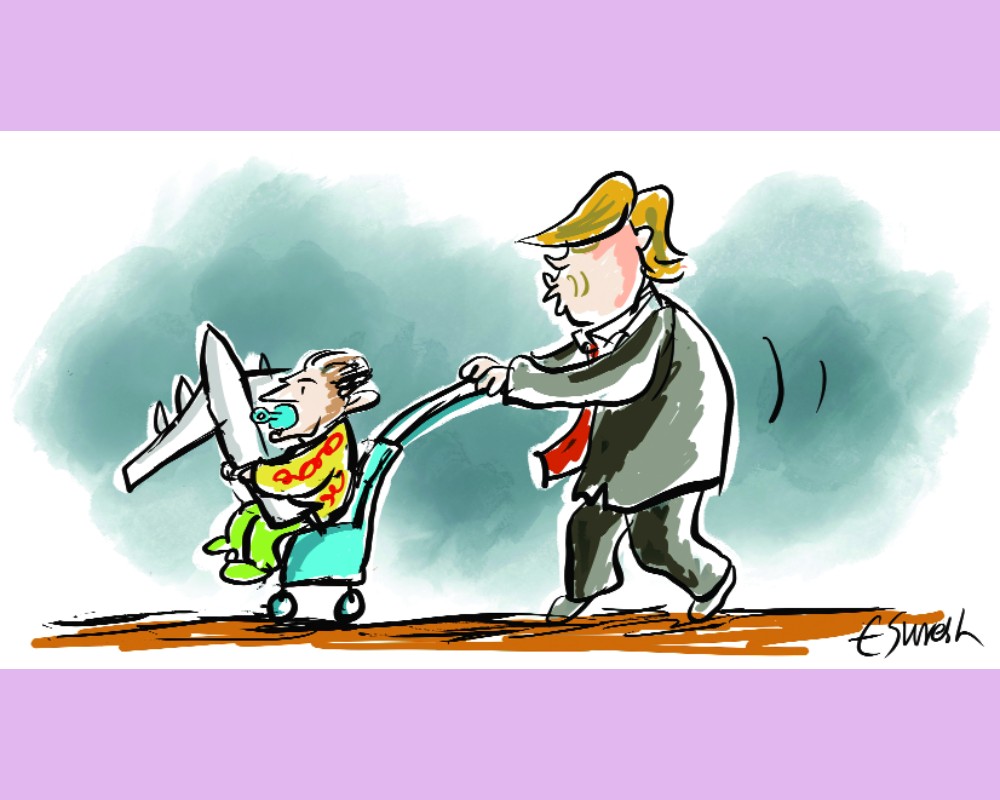
In diplomacy, timing writes the script and optics stage the play. The timing besetting the recent United States government’s agreement to a $686 million deal to upgrade the Pakistani Air Force’s F-16 fighter planes, as indeed the various contexts surrounding the same, is ominous and questionable, to say the least.
Way back in 2021, Pakistan had formally submitted an appeal to the US government for such a comprehensive upgrade of its frontline fighter planes, but the Joe Biden administration had taken a suspicious view of Pakistani intent. Given the less-than-credible track record of the duplicitous Pakistanis in fighting terrorism (especially in Afghanistan, where US stakes were high at the time), with Imran Khan as Prime Minister (infamous as “Taliban Khan”), and with its continuing machinations across the Line of Control, the request was put on the back burner. Technically still a supposed “ally”, Pakistan was afforded scepticism, as the US did not want to jeopardise its growing equation under its “pivot to Asia”, ie, India.
This calibrated restraint fit well with the strategic template of maintaining “sustainment” of Pakistani military capabilities, as opposed to “enhancement”. Therefore, the next year, a much-curtailed “sustainment” package was offered, which did not enhance its war-fighting capabilities or weaponry. It made eminent sense to water down Pakistan’s request, because its ostensible justification of the F-16 upgrade to “fight terrorism” convinced no one.
There can certainly be certain militaristic platforms such as drones, helicopters, surveillance elements, or even close-range engagement weapons — but F-16 fighter planes for fighting terrorism? India had rightfully protested the thin logic underlying the upgrade request, and the US had to confirm that it did not amount to a “capability upgrade”. They maintained an “airworthy” angle of maintenance and safety. Also, the existence of a sizeable American wherewithal in landlocked Afghanistan during 2021-22 necessitated the US government retaining a bare minimum semblance of support to Pakistan in order to deter it from going completely into Chinese hands. But all those considerations and sensitivities were of that time, and Joe Biden navigated them with dexterity and sensitivity, without offending India (beyond a point) while securing US interests in Afghanistan and Pakistan.
But with the unpredictable “deal-maker”, rather than a President, Donald Trump in the chair, those cautionary nuances and moderations have been thrown to the wind. Trump has unabashedly reneged on his own past statements and concerns about supporting Pakistan militarily, as he acceded to the obviously questionable request for an F-16 upgrade. For context, on January 1, 2018, Trump had tweeted: “The United States has foolishly given Pakistan more than 33 billion dollars in aid over the last 15 years, and they have given us nothing but lies & deceit, thinking of our leaders as fools. They give safe haven to the terrorists we hunt in Afghanistan, with little help.
No more!” That tweet appears to have been forgotten by Trump today.
While the logic of avoiding Pakistan going belly-up through total abandonment — with the loss of critical visibility over American weaponry-and potentially becoming another Afghanistan is very real, even the possibility of a complete surrender to China to secure its full security needs is a legitimate fear haunting Washington, DC. But the US definitely owes a duty to reassure India after the particularly sham upgrade logic of “counter-terrorism support”, and to ensure that the move does not alter the security balance in the hyphenated Indo-Pak calculus. Regional emotions and wounds from the recent Operation Sindoor are still raw, where air power played a dominant role in that showdown. Simply put, this timely upgrade-however limited-can only be advantageous and timely for Pakistan, and not so for India.
The Pakistanis have been clever in limiting and contextualising the recent move towards improving “integration” and “interoperability” with the US Air Force. They have played down regional competition, as that would undermine the official justification-but commentators on both sides of the Line of Control know better than to believe the official script. Even the fine print of the letter issued by the US Defence Security Cooperation Agency (DSCA) clearly notes: “It provides the warfighter key theatre functions such as surveillance, identification, air control, weapons engagement coordination, and direction for all services and allied forces” — hardly connectable with the issue of counter-terrorism.
There is still time for the final contract to come through, as it requires procedural vetting by US legislators, but the principal agreement is in place. What is truly disconcerting is the level of accommodation and reprieve granted to Pakistan when it comes to its murky role in the “War on Terror” — something for which the US has paid a personal and terrible price. To continue supporting Pakistan’s so-called counter-terrorism preparedness through F-16 upgradation is dubious, even if one were to suspend logic entirely and somehow believe that fighter aircraft can be used for counter-terrorism.
More likely than not, the move is aimed at strengthening Field Marshal Asim Munir’s hand by signalling that he has delivered results through the US-something his nemesis, Imran Khan, could not achieve. That, and such other plausible reasons notwithstanding, the US must balance its counterintuitive leniency towards Pakistan with matching considerations and accommodations towards Delhi. After all, in diplomacy, optics speak louder than words.
The writer, a military veteran, is a former Lt Governor of Andaman & Nicobar Islands and Puducherry; views are personal
Leave a Comment
Comments (1)
Excellent