Trump, Venezuela, and the crumbling states
It is all too easy to criticise President Trump, American foreign policy, and its hypocritical authorities, because they are highly visible. Forget the moral and ethical jargon that hangs over every discussion; the most striking aspect is that President Trump is unapologetically blunt about what he will do, why he did it, and what he intends to achieve — unlike so many leaders of the United States who recite ethical rationales and moralistic rhetoric even as they drop bombs and loot. Trump exposes the raw mechanics of American power with gargantuan ambition; whether this turns into enduring success or spectacular failure is another matter entirely. But to comprehend the Trump phenomenon, we must confront it, not merely argue over its consequences. Like any imperial superpower, the United States has never been truly ethical or morally upright, because power itself refuses to be shackled by ethics or morality. History’s paradoxical arc, from Babylon to the contemporary epoch, teaches us that might and strategic interest invariably outmuscle moral imperatives. Trump may be revitalising a 250-year-old strategy, one rehearsed by many empires before, without a clearly articulated alternative.
What have we produced in the name of socialism when the “big man” vanquishes his rivals or succumbs to the inevitable pull of mortality? In every instance, once the charismatic founder departs, he is succeeded by a coterie of robbers and oppressors. We are often unwilling to look in the mirror and ask what sort of system we have created, and what sort of society we truly require.
The so-called extrication of Nicolás Maduro - labelled a kidnapping in the media and decried as such by Maduro himself — is full of contradiction and ethical collision. Top US legal minds, Jack Goldsmith, the Learned Hand Professor of Law at Harvard and former Assistant Attorney General heading the Office of Legal Counsel, and Bob Bauer, Professor of Practice and Distinguished Scholar at New York University School of Law and former White House Counsel to President Barack Obama, have pointed out that, in terms of domestic legal jurisdiction, the President’s power in this instance prevails, much as George HW Bush’s invasion of Panama and the capture of Manuel Noriega did in 1989, or as US courts applied the Ker-Frisbie doctrine to uphold jurisdiction irrespective of how a defendant was apprehended. Maduro’s defenders first called it kidnapping, then reframed it as the status of a prisoner of war. The fundamental contradiction here is stark: how can a sitting president, presumably holding legitimate power in his own state, be cut down by an American executive acting at will? Trump was never engaged in nation-building; he was there to do business and wield power as a form of profit and influence. Whether one finds this justifiable or reprehensible, it is precisely what President Trump intended. His leadership of American power never hid its transactional essence.
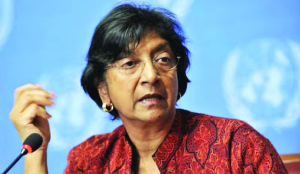
Behind this operation lie years of build-up, rehearsal, and escalating pressure. Maduro was reportedly offered an exit to a third country, perhaps Turkey, to spend his remaining years, but he refused, demanding control of his nation’s oil and rejecting any concession that would tarnish his hold on authority. Instead, he clung to power even as the world around him crumbled. The collapse of Venezuela’s institutions was vividly illustrated in 2017 when Luisa Ortega Díaz, who had served as Prosecutor General of Venezuela for a decade, broke with Maduro’s government and denounced constitutional overreach and human rights abuses. She was forcibly removed from office, threatened, and ultimately forced into exile.
This pattern — a charismatic founder followed by deterioration into kleptocracy — is not unique to Venezuela. Consider Salvador Allende, whose democratic socialist experiment in Chile was strangled by internal sabotage and external interference, culminating in his death amid bombardment and political turmoil. In Cuba, Fidel Castro, a revolutionary of formidable strategic acumen, was not deposed by internal moral failure but by relentless external pressure — the failed Bay of Pigs invasion and decades of embargo that forced him into Soviet patronage and militarised survival. These are not simple narratives of socialism’s collapse; they are stories of geopolitical extraction and the endurance of power structures that devour even their own progenitors.
It is here that we confront the deeper analytic kernel. Socialist or leftist leaders were often coherent in their critique of capitalist domination and imperial interference, but the systems they built were highly personalised and lacked the institutional resilience necessary for succession. Critical thinkers like Leszek Krakowski warned that attempts to institute socialist systems without robust legal, ethical, and cultural foundations would inevitably succumb to authoritarianism or stagnation, precisely because they failed to create mechanisms for self-critique and renewal. In this context, Trump’s Venezuela strategy is both blisteringly candid and ruthlessly strategic. He has signalled that the United States will direct Venezuela’s oil reserves towards American interests, a move that Russia, China, and others condemned as a violation of sovereignty and international law. Some see the operation as a reassertion of American power in its “backyard”; others view it as a dangerous precedent that erodes the rule of international law. But to frame this debate solely around Trump is to miss a more profound reckoning: our own. We in the Global South have been complicit in romanticising the myth of an external villain while ignoring the internal rot of our governance systems, institutional weakness, and the penchant for personalised power that decays into predation once the strongman exits the stage.
Even the most revolutionary leaders, exalted as paragons of resistance, reveal an ugly truth through their successors: systems built around personalities, without accountability, internal checks, and vibrant civil liberties, are destined for decay. We may decry external intervention — and rightly so - but external actors exploit the very vulnerabilities that internal malfunctions create.
The Trump operation in Venezuela challenges the conventional moral binary. Trump did not mask his strategic intent; he wielded power in the most unabashed terms the world has seen in recent decades. Whatever one’s view of Trump’s moral compass, he has pulled back the curtain on power’s true nature. The saga of Venezuela is not merely Trump’s problem or America’s imperial overreach; it is a mirror for all societies that have failed to cultivate governance structures robust enough to withstand the departure of strong leaders without descending into kleptocracy, repression, and systemic collapse. This is the fate awaiting any country where “big men” rule with iron fists, often arriving far sooner than expected. Change cannot come until those inside the system confront the fact that the problem is theirs to fix.
If there is any hope for societies shackled by personalist rule and ideological absolutism, it lies not in lamentation over external actors, but in the rigorous undertaking of internal reform - in building institutions that endure beyond any individual, in cultivating a civic culture that tolerates dissent, and in recognising that sovereign pride without systemic resilience is a path to ruin. Only then will societies possess the capacity to demand accountability from powers both near and distant, and only then will they be worthy interlocutors in the global arena where sovereignty, justice, and power intersect in the most unforgiving ways.
The writer is a columnist based in Colombo; views are personal