Trump and the art of making friends into foes

North Atlantic Treaty Organisation (NATO), the world’s largest and most potent military alliance, is at a crossroads. Born after World War II it rose in scope and prominence, and its strength grew from 12 members to 32. However, in present times it is facing one of the biggest challenge to its existence, not from out side but from within — The US. President Donald Trump’s pitch to acquire Greenland at any cost has rendered Article 5 meaningless. The article states that an attack on one of its members would be deemed an attack on all. But what if the attack is by its own member, in the present scenario, the US on Denmark. The whole premise of NATO falls flat.
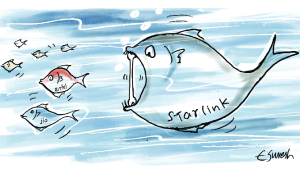
It remained cohesive and strong during the Russian aggression in Ukraine or on the US unilateral action in Iran, but the fissures are coming out in the open as European nations are consolidating against the US like never before. Europe sees the US move as coercive overreach. No doubt Greenland, an autonomous territory under the control of Denmark, occupies a strategically vital position in the Arctic. Its location, natural resources, and proximity to emerging polar shipping routes have made it increasingly important. There is also stiff competition with Russia and China. Trump’s argument that US control of Greenland is essential for American national security is absurd, as Denmark happens to be a NATO member and by default Greenland a partner to it, and the US and NATO can always useit as a military base to thwart any challenge. Yet pressure tactics are being employed by Washington — punitive tariffs against several European nations unless Denmark agrees to negotiate Greenland’s transfer. For Europe, this is an intimidation guised as a security concern of the US. If the US can do it with Denmark, it can doit with other territories as well, shattering the notion of sovereignity of small European nations. The European Union is in no mood to comply; its response has been unusually unified. Denmark has categorically rejected the idea of selling Greenland, while Greenland’s local government has stressed that its future is not for foreign powers to decide. European leaders have categorically warned that coercion against any NATO ally undermines the very foundation of the alliance. If economic threats become an acceptable tool within alliances, the moral authority of NATO weakens. The US move could also have wider geopolitical implications.Any visible schism between the US and Europe is closely watched by Moscow and Beijing.
A divided NATO emboldens adversaries and weakens deterrence at a time when global security is already under strain. Ironically, a move justified in the name of American security could end up diminishing it by hollowing out the alliance system that underpins Western power. Interestingly enough, within the United States, concerns are growing across party lines. Lawmakers and policy experts have warned that treating allied territory as a negotiable asset damages America’s credibility and leadership. Ultimately, Greenland is a test of whether alliances are partnerships or mere power arrangements. If NATO falls apart, it would disbalance the world geopolitics in a big way.