The unvanquished statesman: Narendra Modi
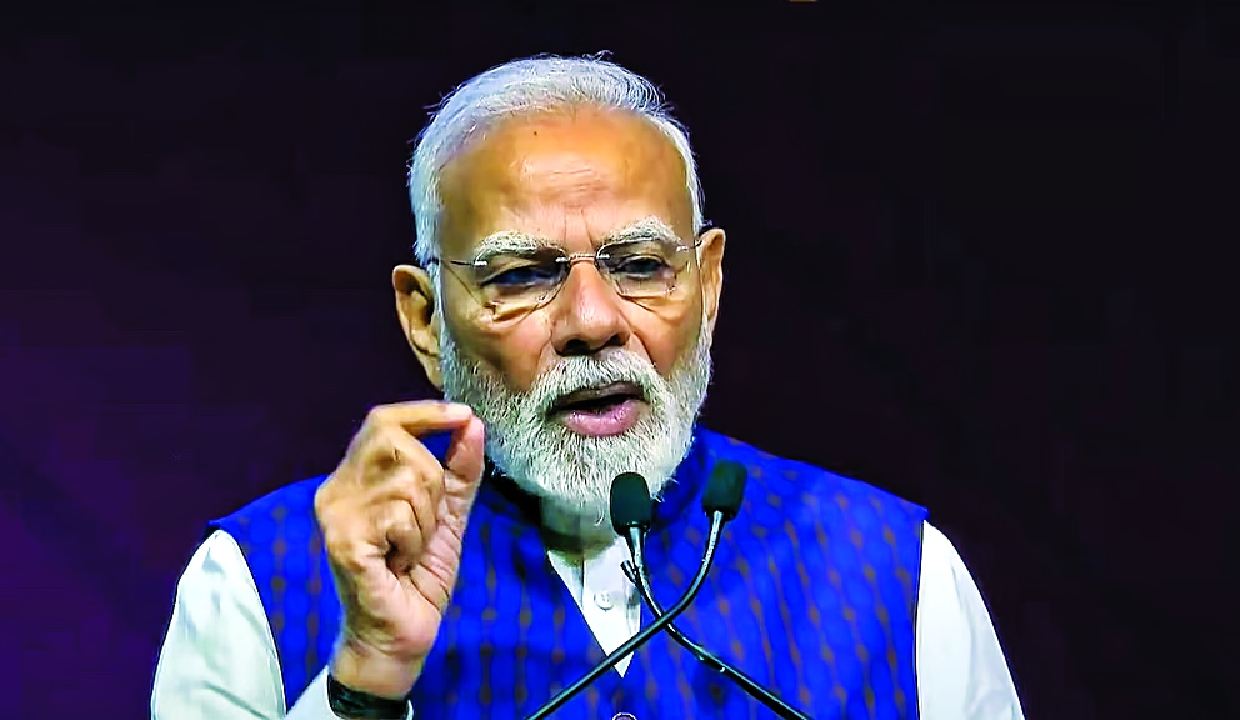
In the last decade, a clear pattern has appeared. Politicians who focused only on opposing Modi have slowly become irrelevant. Those who expected him to fail have been let down. People who tried to get close to him for personal gain were pushed aside, and those who used flattery to gain influence had to look elsewhere
Twelve years is a long time in politics. In that span, leaders come and go, parties form and disappear, and slogans are made and forgotten. Sometimes, though, a leader stands out and becomes the main focus. Now that Narendra Modi's government has completed 12 years at the Centre, it is worth looking back at what this period has meant.
Over these years, Modi's supporters have praised him for many qualities, while his critics have made many accusations. People have often predicted his fall, and there have been many campaigns against him in India and abroad. Still, one thing has not changed: Narendra Modi has stayed at the centre of Indian politics, and he is still there today.
In the last decade, a clear pattern has appeared. Politicians who focused only on opposing Modi have slowly become irrelevant. Those who expected him to fail have been let down. People who tried to get close to him for personal gain were pushed aside, and those who used flattery to gain influence had to look elsewhere.
In a nation as vast, diverse, and complex as India, with numerous languages, castes, faiths, and regions, there are many languages, castes, religions, and regional interests. Yet Narendra Modi remains the main figure in national politics. After winning three elections in a row, he is more than just a party leader; he is the main reference point in Indian politics. Both his supporters and opponents plan their strategies around him. The opposition may have slogans against Modi, but they lack a strong alternative to his wide reach. This is why the belief that any group can capture political power merely through street mobilisation reflects a misunderstanding of both India and the Indian state.
If this approach were effective, movements such as the anti-CAA protests or the farmers' agitation would have fundamentally transformed the political landscape. However, Modi retained his position, while many of these movements became entangled in internal contradictions and failed to overcome him.
The principal error of the opposition lies in attempting to challenge Modi without first understanding his political strategies. Occupying public spaces, raising slogans, and fostering unrest can compel the government to retreat. However, empirical evidence suggests otherwise. Modi's most significant political asset is his consistent refusal to react, while his opponents depend on a reaction he withholds.
Opponents and protest groups often expect the government to respond. When that does not happen, many protesters lose focus, cross the line, and reveal their own weaknesses. The public then sees who stays calm and who is driven by chaos. People who wonder why the government does not crack down often miss a key point: in politics, the worst outcome is not jail, but becoming irrelevant.
When the public stops taking an opponent's accusations seriously and loses interest, that is a major political defeat. Modi has often managed to do this by being patient and steady. Some people see his restraint as weakness, but governments often hold back because they know that waiting can work in their favour.
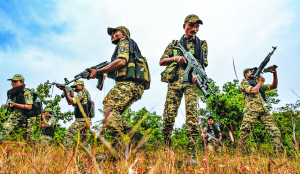
Those who question the strength of the Indian state may consider recent operations against Left-wing extremism. Anyone who doubts the strength of the Indian state should look at recent actions against Left-wing extremism. Groups that once challenged the government in large forest areas had to come to the table when the government acted firmly. The message is clear: when the Indian state is determined, it can take strong action. Whether considering Khalistan-influenced elements within the farmers' agitation or protests against the Citizenship Amendment Act, Indian society ultimately rendered its own judgment. Those seeking to reshape national politics through demonstrations alone discovered that street power does not necessarily equate to public legitimacy.
This distinction highlights how Modi's political style differs from that of many of his opponents. While his rivals often want quick results and focus on today's news, Modi looks ahead, thinking about the future and staying connected with voters. His primary challenge is not limited to electoral defeats; rather, it lies in his persistent inability to comprehend the reasons behind Modi's continued success. Consequently, the opposition often shifts focus from substantive political engagement to questioning the legitimacy of the electoral process, revealing its weakness more than Modi's.
At various times, reliance has been placed on foreign opinion, international pressure, media narratives, or street mobilisation. However, at times, people have depended on foreign opinions, international pressure, media stories, or street protests. But Indian democracy is not shaped by other countries, NGOs, the media, or social media trends. It is built on the trust and participation of hundreds of millions of Indian voters. Douglas Macgregor recently asserted, in the context of the Iran crisis, that the United States should consider Narendra Modi as a credible mediator. MacGregor's rationale is that India maintains working relationships with Israel, Iran, the United States, and China. He contends that India's stature, influence, and strategic importance are expanding, and that this development should be regarded as an opportunity rather than a challenge. Such assessments reflect not only recognition of Narendra Modi but also acknowledgement of India's growing global standing.
People who think that street protests, mass movements, or political disruption can overturn election results do not understand how India works. The country will continue to run according to its Constitution, its democratic institutions, and the will of its voters.
To effect governmental change, the appropriate course is to secure an electoral victory. If you want to change the government, you need to win an election. Policy disagreements should be handled through democratic debate. Trying to reverse election results with protests is not a real substitute for democracy or a lasting strategy. It is easy to criticise or oppose Narendra Modi, but understanding his political style is much harder. Not doing so only weakens the opposition.
Understanding society, building organisations, and governing at the state level, and who have subsequently remained the defining force in national politics for more than a decade.
After twelve years, it is no accident that Modi remains at the centre of both his supporters' and opponents' political plans, as well as of elections and national debates. This is the main political fact of our time, stemming from his long-lasting influence. Regardless of support or opposition, Narendra Modi continues to occupy the centre of the national discourse.
After twelve years, it is no accident that Modi remains at the centre of both his supporters' and opponents' political plans, as well as of elections and national debates. This is the main political fact of our time, stemming from his long-lasting influence
The writer is a socio-political analyst, columnist, and digital strategist. He writes on politics, governance, public policy, and contemporary social issues; Views presented are personal.