The uncertain geometry of relationships
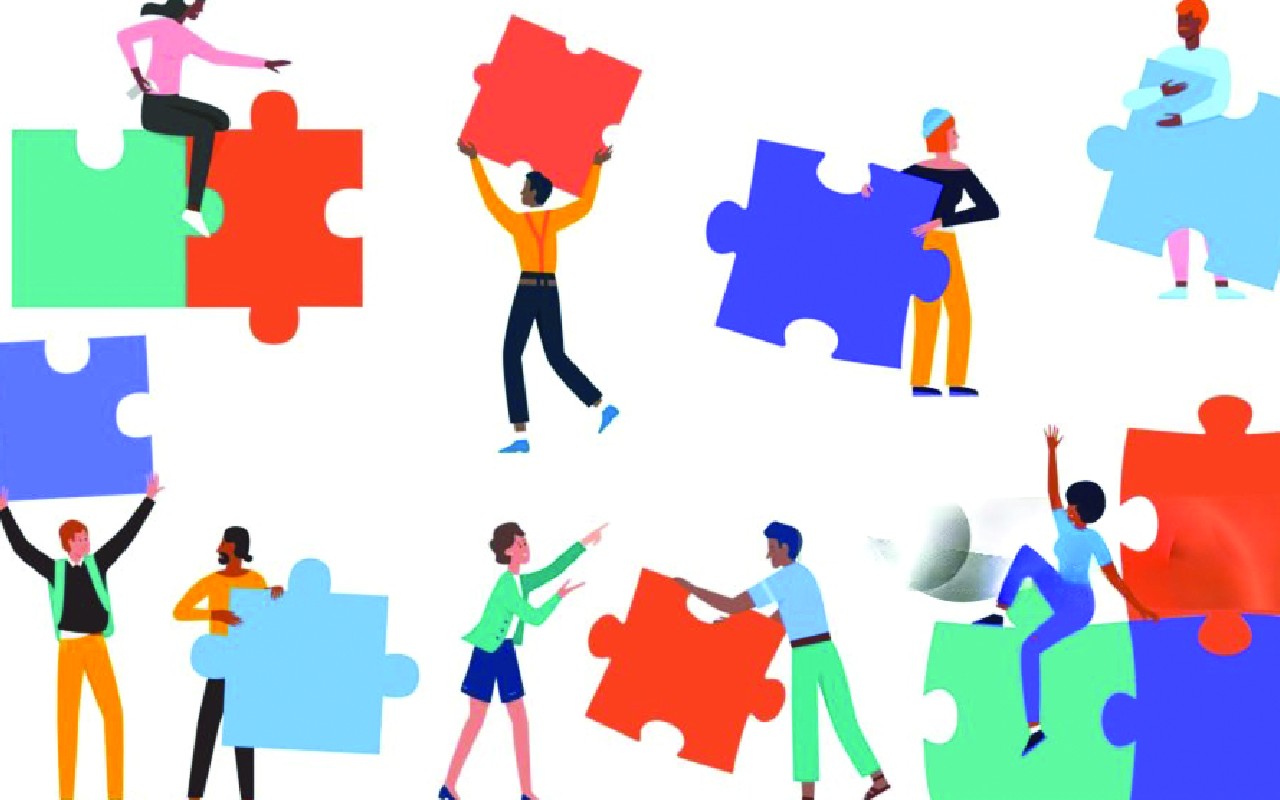
Any relationships of a close bond—say between parents and children; among siblings; between married couples; childhood friends who have grown up together, and more—have predictable patterns of intimacy, aloofness, and so on. There are patches of time where the intimacy is so strong that thought processes almost run parallel and overlap. It leads to intimacies and togetherness—a kind of bonding which gives meaning not only to life but also to the understanding of relationships. While it lasts, it is like a roller-coaster ride, and it almost appears timeless.
But then, as time passes, experiences vary, and people no longer trust each other the way they did not so long ago. There are many reasons why this could happen, and one of the commonest is the entry of another figure who responds more closely to a person’s felt needs or aspirations. The entry of a third figure affects many direct relationships and sometimes may even be as close as sibling relationships or conjugal relationships. Hence, an important takeaway is the ability of relationships to jointly handle a third person’s involvement with caution, care, and foresight.
This is difficult because emotions are involved, and one’s needs change. A husband–wife relationship can typically be affected, one way or another, by the birth of a child or even life experiences from the family background of one or both partners.
If this can happen in the intimacies of a direct relationship, how much more so would it happen in a distant relationship, where people have met not in a natural bonding but casually, over work or even a location?
All put together, the arithmetic or calculus of this law has eluded many attempts at developing a pattern or even predictability.
Operationally, therefore, it becomes a matter of insights into the basic characteristics of human beings as such, rather than as individuals.
It would seem obvious that people seek relationships to suit their fundamental needs of living, loving, and progressing; each one wants happiness, appreciation, and dependability. How one offers this to another person is a matter not only of chance but also of the physical state and condition of the person.
It is commonplace to realise that hormonal balances create behavioural overtones, and at times very distinctive and identifiable ones. An obvious occasion for the manifestation of hormonal impacts is menopause. Formal literature on the effects of menopause has been widely researched in women. However, a reliable pattern identified consensually under menopausal influence has still to fully emerge. Interestingly enough, men also pass through menopausal influences, but literature on this is less common. In the case of men, this is less studied than in women.
In case both parties in a relationship are going through the influence of menopausal hormonal changes, then the relationship is bound to be affected, and the effect can often be more unpredictable, without any research validation to which one can refer. Thus, relationships are very often like fiddling with wires in the dark. The results and consequences are not always pleasant or, for that matter, predictable. It is amusing to notice that in spite of so much drumming up about artificial intelligence, these issues have not even begun to be capped, let alone approached.
While it is easy to identify scientific breakthroughs or new expressions of modelling product design or even work design, reflections on emotional crests and troughs are few and far between. Thus, the true area of manifestation of one’s efforts needs more attention than perhaps many other things. This is because emotions determine the basic orientation of a person and how they relate to another worker or even, for that matter, a machine of the times.
Guidance or orientation, therefore, becomes a challenge, and much ill-informed behaviour takes the place of informed guidance, let alone directive guidance. Unfortunately, the present state of research and knowledge does not do more, and one has to deal with the facts of the case as they are. There is an expression in this statement: “the truth is often stranger than fiction”.
All this can be a fitting subject matter for research into personality and the coping options which an individual is capable of mastering.
Many a time, proverbs sum up generations of experience and can be quite illuminating. However, proverbs are sometimes contradictory, and illustrations would help to explain. There is a statement, “look before you leap”, and an equally powerful statement, “he who hesitates is lost”. Which of these two statements is closer to the truth?
Similarly, there is the statement, “two heads are better than one”, and another, “too many cooks spoil the broth”. Which of these statements is true? Similar other examples can be given, but enough has been said to point out the limitations of folk wisdom represented through popular statements.
Clearly, the time is ripe to create a research agenda on relationships and slowly bring greater light to the grey areas of networking, which indeed affect everyone’s existence. A beginning has to be marked somewhere.
Relationships are an important component of existence, and the sooner one succeeds in giving them higher predictability than at present, the easier life could be for all.
The writer is an internationally acclaimed management consultant; views are personal