The spirit of Pariksha Pe Charcha
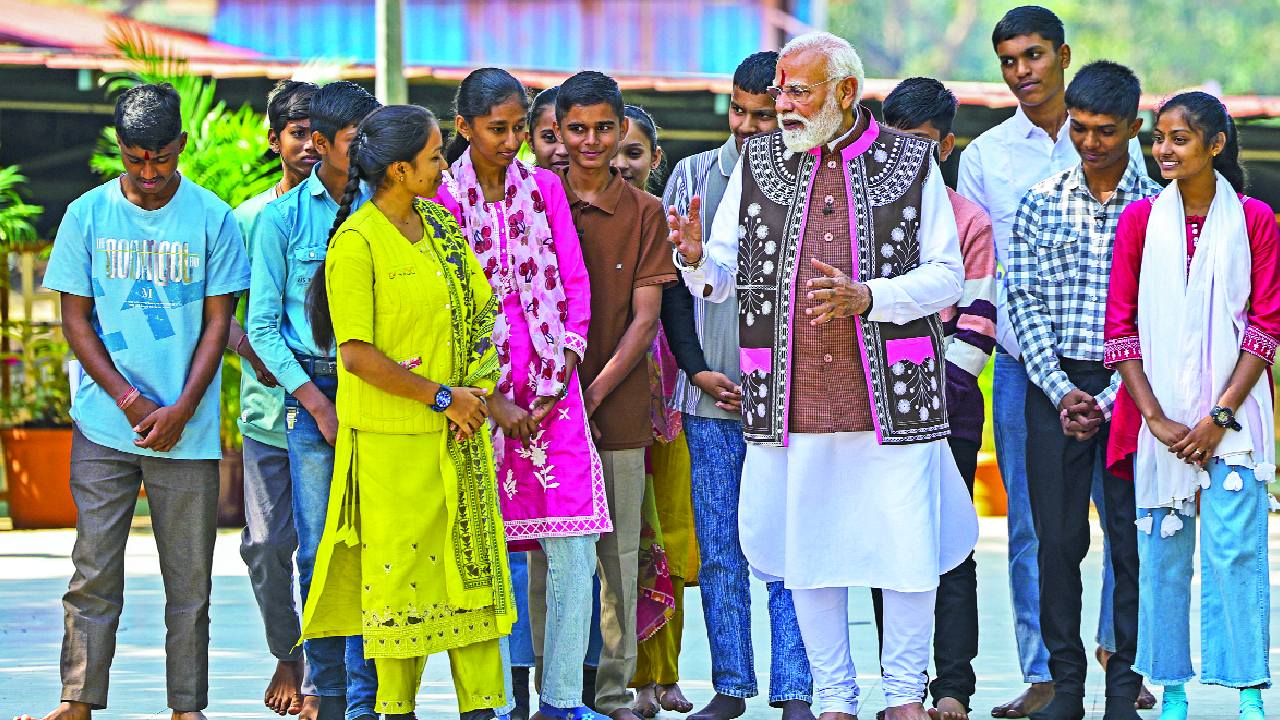
Achieving high marks remains the primary ambition for most students. In classrooms and households across the country, examinations are often seen as decisive moments that determine a child’s future. In keeping with the vision of the Prime Minister Narendra Modi, who — through Pariksha Pe Charcha — has championed a student-friendly and stress-free education system, it is important to remind ourselves that examinations are not meant to be sources of fear, but opportunities for learning, reflection, and self-discovery. The Prime Minister’s consistent message has been clear: marks should never define a child’s worth.
The challenge of current perceptions
Unfortunately, society often interprets lower grades as signs of failure or personal inadequacy. This habit of judging a student’s value solely through academic performance has distorted our understanding of what grades truly represent. Too often, a single score is mistaken for the total measure of a student’s diverse abilities and potential. The emotional toll of this mindset is visible in disappointment, embarrassment, fear, and helplessness. Persistent academic struggle can even lead to what psychologists describe as “learned helplessness”, where students begin to believe that effort no longer matters. At this stage, curiosity — the very heart of learning — slowly fades.
The evolution of Pariksha Pe Charcha
The spirit of Pariksha Pe Charcha seeks to correct this misunderstanding by placing the student’s mental well-being at the centre of the examination process. It urges students, parents, and teachers to see examinations not as judgments on personal worth, but as milestones in a longer journey of growth. Since its first edition on February 16, 2018, Pariksha Pe Charcha has grown steadily in scope and participation. What began as a town hall-style interaction at Talkatora Stadium in New Delhi has evolved into a nationwide platform reaching millions of students through in-person, virtual, and hybrid formats. Participation has expanded from a few tens of thousands in the early editions to over 3.5 crore registrations in 2025. The initiative has rightfully earned a Guinness World Record for its widespread engagement, reflecting a national commitment to making education more humane and supportive.
Understanding the meaning of grades
Grades are intended to measure a learner’s current level of understanding, skill, and progress in a particular subject at a specific moment in time. They reflect performance, not permanent ability. While they may indicate classroom attention, reading habits, and preparation, they are never absolute measures. A wide range of factors — such as anxiety, health, personal circumstances, learning styles, teaching methods, and assessment formats — shape these outcomes.
Therefore, when a student performs poorly, there is always room for improvement. The right perspective is crucial. Grades are temporary indicators that highlight areas for growth. When treated as final judgments of ability, they damage self-esteem and weaken motivation. When understood properly as feedback, they become powerful tools for learning and development. In this sense, poor grades are not the end of the road, but signposts guiding students towards better strategies and deeper understanding.
Learning from failure: The role of teachers and parents
Poor performance provides valuable feedback about what went wrong and why. Failure allows reflection in a way that easy success often does not. By analysing mistakes, students can identify patterns in their errors and gaps in understanding. This process strengthens learning and long-term retention. Lower grades remind students to reflect on their habits, time management, learning strategies, and priorities. A student may realise that distractions, ineffective revision, or last-minute cramming are limiting progress. Through reflection and experimentation, learners can develop study techniques suited to their own abilities and needs.
The influence of educators and families
Teachers play a decisive role in shaping how students interpret success and failure. When educators compare students with others or make negative remarks, they may unintentionally damage self-confidence. In contrast, when they explain mistakes clearly and offer guidance, they help students improve. By encouraging collaboration and valuing every learner beyond numerical scores, teachers can transform classrooms into spaces of growth rather than fear.
In many families, academic performance is closely tied to expectations and social status. When children underperform, parents may react with anger or comparisons, creating fear and pressure. Supportive responses, however, build resilience. By asking constructive questions and encouraging problem-solving, parents help children rebuild confidence and motivation.
Building resilience for life
Peers also influence how students cope with failure. By being understanding and offering help, students can support those who are struggling. Helping one another builds friendships and prepares students for real-life challenges. Mindset ultimately determines whether poor grades become obstacles or opportunities. A growth mindset views challenges as chances to improve. We must adopt a mindset in which bad grades are seen as informative rather than discouraging. They point to areas for development, not the limits of potential.
In the end, what matters is not the grade itself but how it is understood and used. When seen as proof of failure, bad grades damage self-worth. When viewed as feedback, they become tools for improvement.
In this larger vision, Pariksha Pe Charcha stands as a transformative national platform that humanises examinations and restores confidence in young minds. The Prime Minister Narendra Modi has consistently reminded the nation that education is not a race for marks, but a journey of character, curiosity, and courage. When grades are understood in this spirit, they do not weaken our children — they prepare them to face life with strength and wisdom.
The writer is the Minister of State for Education and Development of the North Eastern Region; views are personal