The resolve to end Naxalism becomes reality
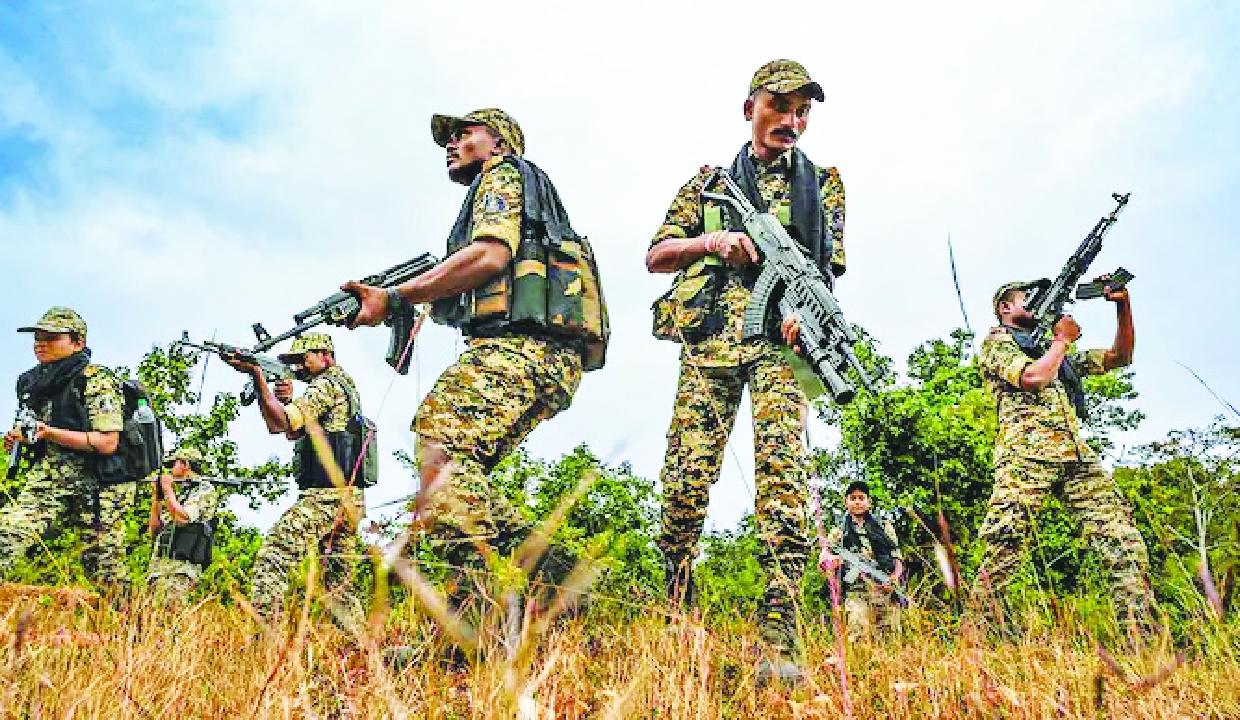
The Resolve to End Naxalism Becomes Reality *Praful Kumar Singh* A new chapter has been written in the history of India’s internal security. Under Union Home Minister Amit Shah’s policy of “zero tolerance” and his time-bound commitment to eliminate Naxalism, this long-standing challenge is now turning into a reality. Since assuming office, Amit Shah has pursued a dual strategy of “decisive action” and “inclusive development” to tackle Naxalism. He made it clear that Naxalism is not merely a law-and-order issue, but one of the greatest obstacles in the path of democracy. A key pillar of his strategy has been the establishment of security camps in areas once considered strongholds and safe havens for Naxal groups. The Ministry of Home Affairs has set up more than 330 new security camps in the remote regions of Chhattisgarh.
These camps have effectively restricted the free movement of Naxal elements and provided a significant strategic advantage to security forces. To weaken the Naxal network, its funding mechanisms were specifically targeted. Central agencies such as the National Investigation Agency (NIA) and the Enforcement Directorate (ED) launched stringent action against levy collection networks and the so-called urban Naxal ecosystem. This crackdown severely disrupted their logistics and eliminated their ability to procure modern weapons. The government also granted operational freedom to security forces, resulting in a record number of Naxals being neutralised in encounters between 2024 and March 2026. Several high-value commanders were among those eliminated, leading to a near-total collapse of the Naxal leadership structure. From the beginning of 2024 to March 2026, more than 700 Naxals were killed, including hardened Maoists who had long symbolised terror in affected regions. Encouraged by the government’s liberal rehabilitation policy, nearly 5,000 Naxals surrendered and chose to join the mainstream.
Additionally, over 2,200 Naxals and their associates were brought within the ambit of the law. Union Home Minister Amit Shah, soon after the formation of the BJP government in Chhattisgarh, laid out a comprehensive roadmap to make India Naxal-free by December 2025 in his very first meeting on January 21, 2024. This vision was formally articulated during his visit to the state in August 2024, when he announced the target of ending Naxalism by March 31, 2026. To achieve this, the Union Home Minister directed the Chhattisgarh government to formulate a dedicated rehabilitation policy for Naxals, aimed at encouraging large-scale surrenders. In this regard, the ‘Niyad Nellanar’ (Your Good Village) initiative of the Vishnu Deo Sai government in Chhattisgarh proved to be a game-changer. Under this scheme, villages located within a 5-kilometre radius of security camps were connected with essential infrastructure such as roads, electricity, clean drinking water, ration shops, and healthcare centres.
As villagers began to realise that the camps were meant to deliver development rather than repression, the Naxals rapidly lost their grassroots support base. At the same time, improved coordination was ensured between the state police and central armed police forces such as the Central Reserve Police Force (CRPF), Border Security Force (BSF), and Indo-Tibetan Border Police (ITBP), further strengthening the effectiveness of anti-Naxal operations. The government did not rely solely on the use of force; it also kept the door open for reform for “misguided youth.”
For Naxalites who chose to surrender, the Chhattisgarh government implemented one of the most attractive rehabilitation policies in the country. Surrendered cadres were provided immediate financial assistance, land to build homes, free education, and skill development training.
Today, many former Naxals in Bastar are running small businesses or practicing agriculture, leading lives of dignity. The greatest beneficiaries of the end of Naxalism have been the tribal communities of Bastar. After four decades, schools are now functioning without fear in areas like Abujhmad. Roads that had remained closed for decades are now reconnecting villages with towns.
Bastar is shedding its identity as part of the “Red Corridor” and is emerging as a hub of tourism and art. Products like “Bastar Coffee” and “Dhokra Art” are now reaching global markets. The impact of rehabilitation efforts is also visible in social acceptance, as communities are embracing those who have surrendered. Women in Bastar who once carried weapons are now setting examples of self-reliance by running initiatives like “Bastar Cafe.” Many former Naxals have even joined local security forces and are now protecting their own communities. Those who once waged war against the state are today part of the mainstream of development, working under the tricolour.
The visionary strategy of Amit Shah and the resolute, strong-willed leadership of Vishnu Deo Sai have demonstrated that with genuine coordination between the Centre and the State, even the country’s most formidable internal security challenge can be eradicated from its roots.
March 31, 2026, has been etched in India’s history as a landmark day of “freedom from terror.” This is not merely a military victory, but a triumph of democracy, a victory of development, and a moment of justice for thousands of families who lost their loved ones to Naxal violence.
The author is associated with the Dr. Syama Prasad Mookerjee Research Foundation; Views presented are personal.