The history Bangladesh must not forget
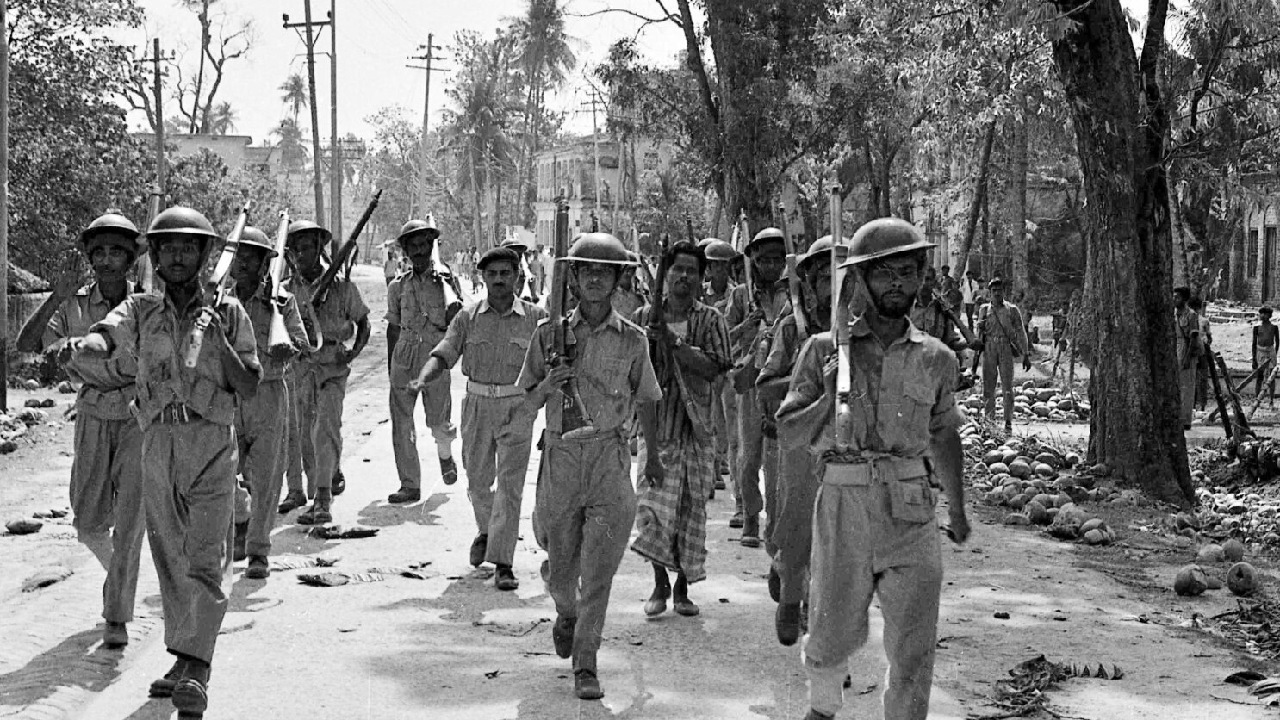
India hosted over 10 million Bangladeshi refugees following the genocide by Pakistani forces, who accounted for 3 million Bengali deaths, as per official Bangladeshi records. The Indian Government recorded 3,842 Indian soldiers as having been killed and 9,851 wounded in the 1971 Indo-Pak War (an estimated 8,000–9,000 Pakistani soldiers were killed, and 93,000 were taken prisoners). Besides the incalculable human cost that India sacrificed, it wily-nilly funded the creation of “Bangladesh” with its own government expenditure, with reallocated budgetary spends and the subsequent creation of a Bangladesh Relief Fund.
The doyen of the Bangladeshi Freedom Movement, Sheikh Mujibur Rahman, was to generously acknowledge, “The people of Bangladesh will remember forever the sacrifices of the Indian people and soldiers,” and that, “Without India’s support, our independence would not have been possible.” In what might seem surreal today, given the perception being sought to be created by the dispensation of the day in Bangladesh, Mujibur Rahman had bluntly said, “India stood by us in our darkest hour.” But as the wounded and recorded history of Bangladesh is getting callously and falsely reimagined, and Mujibur Rahman himself is getting demonised, the outcome of the “new history” in Bangladesh could fail so many countless heroes, even on the Indian side.
Regrettably, those who delivered what is often called the Indian Armed Forces’ “Finest Day” — i.e., the most decisive victory (the largest surrender since World War II) — went unsung. Beyond the human and moral underpinnings of the victory, 1971 remains an unprecedented (and under-recognised) saga in militaristic professionalism for its tactical genius, lightning-speed campaign, and sheer valour.
One such hero who never really got enough credit for his unprecedented heroics in the Indian “uniform” (including in the creation of Bangladesh in 1971) is the legend of Lt Gen Sagat Singh. He goes down in the glorious annals of Indian military history as perhaps the only General in the Indian Army who never lost a battle he partook in. Hailing from a martial stock of fearsome Rathore warriors of the Rajputana deserts, Sagat was to naturally join the profession of arms. The die-hard soldier in him saw a certain inexplicable proclivity for daredevilry and unconventional means that brooked no justification for inaction or failure — he always delivered, whatever the task and whatever the odds.
His meteoric rise was seemingly preordained, and his first big moment to honour the warrior’s call came with the opportunity to lead the action against the Portuguese in Goa. Leading the famous 50 Para Brigade that was brazenly airdropped into Goa, stunning the Portuguese with its furious pace and spirit, Sagat’s brilliant leadership shone as he seized fleeting opportunities to press ahead, cavalierly and fearlessly.
Later, commanding the 17th Mountain Division, Sagat was to “hit” the Chinese in a way they never imagined after the 1962 operations — the Chinese had unknowingly stepped on a man who knew no fear. Disregarding all official calls for caution, restraint, and even withdrawal from certain forward posts, the barrel-chested Sagat refused to be cowed down and bloodied the Chinese nose at Nathu La. As a Major General, Sagat kept hitting back at the Chinese to set a new template of Indian soldiering for the Chinese to fear, for posterity. As always, the incorrigible audacity to defy orders in order to hold his ground, stare the enemy in the eye, and attack furiously as he pleased typified Sagat’s generalship.
After vanquishing the Portuguese and the Chinese forces, the pivotal moment of Sagat’s patent dash and bold style of leadership was reserved for the 1971 Indo-Pak War, as his 4 Corps smashed its way to Dhaka to deliver the Indian Armed Forces’ “Finest Day”. In the 14-day Indo-Pak War, Sagat was to redefine the meaning of speed, fortitude, and combat command, as he pieced together his moves with clinical precision, unorthodox means, and kinetic bluntness that not only caught the enemy by surprise, but even Sagat’s own Headquarters, who struggled to keep pace with his guts, moves, and grit.
His crossing of the Meghna River was fraught with risk, but the man was destined to back his instinct, and he pressed on like a man possessed, and soon, troops from his 4 Corps entered Dhaka. Like in all previous combats, Sagat would always trust his hunch and go flat out for total victory, instead of resorting to safer means of pitter-patter, as conventionally ordered. It is only due to the unmitigated dare and fury of such combat commanders that the odds can be defied, as his instinct, talent, and untamed ferocity as a combat leader remain unmatched.
If there is one person that the Bangladeshis owe their salvation from the brutality of the Pakistani Army, it is the unparalleled heroics of Lt Gen Sagat Singh. Sadly and unbelievably (perhaps owing to his unconventional and incorrigible military genius), Sagat was denied a military gallantry award, when many far less deserving got credit for the creation of Bangladesh.
Today, Bangladesh is incredulously reimagining its own history and succumbing to the very forces (read: religious extremists) who undertook the bloody genocide barely 54 years back. When they can thanklessly question India today, there is little hope that they would recognise the few like Lt Gen Sagat Singh, who staked their own lives to liberate Bangladesh.
The writer, a military veteran, is a former Lt Governor of Andaman & Nicobar Islands and Puducherry; views are personal