The Global Costs of America’s Retreat
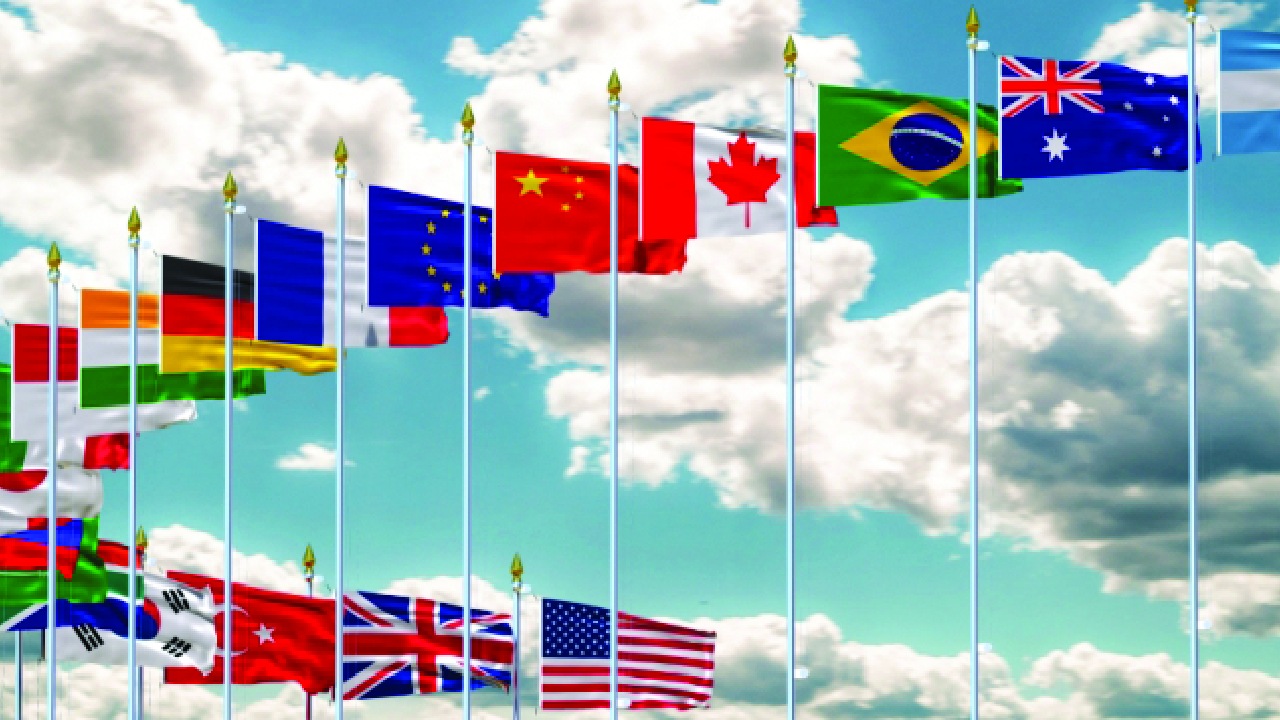
As Washington turns away from global institutions and towards deal-making, the consequences for aid, climate action and the Global South are becoming increasingly hard to ignore.“The future of our country will not be decided in global halls or by unelected bureaucrats. It will be decided by Americans,” Donald Trump has repeatedly declared. This philosophy, framed as a reclaiming of national sovereignty, has translated into a decisive withdrawal from multilateral institutions and a renewed preference for bilateral agreements. What appears, on the surface, to be a tactical recalibration of foreign policy is, in reality, a deeper ideological shift — one that is reshaping how power, assistance and influence are exercised across the world. Multilateralism, for all its flaws, was built on the premise that shared problems require shared responsibility. By contrast, bilateralism concentrates authority in the hands of the powerful. For donor countries, bilateral arrangements promise greater visibility, tighter control and clearer political returns. For recipient nations, however, they often bring sharper conditionalities, reduced policy space and an uncomfortable exposure to geopolitical pressure. In this emerging order, humanitarian need risks being eclipsed by strategic convenience.
Institutions under the United Nations umbrella were designed precisely to mitigate such asymmetries. As the United States steps back, these institutions are weakened both financially and morally, forcing a smaller group of committed states to shoulder a growing burden.
The consequences are already visible in population and public health programmes. Support from bodies such as the UN Population Fund has been critical for countries grappling with fragile health systems, conflict and displacement. In Afghanistan, where state capacity has steadily eroded, multilateral assistance has often been the only lifeline for maternal health, reproductive services and basic care for women.
When a major donor withdraws, the impact goes beyond lost funding. It undermines confidence in the very idea of collective humanitarian responsibility. Climate governance presents an equally troubling picture. The shift away from multilateral climate commitments towards bilateral energy deals risks deepening global inequality. Technologies such as hydrogen fuel systems and electric vehicles, often touted as the future of clean mobility, remain prohibitively expensive for most developing economies. High infrastructure costs, dependence on rare earths and elevated consumer prices make rapid adoption unrealistic across much of Asia and Africa.
For India, this creates a particularly sharp dilemma. Affordable transport is a social and economic necessity, yet prolonged reliance on outdated technologies delays the transition to cleaner energy and inflates long-term environmental costs. Without the discipline and incentives of strong multilateral frameworks, climate commitments risk becoming discretionary rather than binding.
This is why Washington’s withdrawal from the India–France-led International Solar Alliance carries symbolic and practical weight. The alliance represented more than a renewable energy platform; it was a rare instance of the Global South shaping the climate agenda, with India at its centre. By promoting affordable solar deployment across tropical nations, the ISA sought to align development, energy security and climate responsibility.
American disengagement from the initiative sends a discouraging signal. It suggests that long-term investment in collective clean energy solutions can be sacrificed for immediate national priorities. For countries betting on solar power as a route to resilience and self-reliance, this weakens momentum, financing prospects and political confidence. The diplomatic implications extend well beyond energy and aid. Multilateral forums have historically given smaller and middle powers the space to collaborate, negotiate and assert shared interests. Bilateralism, by contrast, thrives on imbalance. Strong states dictate terms; weaker ones adjust. In South Asia and the Indian Ocean region, this dynamic could significantly reshape diplomacy.
Nations such as Nepal, Sri Lanka and the Maldives, heavily dependent on multilateral climate finance and development assistance, now face a more transactional environment. Aid is increasingly intertwined with strategic expectations. For the Maldives, confronting the existential threat of rising sea levels, bilateral assistance cannot replace coordinated global action on emissions and adaptation.India’s position in this shifting landscape is complex. It remains a beneficiary of multilateral cooperation while also emerging as a donor and agenda-setter. Preserving global institutions aligns with its long-term interests, yet it must also navigate a world in which Washington prefers deals over consensus. This demands diplomatic agility: closer engagement with Europe, deeper South–South cooperation, and a willingness to assume greater responsibility in sustaining multilateral initiatives.
The retreat from multilateralism also erodes the global knowledge ecosystem. International research networks, data-sharing platforms and coordinated responses to pandemics and climate disasters rely on stable institutions. Without a central convening power, expertise fragments and collective learning slows — at precisely the moment when shared knowledge is most urgently needed.Historically, American influence rested not only on military or economic strength, but on its role as an architect of global order. Cooperation generated legitimacy, and legitimacy sustained leadership. By stepping away, Washington risks weakening the very influence it seeks to protect. Power exercised through transactions may be immediate, but it is rarely enduring.The revival of bilateralism reflects an older worldview, one that prioritises national advantage over collective security.
For the Global South, the challenge is stark: fewer safeguards, greater unpredictability and heightened exposure to power politics. Yet there is also an opening for emerging powers like India to act as stabilisers of a cooperative order — not as substitutes for the United States, but as anchors of multilateralism in a fragmented world.As the world confronts climate urgency, demographic transition and geopolitical uncertainty, the real question is not whether multilateralism is imperfect. It is whether the world can afford its decline. In choosing bilateral leverage over collective responsibility, the United States may secure short-term advantage, but the long-term costs — for aid, climate action and global stability — will be shared by all.
The writer is a Professor at the Centre for South Asian Studies, School of International Studies and Social Sciences, Pondicherry Central University; views are personal