The forgotten power of philosophy
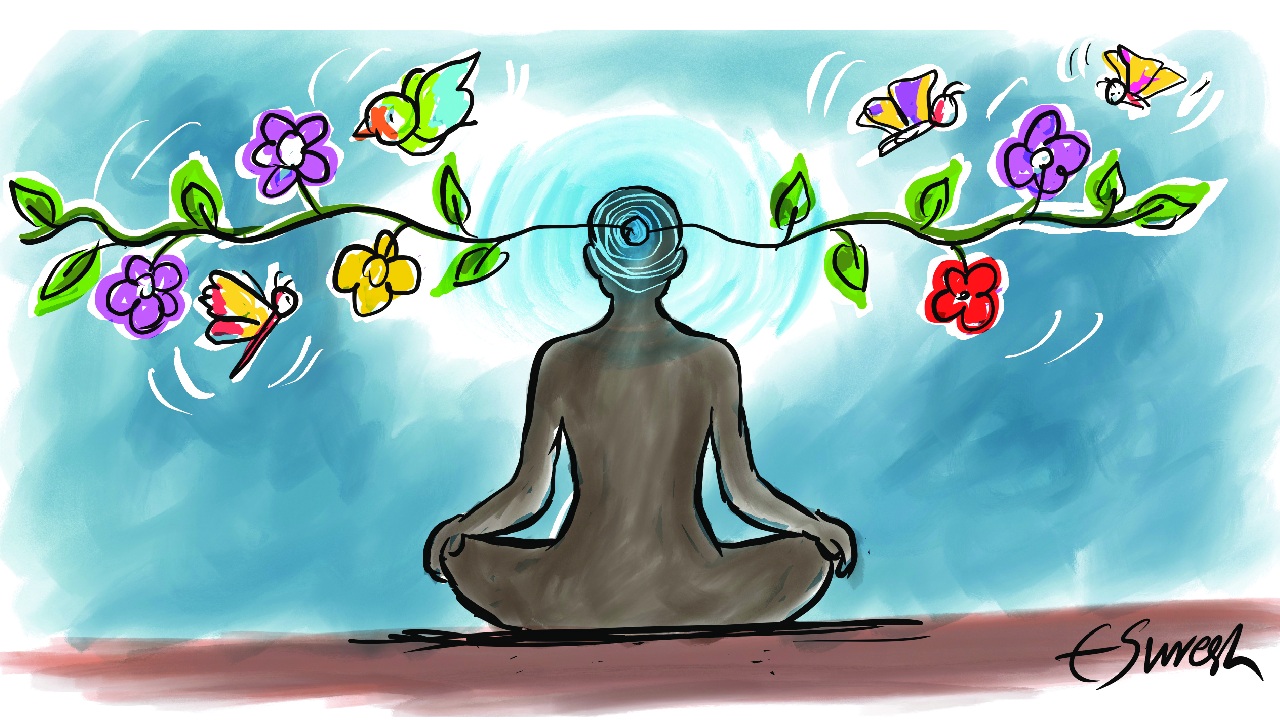
“Philosophy is the lamp that illuminates all sciences; it provides the techniques for all action; and it is the pillar which supports dharma.” -Preface of the Arthashastra by Kautilya
Philosophy occupies a special place in academia because of its distinctive style. While in other subjects there is an answer to every question, in philosophy there is a question for every answer, so it is said that philosophy is the mother of all academic disciplines and is also the climax. The most striking speciality of philosophy is that it makes us wiser rather than intellectual or logical. Intelligence or logic can be misused, but not wisdom. We all know how some of the most logical sophist judges in Greek Philosophy awarded capital punishment to Socrates, one of the wisest figures in the world.
Some people allege that the world of philosophy and philosophers is imaginary. Their ideas are esoteric and do not have any concern with the problems of ordinary people in society. This allegation reflects a very superficial understanding of Philosophy. To realise how profound the role of the philosopher is, it is necessary to cite a few instances. Few of us know that on March 21, 1977, the then Prime Minister, Mrs Indira Gandhi, declared the end of the Emergency on the suggestion of Jiddu Krishnamurti (as accounted in the biography of J. Krishnamurti, written by P Jayakar), a renowned humanist and philosopher, whose book ‘Freedom from the Known’ is considered a revolutionary work in academia. Similarly, on November 8, 2010, when the then US President Barack Obama addressed both Houses of the Indian Parliament, he cited the influence of four Indians - Swami Vivekananda, Rabindranath Tagore, Mahatma Gandhi and B.R. Ambedkar. This acknowledgement underlines the global contribution of philosophers, and that of Indian philosophers.
A philosopher influences our inner self more than the external environment, which is why Socrates used to refer philosopher as a ‘doctor of the soul’ who prescribes proper attitudes and practices to nurture our mental health and happiness. In a world where high economic growth rates, intellectual skills, and advancement of technology are considered as criteria of a prosperous society, philosophers administer some new thought process to understand human life in a deeper sense.
John Dewey, whose ideas on philosophy of education work as a trailblazer, once said, ‘Education is not preparation for life, education is life itself.’ There is hardly anyone who can ignore its significance in the present rat-race competitive world. In the era of artificial intelligence and Chat GPT, teachings like “Appo Deepo Bhava”- Be your own lamp of Gautama Buddha, Socrates’ proposition “An unexamined life is not worth living”, or Swami Vivekananda’s call “Strength is life, weakness is death” are the core values of our existence. No sensible society should neglect these insightful ideas. If most of us had been philosophical thinkers, we would not have been misled by scheming politicians and fake godmen all these years.
Philosophical ideas can play a very significant role in addressing these types of socio-political and ethical malaise in society. We evaluate Mahatma Gandhi as a champion of truth and non-violence, but his most impactful teaching is his unmatched emphasis on human dignity. As he writes in his autobiography- ‘It has always been a mystery to me how men can feel themselves honoured by the humiliation of their fellow beings.’ Unfortunately, we failed to understand this fundamental truth that our mind is the silent architect of our life.
So, if there is restlessness in our mind and shrewdness in our behaviour, then there will be complete chaos in our lives as well as in society. One can say that Philosophy unites a world which is deeply shattered in the name of region, religion, caste, race and ideology.
A major challenge for philosophy is its decline in academia because of fewer enrollments of students in this subject.
It is beyond comprehension why a subject which is considered the mother of all other subjects is losing its importance amongst students. Universities across the country face this dismal condition, and the lack of opportunities in this field is one of the most important reasons. Our policymakers should take note of this. Even though the National Education Policy-2020 makes several references to the Indian Knowledge System and Philosophy, our lawmakers and educationists must make more efforts to address the problem of the dwindling popularity of this subject. One may suggest that this subject be introduced in the class 11th and 12th of the CBSE and ICSE Boards, as it’s been done at the school level in some state boards.
One must keep in mind that Philosophy is not just an academic subject rather also concerned with the upliftment of humanity. Its role is very intense and wide.
As a mother of all subjects, it is indispensable for the intellectual and ethical growth of human beings. The value of philosophy should not be evaluated in getting final answers but in the very process of seeking them, which elevates human life and understanding. It helps individuals navigate life by fostering an unselfish, open-minded approach that reduces anxiety and increases the ability to understand, justice, and love.
As Nobel Laureate Bertrand Russell wrote in his well-known essay ‘The Value of Philosophy’ in 1912 - “If all men were well off, if poverty and disease had-been reduced to their lowest possible point, there would remain much to be done to produce a valuable society; and even in the existing world the goods of the mind are at least as important as the goods of the body.
It is exclusively among the goods of the mind that the value of philosophy is to be found; and only those who are not indifferent to these goods can be persuaded that the study of philosophy is not a waste of time.”
Both authors are professors in the Department of Philosophy, Kirori Mal College, University of Delhi.; views are personal