The balance of power is changing
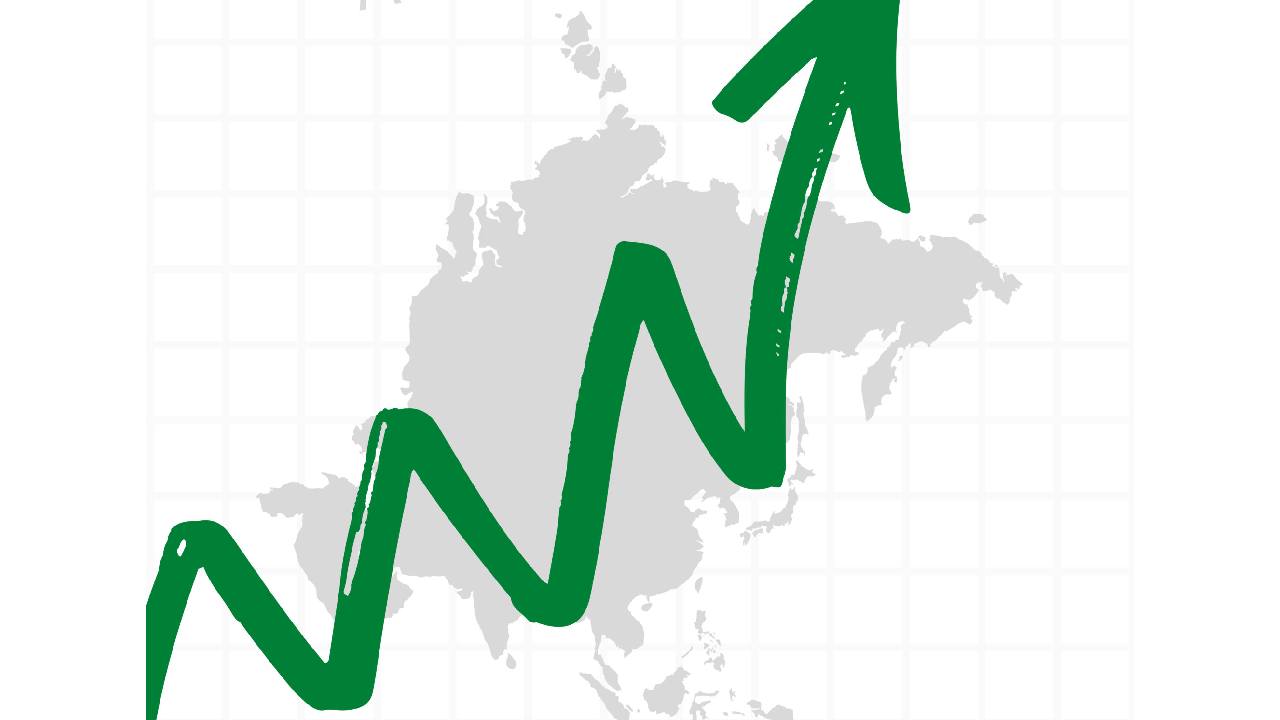
No matter how hard US President Donald Trump tries to tell the world that the US is the dominant power, the fact is that US dominance in the world and its grip over geopolitics are waning fast. The fulcrum of the world is slowly but surely shifting to Asia. What is heartening for us is the fact that India happens to be at the forefront of this new world order. Recognition of this fact comes from none other than Elon Musk, once a close friend of Trump but now a bête noire, who categorically claimed that the balance of power is shifting in a post on X that has gone viral. The repost by Elon Musk of an IMF-based chart showing China and India together driving nearly 44 per cent of global growth in 2026 is a statement of fact that cannot be brushed away. This is not just a contention of Elon Musk but a hard fact vetted by institutions like the IMF, which acknowledge that the world economy is now being driven by two Asian giants, India and China. For the first time since the industrial revolutions of Europe and America— China and India– the two Asian giants are the primary engines of global expansion.
According to the IMF’s January 2026 outlook, China will contribute 26.6 per cent of incremental global GDP this year, while India will add another 17 per cent. The United States, long the world’s undisputed growth anchor, comes a distant third. This reflects a structural transformation in how the global economy is organised. China’s role is well understood. Despite slowing from its earlier double-digit pace, it remains the world’s largest manufacturing hub, the biggest trading nation, and an increasingly sophisticated technology and innovation ecosystem. India, on the other hand, has some distinct advantages. With a young population, an expanding middle class, and improving infrastructure, India is now where China was in the early 2000s — poised for a long growth runway. India’s contribution of 17 per cent of global growth is extraordinary for an economy that still has relatively low per capita income. It signals not just speed, but also potential depth. The IMF’s view of Asia rests on three points. First, technology investment — especially in digital platforms, AI, semiconductors, and green energy. Second, financial conditions across much of Asia remain supportive. Third, Asian economies have shown remarkable adaptability: they have reconfigured supply chains, absorbed geopolitical shocks, and leveraged domestic demand to cushion global volatility.
Yet the IMF also warns of serious risks: trade tensions, geopolitical flashpoints, high public debt, and the possibility that AI-driven optimism could give way to financial corrections. For India, this is a once-in-a-generation opportunity. To make the most of it, three priorities stand out. First, India must accelerate manufacturing. Second, India should lead in the digital-AI economy. With its huge pool of engineers, India can become the platform on which global AI and fintech applications are built. That requires sustained investment in research, skills, and data governance. Third, India must invest heavily in human capital. The world is increasingly depending on Asia. If China provides scale, India provides momentum — together, they can make it an Asian century.