Thalapathy storms the citadel, interval for Dravidian dominance
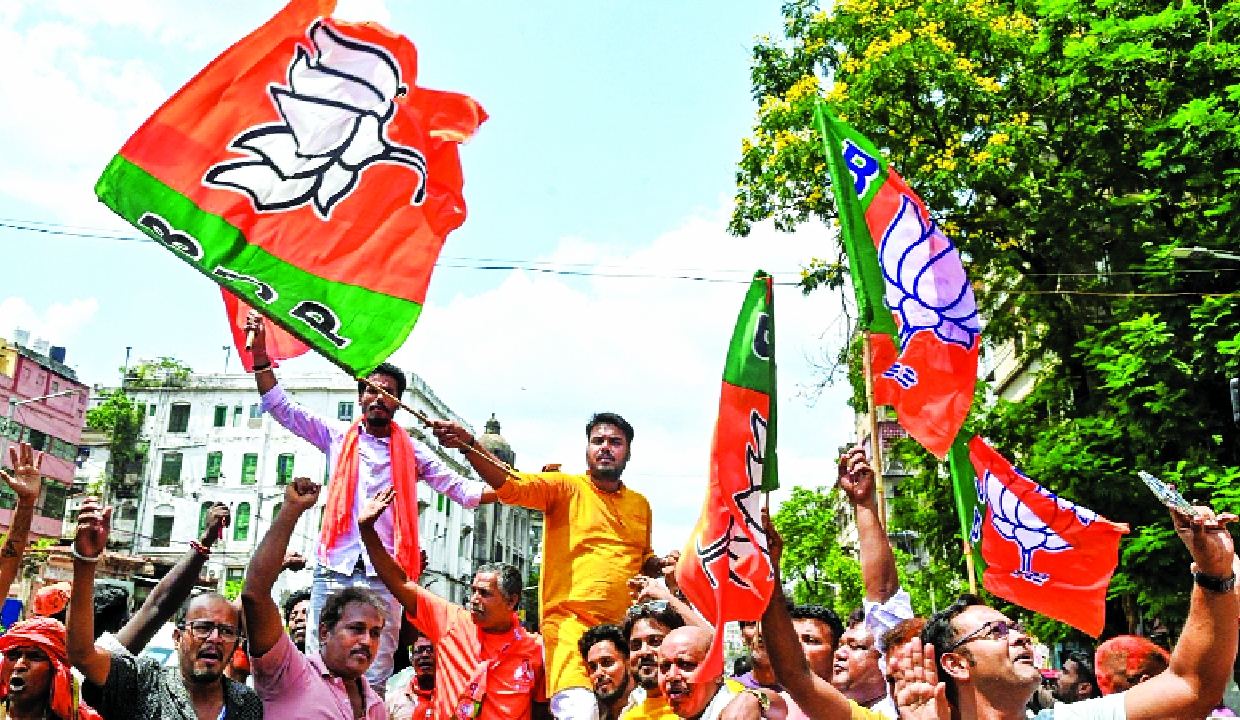
South Indian fixation with cinematic actors as successful politicians has got yet another name, i.e., Chandrasekaran Joseph Vijay, or simply, Thalapathy (Commander) Vijay. Historically and culturally, movies have been a powerful medium to spread societal and political messages of justice, ethnic/regional pride, and anti-caste messaging that have stirred public imagination. Actors who played the screen protagonists became the face of those ideas and afforded themselves public reverence as veritable messiahs.
This phenomenon is particularly visible in Tamil and Telugu films with the likes of MG Ramachandran, Jayalalithaa, Karunanidhi, Vijayakant, etc., to the likes of NT Rama Rao, Chiranjeevi, Pawan Kalyan, etc., in the so-called Tollywood. Even Karnataka (euphemistically called Sandalwood) has had Rajkumar, Ambareesh, Upendra, etc., while Kerala (Mollywood) has had Innocent Vareed Thekkethala, Suresh Gopi, etc.
Almost everywhere, the actor-turned-politician template saw the screen actors as real-time manifestations of their heroic roles (often mythological or in the David-versus-Goliath frame) to build trust, resonance, and preference in the electoral hustings. The screen imagery afforded a larger-than-life or Robin Hood-esque image as the valiant protector against injustice, discrimination, or corruption, who stood up valiantly for the poor.
This leads to a naturally blurred transition and perception of “goodness” from reel-to-real for those seeking to make the shift from movies to the state assemblies, as their public persona is a political goldmine to tap.
That many of these actor-turned-politicians have acquitted themselves to be as good as non-actors (sometimes even better) has opened the doors for the likes of Thalapathy Vijay.
The sensitive Dravidian realm has used films to carry political ideas and themes. It became imperative to embed scripts with lingering social messages that shaped public opinion. The accompanying phenomenon of “Fan Clubs” (Thalapathy Vijay had launched his Vijay Makkal Iyakkam in 2009) further lionised impressions of “hero as saviours” in a highly organised way with active social work eg, arranging marriages, blood drives, relief work etc, to build personal brand and emotional attachment.
Vijay has followed the well-beaten track of addressing socio-political tensions through storytelling and loaded dialogues. The tell-tale trajectory saw him play the mandatory “angry young man”, albeit with idealistic moorings in Thamizhan and the Godfather-like Thalaivaa where he spouts his prophetic “time to lead” line. Later, as the crusader focused on farmer suicide and corporate greed in Kaththi, the anti-GST proponent in Mersal, to Sarkar where he addresses voter fraud. In hindsight, the selection of scripts with their underlying themes was unmistakable in the route that he was charting all along. The carefully curated journey ensured that he could be perceived above caste or religious considerations, which otherwise play a major role in political preferences. Having vanquished the unimaginable duopoly of the Dravidian biggies ie, DMK and AIADMK (besides spurning overtures from national parties), Thalapathy Vijay has finally breached Fort St George in Chennai.
While Vijay has tiptoed his way very carefully without offending any section of Tamil society e.g., he named the entire galaxy of former Tamil politicians as his inspiration like KG Ramachandran, Karunanidhi, Periyar, Annadurai to Jayalalithaa — there is really nothing new in his manifesto that differentiates him from the other Dravidian politicians.
There is the usual retinue of freebies like financial aid for women and unemployed youth, free annual medical check-ups, free LPG, loan waivers, etc., that seems run-of-the-mill.
He even did the de rigueur temple run to assuage people of faith who could have had potential concerns owing to his belief systems. His youth-baiting beyond the “Starpower” was with quaint promises like a Ministry of Artificial Intelligence — whether that delivers as well as it sounds remains to be seen. He even showed political astuteness in courting and heeding Prashant Kishore's critical advice on going solo, as opposed to tying up with any other regional or national party. Unlike the stuttering and seemingly confused positions of other cine stars like Kamal Haasan or Rajinikanth, Vijay has stunned all and sundry with his clarity, grit, and confidence in his chosen path.
For now, the masses have given him a solid benefit of doubt that has glossed over many personal, financial, cinematic, and even political controversies like the recent mishandling of his political rally that resulted in a deadly stampede. If anything the deployment of the state machinery to suppress his movement e.g., delayed clearance and supposed leak of his latest movie, Jana Nayagan, to curbs on his political activities have all seemingly backfired as the Tamil electorate have given him a thumping endorsement to victory.
However, Vijay would know better than most, that in real life the script rarely plays out as seamlessly, as it should. Film stars know the fickleness of stardom and how the fate of a star can never be taken for granted, as there is always yet another star waiting in the wings to dislodge the first. Today the masses are a lot more impatient, demanding, and seek action rather than words - that is particularly truer in the Southern States, where the overall socio-economic indices are higher than the national average. Vijay’s much bandied cinematic line, Naa Vaaren (I am coming) has come true, now the stage is set for the more difficult path of leading the State of Tamil Nadu to its aspired destiny.
Bhopinder Singh, Former Lt Governor of Andaman & Nicobar Islands and Puducherry and a military veteran; Views presented are personal.
Leave a Comment
Comments (1)
Another lazy piece lumping all "South Indians" as victims of group think.