Tectonic shift in people’s power or a power play?
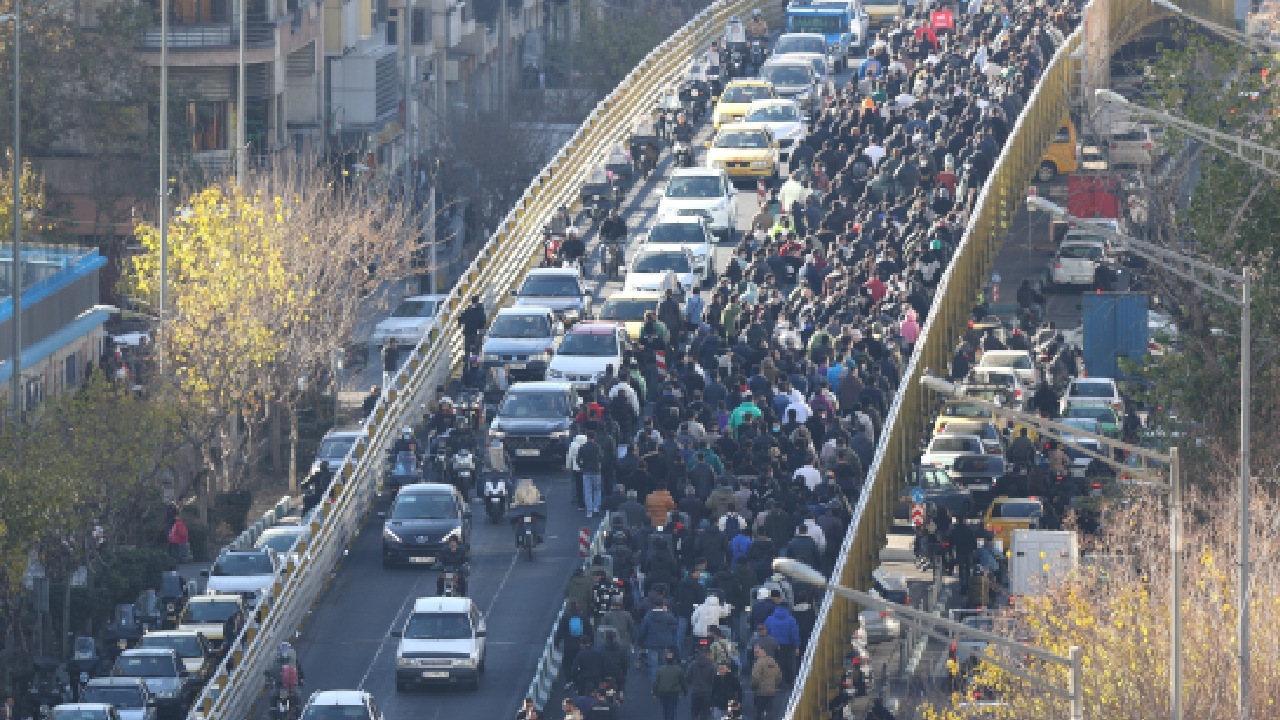
What is happening in Iran today is disturbing on many counts. First, the protests on the streets have turned into a spectre of violence and arson, and the government has stepped in with a force that has killed over 500 civilians. Second, it has created a situation where superpower involvement is imminent, turning Iran into a flashpoint that could spill over its borders. Third, it sets a dangerous precedent in which the US President is brazenly inciting people to “take over institutions”, a direct meddling in the affairs of a sovereign country. And finally, the protesters are seeking regime change, not reforms.
They lack a roadmap for resolving the issues confronting them, which could plunge the country into a long cycle of chaos and confusion. Though the countries are different, Iran could go down the path that Bangladesh is treading now. It happened in Bangladesh, it happened in Nepal, and a little earlier in Egypt - regimes changed, but the misery of the people only multiplied.
At present, the main issue is economic collapse, but it has been channelled into one of the most potent challenges to the Islamic Republic since the 1979 revolution, when the monarchy ended and an Ayatollah-led theocracy began.
Today, Iranians — spurred by sky-high inflation, a crashing currency, and deep dissatisfaction with elite corruption and repression — are demanding a better life for themselves. The immediate trigger was economic — the plummeting rial and soaring basic costs — but the protests quickly turned into a challenge to the legitimacy of theocratic governance itself. What distinguishes these protests is their sheer number and vigour. The exiled Crown Prince Reza Pahlavi has gained a new lease of life and is appealing for international support. The US President, who rarely cares for world opinion, has already said that the United States might respond “very strongly”.
He may use the situation to his advantage through a mix of tariffs, cyber assaults, and even direct strikes to install a favourable regime in Tehran. But the big question now is this: are we witnessing the beginning of a new trend where popular protests, supported from outside and amplified by the world media, can effectively undermine entrenched governments?
Internal protests are no longer strictly domestic. No government is now entirely safe, and its rivals can exact revenge without sending a single soldier. This marginalises smaller states, undermines the world order based on respect for sovereignty, and risks rendering the United Nations redundant. It also jeopardises the global economy and international trade.
For India, this evolution carries special stakes, as its investments in Iran, particularly the Chabahar Port - a gateway for trade with Central Asia — are at risk. Turmoil could delay infrastructure, disrupt cargo movement, and allow China to fill strategic vacuums. The Global South should therefore advocate a peaceful, Iranian-led transition over externally driven upheaval. Internal aspirations must be respected, not exploited, as past superpower interventions — Afghanistan being a case in point — have often left nations in ruins.