Supreme Court questions own order on denial of bail to Umar khalid in Delhi riots case
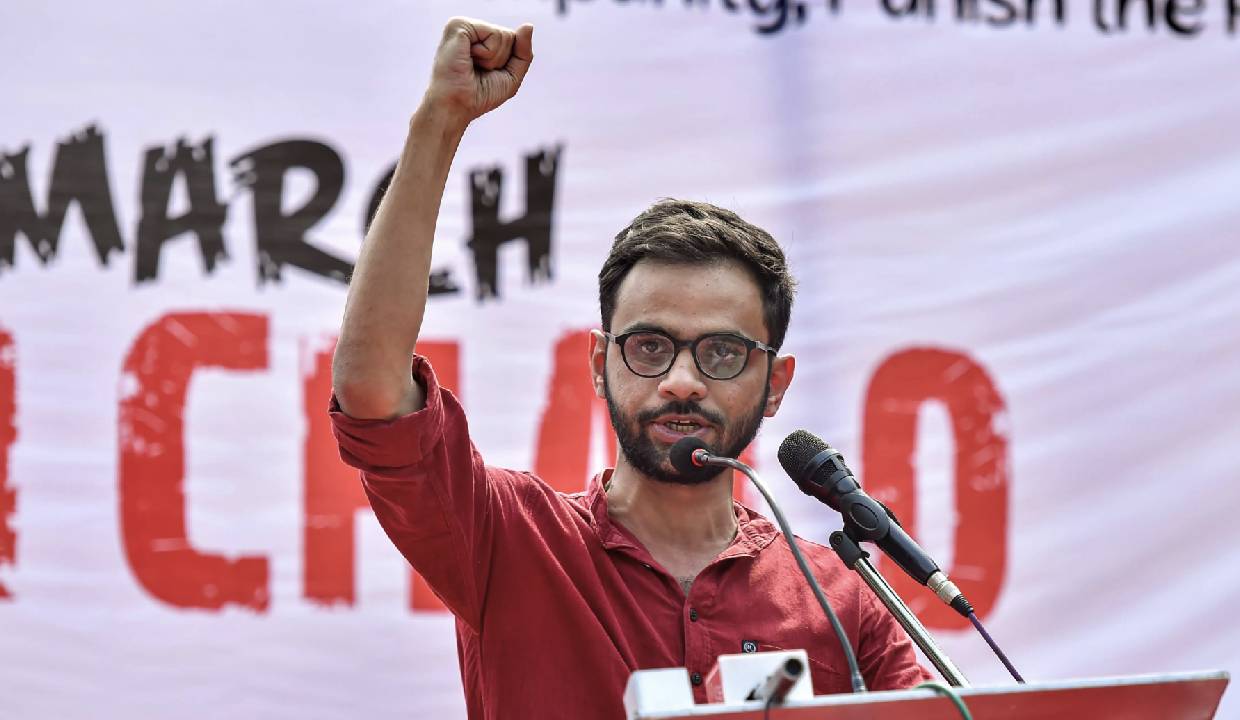
The Supreme Court of India has expressed strong reservations over its earlier judgment that denied bail to former JNU student leader Umar Khalid in the Delhi riots conspiracy case, while reaffirming that “bail is the rule and jail is the exception” even under stringent anti-terror laws.
A bench comprising Justices BV Nagarathna and Ujjal Bhuyan observed that the earlier verdict rejecting bail to Umar Khalid and Sharjeel Imam appeared to dilute the binding precedent laid down in the landmark KA Najeeb case.
The court emphasised that judicial discipline requires lower strength benches to strictly follow larger bench rulings, and cautioned against interpretations that weaken established precedents on bail jurisprudence.
The observations were made while hearing a separate matter in which the court granted bail to an accused in a different UAPA-related case, where it reiterated that prolonged incarceration cannot be justified solely on the basis of statutory restrictions.
The bench noted that the right to speedy trial under Article 21 of the Constitution cannot be overridden merely due to charges under the Unlawful Activities (Prevention) Act.
It also stressed that the KA Najeeb ruling remains binding law and must be followed by all courts, including High Courts and coordinate benches of the Supreme Court.
The court further criticised the tendency of smaller benches to weaken larger bench rulings without formally referring the matter for reconsideration.
In its remarks, the bench reiterated that bail cannot be denied indefinitely when trials are delayed, even in serious criminal and anti-terror cases, reinforcing the constitutional balance between liberty and statutory restrictions.