Strategic repositioning of higher education
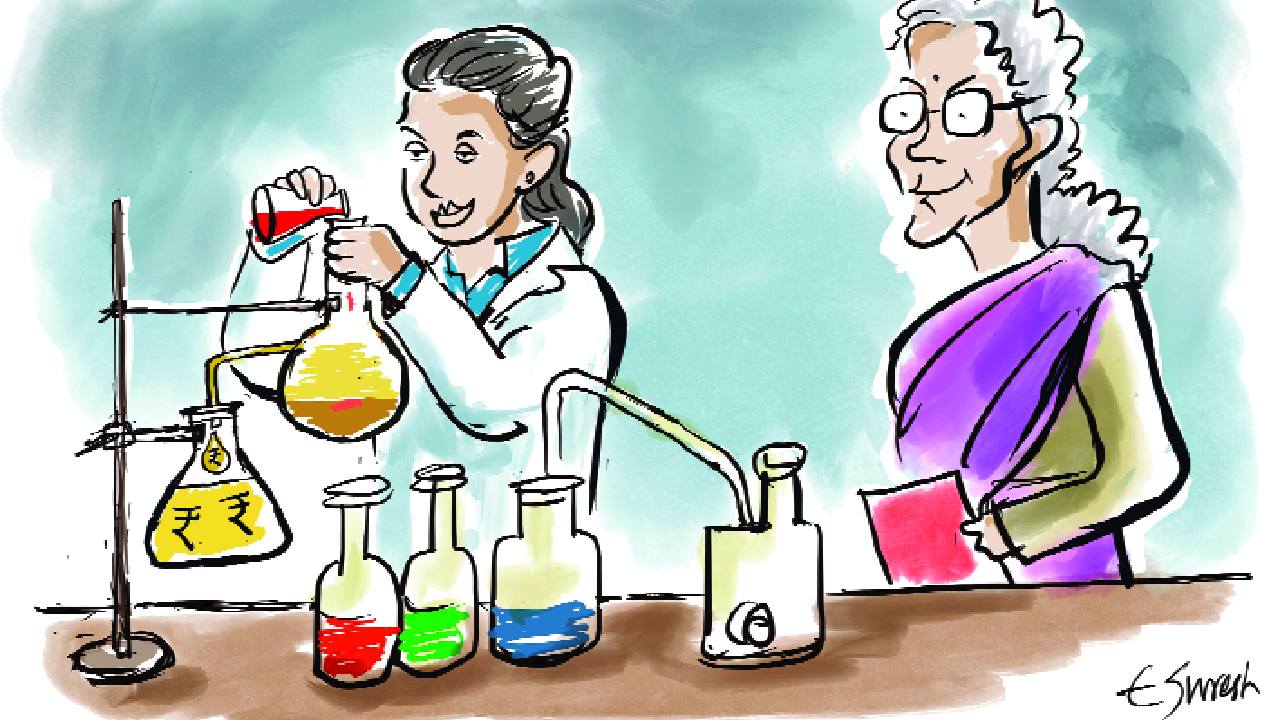
The major highlight of this year’s Union Budget, as far as higher education is concerned, is the major shift in the approach towards higher education. There is a structural shift in the perceived role of higher education, that is, from a welfare-oriented social sector to a core pillar of India’s economic growth. Instead of treating higher education separately, it has been embedded within an integrated education, employment, and enterprise continuum, thereby directly linking universities with industrial growth and exports, intertwined with emerging technologies. This change in approach recognises human capital as the country’s most critical productive asset, particularly in times of global uncertainty with geopolitical conflicts, the advent of disruptive technologies, reshoring as well as regionalisation of value chains, and intensifying competition for skilled talent.
University Townships: Anchoring Knowledge in Economic Geography
One of the most revolutionary interventions in this Budget is the proposal to develop, through states, five University Townships along major industrial and logistics corridors through a challenge-mode framework. These townships will be developed as an ecosystem consisting of multiple universities, colleges, research institutions, skill centres, residential facilities, along with different industries. This proposal will help in institutionalising the spatial integration of education, research, and industry, eliminating the long-standing disconnect between academic institutions and industries. Finally, it may result in developing Regional Innovation Systems, where proximity between universities, research institutions, and industries boosts innovation and ideas which can be transformed into commercially viable products.
Education-to-Employment and Enterprise Standing Committee
Another pragmatic, timely budget proposal is to form a High-Powered Education-to-Employment and Enterprise Standing Committee. It is a significant shift from fragmented skill development initiatives to system-level planning to integrate education, skills, and entrepreneurship. The proposal envisages transforming higher education institutions from a degree-granting role to dynamic suppliers of a future-ready, agile labour force and entrepreneurs to meet the evolving demand of industry. It takes into consideration the advent of emerging technologies like AI to bring the required changes in the education sector, starting from school to higher education.
STEM, Research Infrastructure, and Frontier Knowledge
The Budget also proposes strengthening the research and frontier-science ecosystem, highlighting the role of higher education institutions as engines of innovation. The establishment or upgradation of four major national telescope and astronomy facilities to enhance India’s global standing in astrophysics and space sciences, as well as continued support to national research missions like AI, Quantum, Anusandhan NRF, etc., with higher education institutions as primary implementing nodes, are the major initiatives to elevate the research ecosystem in the country. This highlights the importance of sustaining innovation-led growth, which will create more value than imitation-based industrial development.
Gender-Responsive Higher Education Infrastructure
To eliminate the structural barriers faced by women in STEM education, the Budget proposes establishing one girls’ hostel in every district. This may address non-academic constraints such as safety, accommodation, and mobility faced by female students in STEM and result in greater participation. The highlight of this proposal is enhancing productivity through innovation with greater female participation rather than a mere social obligation.
Expansion of Professional and Applied Higher Education
The Budget tries to expand higher education beyond traditional universities into professional, applied, and services-linked domains. The major initiatives under this head include adding 100,000 professionals in allied health institutions by enhancing the capacities of AYUSH universities and research centres; increasing the number of veterinary and para-veterinary colleges through private participation; establishing a new National Institute of Design through challenge mode; and introducing creative technologies (AVGC) labs in colleges and schools to bring a more professional skill-oriented approach.
Overall, the Budget introduces new institutional architectures that can reshape India’s higher education ecosystem over the next two decades, considering higher education as the major source of long-horizon national capital formation. If effectively implemented-especially through cooperative federalism and credible governance mechanisms — these reforms can position Indian universities as anchors of innovation-led, inclusive, and competitive growth.
The writer is Director, Indian Institute of Management Mumbai; views are personal