Reclaiming footpaths, losing livelihoods
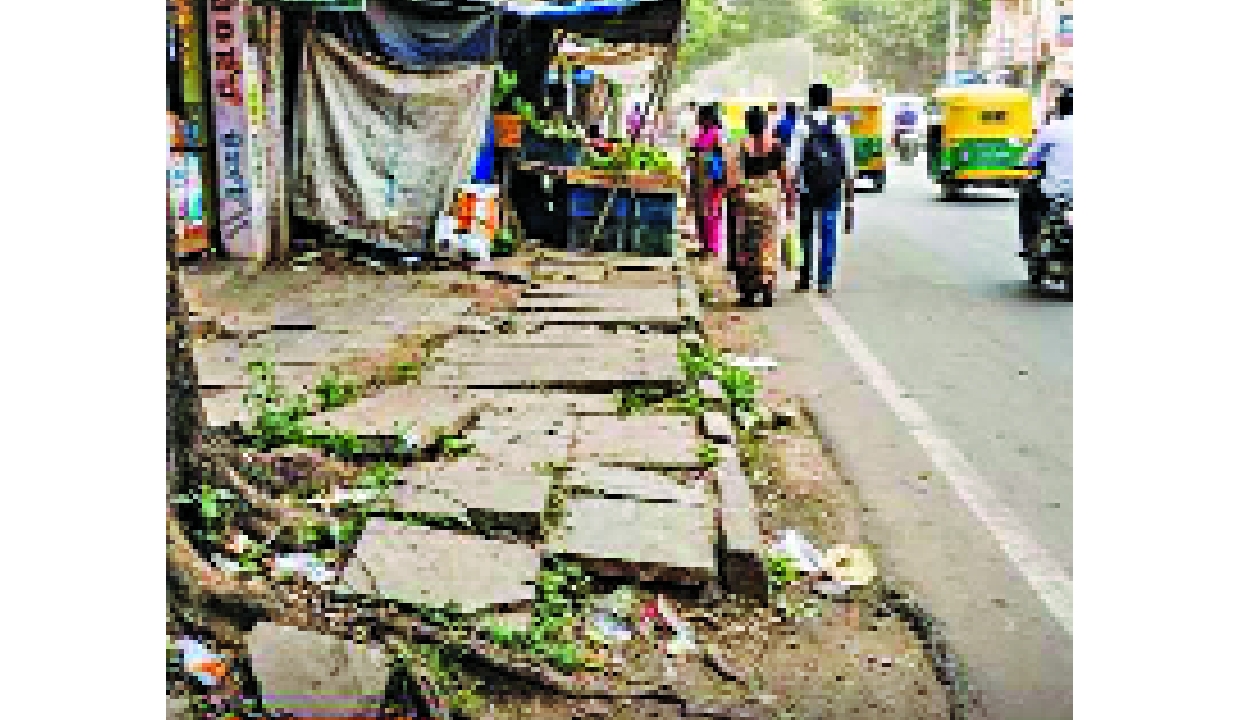
Every city tells a story through its footpaths. Some stories narrate the tale of accessibility and inclusion, while others are painful stories of survival. The Supreme Court’s recognition of walkability as a fundamental right in the case of Maniyar Iliyaz @ Shaik Riyaz v. P. Ayyapa (2026), did more than just redefine urban mobility, it reaffirmed the constitutional promise of accessible and inclusive public spaces. This was a call to rethink how Indian cities are designed and governed. The Greater Bangalore Authority was amongst the first to answer that call by clearing 200 km of footpath of unauthorised structures, temporary vending space, kiosks and other encroachments. This exercise prompted protest by street vendors who questioned whether making cities walkable should come at the cost of their livelihood. Public reaction on social media reflected the same divide. While some praised the clearance as a necessary step towards restoring pedestrian access, while others said that street vendors are not to be treated as encroachers. Around the same time, Bombay High Court, while hearing a matter concerning road widening and recurring waterlogging, remarked that Mumbai’s flooding is “our own creation” and “can’t blame BMC alone”. This judicial observation invites an uncomfortable question that if the Municipal Corporation cannot alone be blamed, then who else should be held accountable? Urban spaces are shared by multiple stakeholders. Pedestrian seek safe and accessible streets, street vendors depend on them for their livelihood and municipal authorities are entrusted with their governance.
While Citizens and street vendors share the responsibility for respecting public space but it is the local urban body that bears the statutory obligation to regulate, plan and manage them and is failing miserably in doing so. Even Delhi is no different, wherein the High Court of Delhi have time and again flagged the lackadaisical functioning of the municipal body. The same governance deficit is evident in Delhi. Delhi High Court has highlighted delays in approving vending plans and directed authorities to constitute TVCs and finalise certificate of vending. Courts continue to remind municipal authorities to perform duties that should have become routine administrative functions, exposing a deeper institutional failure in the governance of public spaces. India’s Footpaths have thus become far more than just strips of concrete; they have become newest constitutional battlegrounds. On one side stands the pedestrian, armed with the Supreme Court’s recognition of walkability as a fundamental right. On the other stands the street vendor, whose livelihood also enjoys constitutional protection. These developments reveal the increasingly contested nature of urban public space, where footpaths are not just physical infrastructure but facilitate pedestrian movement, sustain informal livelihoods and preserve essential urban infrastructure. While walkability is now affirmed as a fundamental right, the Supreme Court has also affirmed in Sodan Singh v. New Delhi Municipal Committee (1989), Bombay Hawkers’ Union v. Bombay Municipal Corporation (1985) and Olga Tellis v. Bombay Municipal Corporation (1985) that street vendors possess a constitutionally protected right to carry trade under Article 19(1)(g) on streets. More recently, the apex court clarified that anti-encroachment drives cannot be undertaken in a mechanical manner, instead the authorities must provide for rehabilitation of street vendors in the vending zones and must minimise disruption of their livelihood in accordance with the Street Vendors (Protection of Livelihood and Regulation of Street Vending) Act, 2014. These conundrums lead to the question of whether walkability and livelihood are mutually exclusive?
From Bangalore’s ambitious footpath reclamation drive to Delhi’s institutional implementation failure and Mumbai’s prolonged courtroom battle, all three cities narrate the same story. The battle for the footpath has become the defining symbol of urban governance failure. Parliament enacted the Street Vendors (Protection of Livelihood and Regulation of Street Vending) Act, 2014, to replace ad-hoc evictions with a structured framework based on surveys, participatory town vending committees, notified vending zones, certificates of vending and rehabilitation. Yet more than a decade after its enactment, delayed surveys, incomplete Town Vending Committees, pending Certificates of Vending and unnotified vending zones have left vendors in legal uncertainty, forcing civic authorities to repeatedly rely on anti-encroachment drives. Footpaths are reclaimed, vendors are evicted, protests erupt, petitions reach the courts, and yet the cycle begins all over again. Beneath this recurring cycles is the role of corruption in governance of public space. Rent seeking, selective enforcement and unofficial payments, exposes vendors to arbitrary decision-making, local power brokers and other informal actors to exercise influence over access to vending spaces. Therefore, the real congestion on Indian footpaths is institutional.
Across the world, smart city initiatives have often regarded street vendors as visual blight whose presence is perceived to undermine aesthetics, efficiency and marketability of modern cities. Smart cities discourse have framed street vendors as manifestation of urban disorder and visual clutter, justifying their removal from public spaces. This perception, however, overlooks the indispensable role that street vendors play within the urban informal economy by generating employment for millions, making essential good affordable, supporting local supply chains and keeping public space active and accessible. The paradox of contemporary urban planning, therefore, is that cities celebrate walkability but often pursue it at the cost of displacing the very workers who keep cities economically and socially active. Walkability and livelihood are therefore not mutually exclusive constitutional aspirations, they become adversaries only when cities govern street vending through administrative delays, regulatory ambiguity and eviction-driven enforcement instead of planning. Despite their different context, Bangalore, Delhi and Mumbai tell the same story. The message is strikingly clear, persistent failure of urban local bodies to implement the Act which has transformed into recurring constitutional controversies. The constitution never required the cities to choose between right to walk and right to work, it is the governance failure that has failed to make them coexist. A truly walkable city is not one that merely clears it footpaths, it is the one that creates space for both movement and livelihood, proving that constitutional rights need not compete when institutions do their jobs. Until that vision is realised, every cleared pavement will continue to raise the same unsettling question: are we building smarter cities, or simply more exclusionary ones?
Dr. Deeksha Bajpai Tewari is Professor, Department of Geography, Dyal Singh College, Dr. Upma Gautam is Professor, University School of Law and Legal Studies, GGSIP University. Nandini Singh Randhawa is Ph.D. scholar, School of Law and Legal Studies, GGSIP University; Views presented are personal.