Dalit political realignment in Uttar Pradesh: A decisive tilt towards the BJP
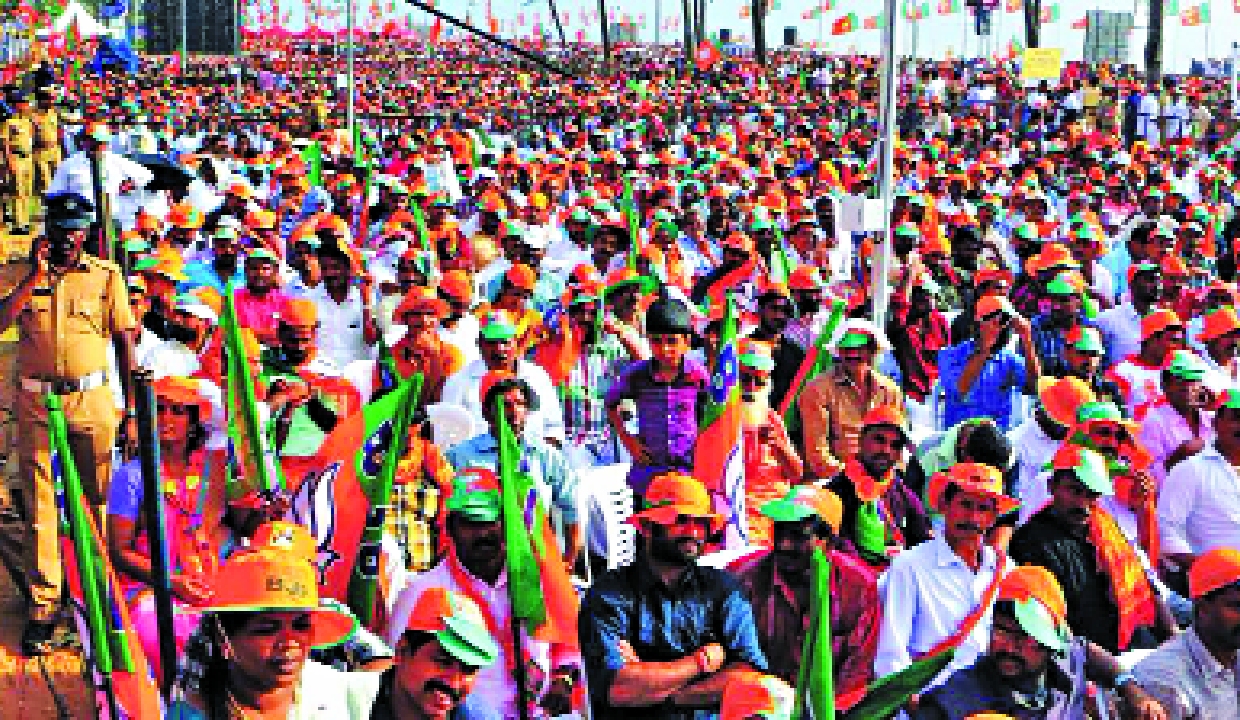
Over the past decade, Uttar Pradesh’s political landscape has undergone significant transformation, with one of the most notable shifts occurring in the voting preferences of Dalit communities. For years, the Bahujan Samaj Party (BSP) was widely regarded as the primary political representative of Dalits in the state. In 2007, BSP secured a decisive majority and formed the government, not only offering Dalits political representation but also instilling a sense of confidence that they could play a decisive role in the corridors of power. However, nearly two decades later, that political equation has undergone a marked change.
The early signs of this realignment became evident during the 2014 Lok Sabha elections, when the Bharatiya Janata Party (BJP), under the leadership of Narendra Modi, achieved a historic victory by winning 71 seats in Uttar Pradesh. This was followed by another landmark moment in 2017, when Yogi Adityanath was sworn in as Chief Minister after the BJP secured a resounding majority in the state assembly. These developments signaled a deeper social and political reconfiguration within Uttar Pradesh’s Dalit politics.
In the years that followed, the BJP, particularly under Chief Minister Yogi Adityanath, succeeded in expanding its political acceptance among a significant section of the Dalit community-most notably among non-Jatav Dalit groups. This shift was not the result of a single slogan or short-term electoral campaign. Rather, it emerged from a sustained, multi-pronged strategy that combined effective law and order management, the delivery of welfare schemes, cultural recognition, and greater social representation.
The most visible manifestation of this change has been the steady erosion of the BSP’s support base. The party that had polled nearly 30 percent of the vote and formed a majority government in 2007 has witnessed a consistent decline in its vote share over the subsequent decade and a half. Political analyses and post-poll surveys conducted by CSDS-Lokniti indicate that Dalit voters have not moved as a monolith. While the BSP has retained a relatively strong hold over its traditional Jatav support base for a longer period, it has lost considerable ground among non-Jatav Dalit communities such as the Pasis, Valmikis, Dhobis, Koris, and Khatiks, where the BJP has made notable inroads.
However, Dalit political behaviour cannot be understood through electoral data alone. In rural Uttar Pradesh, questions of security have long been central to Dalit political consciousness. Land disputes, wage-related conflicts, social dominance, and local strong-arm tactics have historically shaped Dalit perceptions of the state’s role. The Yogi Adityanath government has sought to project itself through a firm commitment to law and order and a policy of “zero tolerance” towards crime. By asserting that action would be taken irrespective of an offender’s caste or political influence, the government has been able to foster a degree of confidence among sections of the Dalit community regarding the state’s impartiality and their personal security. This sentiment draws added resonance from the collective memory of the 1995 Guest House Incident, in which then Chief Minister Mayawati was attacked. For many Dalits, the incident was perceived not merely as an act of political violence but as an assault on their collective dignity. Even after nearly three decades, the episode continues to surface in discussions around Dalit political identity and relations with other parties. The BJP has strategically invoked this memory in its political discourse to position itself as a defender of Dalit dignity and security.
While improved law and order has strengthened perceptions of security, the direct delivery of welfare benefits has helped establish a tangible connection between the government and citizens. The Jan Dhan-Aadhaar-Mobile (JAM) Trinity and Direct Benefit Transfer (DBT) mechanisms have significantly improved the efficiency of welfare delivery. Schemes such as the Pradhan Mantri Awas Yojana, Ujjwala Yojana, Ayushman Bharat, free ration distribution, and various scholarship programmes have reached a large number of Scheduled Caste households. The state government has further supplemented these efforts through initiatives focused on expanding scholarships for Scheduled Caste students, promoting self-employment among Dalit youth, developing Dalit-majority villages, and launching targeted programmes such as the Dr. Ambedkar Zero Poverty Mission. It is at this intersection that a new political category-the “beneficiary class”-has begun to emerge in Uttar Pradesh politics. Increasingly, voting behaviour is being shaped not only by caste identity but also by the tangible benefits derived from government schemes.
Politics, however, is not driven solely by material benefits. Symbols and the politics of recognition carry equal weight. Recognising this, the BJP has actively integrated Dalit icons into the broader cultural and political narrative. Chief Minister Yogi Adityanath has frequently described Dr. B.R. Ambedkar as the chief architect of the Indian Constitution and a towering figure of social justice. The state government has also taken steps to protect Ambedkar statues, improve basic infrastructure in Dalit settlements, and accord greater public recognition to figures such as Maharishi Valmiki, Sant Ravidas, Maharaja Bijli Pasi, and Veerangana Uda Devi. Through these measures, the government has sought to convey that Dalit icons belong not to any single community but to the shared heritage of Indian society.
In essence, the Dalit voter in Uttar Pradesh today is no longer a passive recipient of political mobilisation. Instead, the community has evolved into a more discerning electorate-one that evaluates political options through the interconnected lenses of security, dignity, economic opportunity, social inclusion, and constitutional assurances. This marks a significant maturation in the state’s Dalit politics.
The author is a post-doctoral fellow at Jawaharlal Nehru University; Views presented are personal.
Leave a Comment
Comments (1)
A very well-written and thoughtfully structured article. I particularly liked how you connected electoral data, governance, welfare delivery, and social dynamics to explain the political realignment. The flow is logical, balanced in tone, and engaging throughout. Great work!