Queues to QR codes: India’s daily commute is becoming a digital experience
Smartphones are no longer just changing how Indians shop or pay-they are changing how the people move. From buses and metros to railways and airports, transport is increasingly becoming part of everyday digital life.
For decades, urban commuting meant standing in line, buying paper tickets and carrying cash. Today, tickets are moving to smartphones, payments to QR codes and airport access by facial recognition. What is changing is not just transport digitisation but the integration of mobility into everyday digital behaviour. This reflects a wider behavioural shift. Government data shows digital payment transactions rose from 4,371 crore in 2020-21 to over 18,000 crore by January 2025-more than fourfold in under five years. As smartphones become central to payments and services, the commuters increasingly begin experiencing a hassle-free and convenient travel experience.
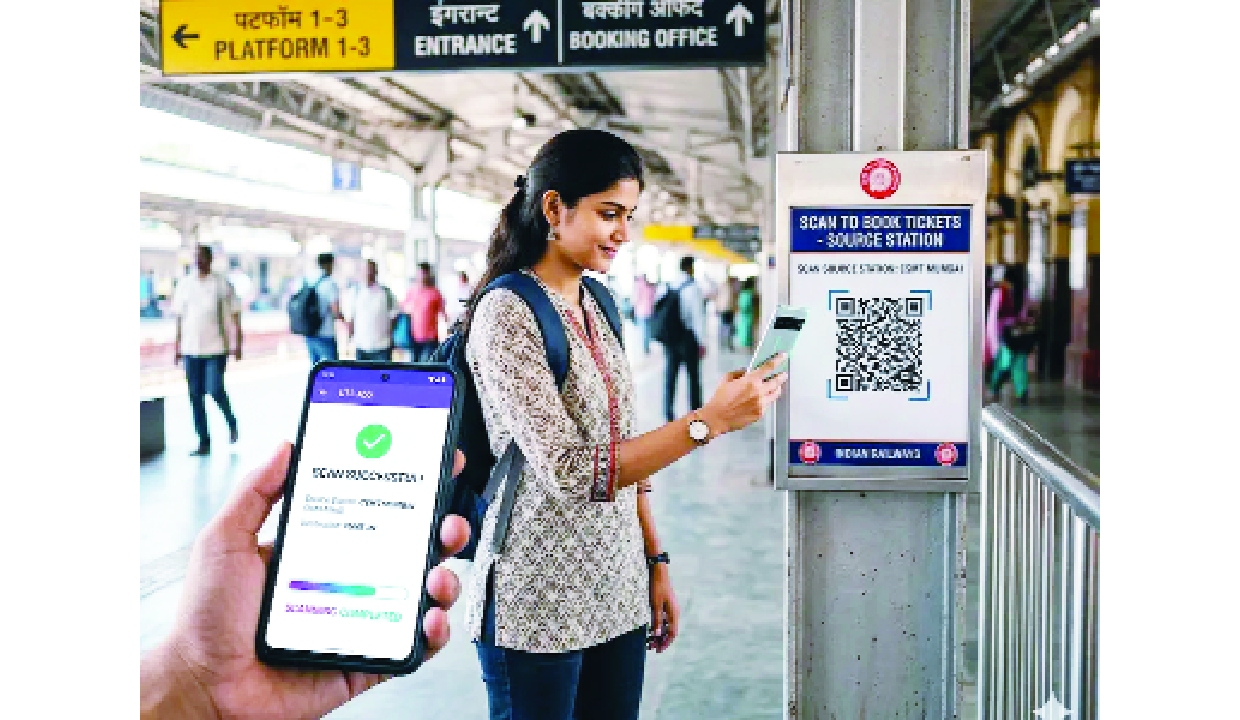
Railways offer one of the earliest examples of this shift. While online reservations became common much earlier, daily commuting remained tied to counters and printed tickets until Indian Railways introduced paperless mobile ticketing through the UTS app in 2015. The app later expanded to include UPI payments and multilingual support. Mobile-based UTS booking has also become increasingly popular, particularly in Mumbai’s suburban network. Between April and November 2023, Central Railway reported that 14.76 crore passengers used UTS, including 14.44 crore on Mumbai Division, generating over `161 crore-showing growing commuter comfort with carrying tickets on smartphones. Alongside this, Indian Railways now operates more than 4,661 Automatic Ticket Vending Machines (ATVMs) and 5 Coin-cum-Card Operated Ticket Vending Machines (CoTVMs) to support digital purchase of unreserved, platform and season tickets and reduce counter congestion. Digital adoption is also visible in reserved travel: e-ticketing accounted for approximately 87.5% of all reserved tickets booked in 2024-25. More recently, the RailOne app has integrated services including ticket booking, live train tracking, PNR status, food ordering and complaints onto a single platform while enabling digital payment through R-Wallet, cards, net banking and UPI.
Metro systems had introduced electronic ticketing years ago through smart cards and tokens, but the current shift is moving ticket access onto smartphones. Delhi Metro now offers QR-ticket booking across multiple digital platforms including the Delhi Sarthi (Momentum 2.0) app, WhatsApp, Paytm, PhonePe, Amazon Pay and the One Delhi app. After introducing QR-based paper tickets in 2023, DMRC recorded more than 74 lakh QR-ticket sales in the first month, contributing to a nearly 32% decline in token usage. A similar shift is visible in Bengaluru: QR-ticket usage rose in 2023-24 from 0.09% to 11.63% on Line-1 and from 0.06% to 10.02% on Line-2, increasing further in 2024-25 to 23.23% and 20.34% respectively, while smart card usage declined.
Bus systems are also becoming more digital through app-based ticketing, QR payments and real-time information. Delhi’s experience showed how quickly commuters adapt when systems become easier to use.
Before COVID-19, over 36% of bus tickets were issued through passes and mobility cards, indicating some digital familiarity. However, a 2020 QR-ticketing pilot expanded access beyond existing users. The first trial recorded over 1,000 app downloads within two days, and after interface improvements, the second phase expanded to more than 15 DTC and cluster routes, generating over 51,000 digital tickets in 14 days.
Surveys by WRI India found over 90% of users intended to continue, and the programme later expanded to around 650 buses, issuing more than 2 lakh digital tickets within three months. Bengaluru shows how this can scale: UPI ticket payments rose from Rs 6.2 crore in January 2024 (7.6% of revenue) to Rs 43.7 crore in September 2025 (nearly 49%). According to the 2024 IAMAI-Grant Thornton Connected Commutes survey covering more than 1,400 respondents, 47% of Mumbai bus commuters used travel apps to buy tickets. The shift is also changing commuter expectations: 27% of respondents prioritised real-time seat availability, 21% valued live bus tracking, and 26% identified ease of use as the most important feature.
The change is not limited to payments. Increasingly, commuters expect transport apps to tell them when the next bus will arrive, whether seats are available and which route is fastest. According to BEST, its live bus-tracking application has crossed 60 lakh downloads. The authority also reported rapid early adoption after launch, with more than 3 lakh users joining within the first few months and 12,000-15,000 new users being added daily.
According to the 2025 BusTrack report by redBus, growing smartphone and UPI adoption in Tier-2 and Tier-3 cities is increasing the use of online bus booking platforms and shifting travel decisions closer to departure time. Nearly 43% of bus users booked tickets on the same day of travel, suggesting that digital access is making intercity bus journeys more immediate and flexible rather than dependent on advance bookings.
Airports are moving in the same direction. DigiYatra, which uses facial recognition for airport entry and verification, was launched at just three airports in December 2022 but expanded to 13 airports within little over a year. The number of registered DigiYatra users increased from 38 lakh on 1 January 2024 to 45.8 lakh by 10 February 2024 - a rise of over 20% in just six weeks. The largest gains were recorded at high-volume airports such as Delhi and Bengaluru, where DigiYatra journeys increased by around 24% and 27% respectively within this short period. What makes this important is not that airports became digital-online check-ins already existed. The bigger change is that identity verification, ticket access and movement are beginning to merge into a single digital journey.
Several forces are driving this shift. First, India’s digital infrastructure has expanded dramatically, with more than 900 million internet subscribers creating the foundation for app-driven mobility.
Second, digital systems provide significant operational advantages to transport agencies. Digital ticketing reduces dependence on paper-based systems and manual cash handling, helping lower revenue leakages and improve fare collection transparency. At the same time, app-based systems generate real-time commuter data that can help agencies understand ridership patterns, optimize routes and improve service planning. Third, commuters themselves are driving this transition. Research by IAMAI on digital bus mobility platforms found that features such as digital ticketing, live tracking and route discovery significantly improve commuter convenience by reducing waiting times and streamlining boarding processes.
Yet this transition remains uneven. Many cities still operate fragmented systems and broader integration initiatives such as the National Common Mobility Card, launched in 2019 under the “One Nation, One Card” initiative, are evolving but slowly. Delhi Metro launched NCMC services on its Airport Express Line in December 2020 and is now attempting to accelerate this shift. As stated by DMRC officials, in April alone, NCMC accounted for over 92% of all smart card sales, indicating a rapid transition away from conventional metro-only cards. In Nagpur Metro, the “Maha Card” was introduced as a common mobility smart card to allow seamless travel and integrated digital payments, while Kochi Metro has already issued more than 1.15 lakh EMV-based mobility cards between 2017 and 2022. Bengaluru has not yet achieved broader ticketing integration through the National Common Mobility Card.
Even so, the direction appears clear. The future of local as well as long-distance travel will be defined by how seamlessly mobility becomes integrated into everyday digital life.
The change is not limited to payments. Increasingly, commuters expect transport apps to tell them when the next bus will arrive, whether seats are available and which route is fastest. According to BEST, its live bus-tracking application has crossed 60 lakh downloads
Shreya Gupta is a Research Associate, and Shubhangi Gupta is a Consultant at The Energy and Resources Institute (TERI); Views presented are personal.