CJP agitation: Failure of BJP’s media cell?
Following the 2024 Lok Sabha elections, when the BJP’s much-publicised slogan “Abki baar 400 paar” ended with the party being reduced to around 240 seats, many political pundits remarked that this was, in effect, a defeat of the BJP’s arrogance. I would also view Education Minister Dharmendra Pradhan’s resignation in the same light, because the BJP appears to have drawn no meaningful lessons from the 2024 verdict.
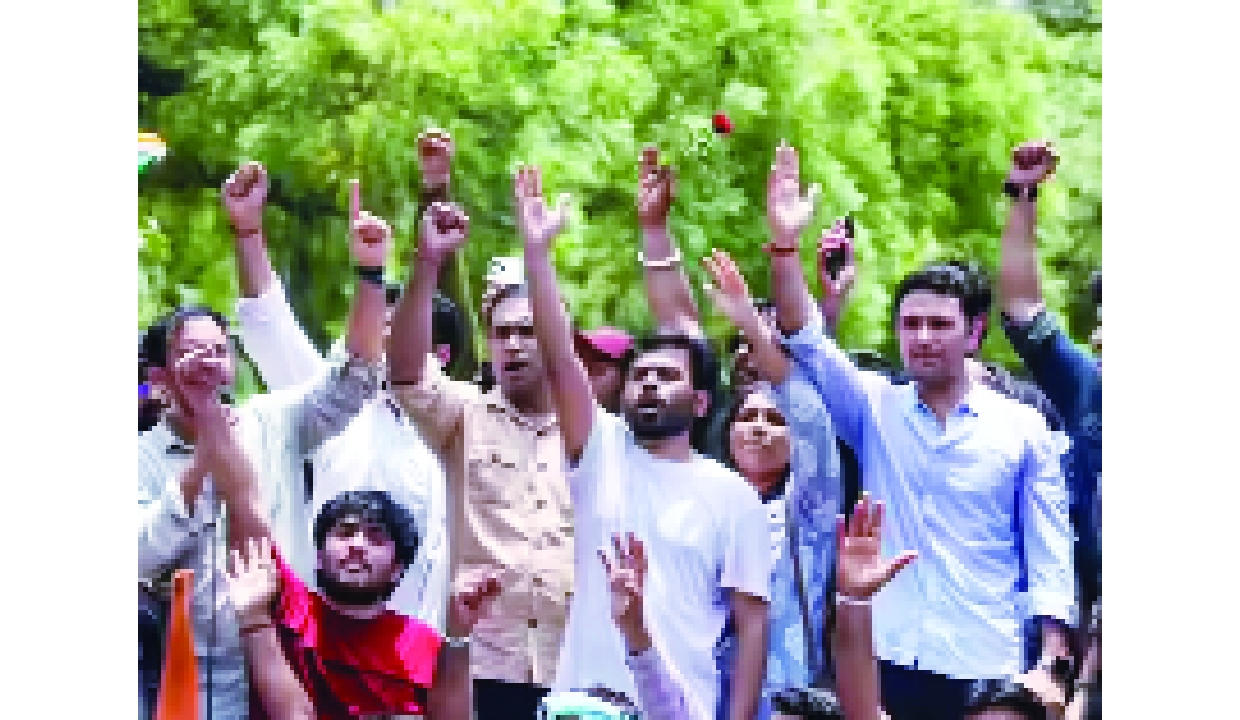
The protests that erupted in response to the NEET medical entrance examination paper leak included, in particular, opposition from the newly formed Cockroach Janata Party (CJP.). Since this organisation had no substantive political presence on the ground and no widely recognised leader, the BJP initially chose to ignore it completely. That changed when a large crowd joined the Parliament march in Delhi on July 20, forcing the to use lathi charge and tear gas to contain the protesters. I shall return later to the violence and the police response; first, it is necessary to examine the underlying reasons, especially the BJP’s arrogance.
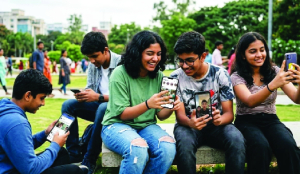
The BJP’s dismissive approach to this movement was not simply a product of being in power. Many political observers also regarded CJP as just a paper or virtual organisation, and that assessment was not entirely unfounded. At one point, the CJP’s virtual following crossed 22 million mark even then, it was not being taken seriously due to a lack of ground presence. A party with no leader, no office and no history could not be taken note of.
Another reason for the BJP’s indifference was the organisation’s lack of any real ground presence, along with the fact that its founder was studying in the United States. Yet the BJP, the RSS, and other right-wing voices belittled the movement by attributing it to foreign backing and anti-India forces like George Soros, thereby reinforcing the logic to ignore it. What neither sociologists nor the government, nor the BJP’s own strategists, fully understood was the silent but growing spirit of discontent among the country’s youth, including Gen Z. In the absence of such understanding, the NEET paper leak, irregularities in the evaluation of CBSE answer sheets, and the broader middle-class opposition to the UGC regulations gradually combined into a much larger political storm, which the BJP failed to anticipate.
The BJP’s media and IT cell were completely ineffective in handling this youth and student agitation. The party’s media machinery also failed to generate any meaningful positive public sentiment in support of the Modi government or the Education Minister. At the same time, Amit Malviya’s entire team failed to counter the narrative built by CJP and its allied left-wing student and youth organisations.
It is true that Cockroach Janata Party and its supporters indeed displayed a degree of creativity in shaping a broader emotional backlash against the government, extending even beyond the student community. It must also be acknowledged, however, that some of the posters, memes, and other materials circulated by the protesters contained crude slogans and obscene remarks, which warranted a strong rebuttal but did not receive one.
If the BJP’s spokespersons, media wing, and IT cell did anything at all, it was limited to repeatedly alleging that the protesters were foreign-funded and linking them to the Aam Aadmi Party or the Congress.
This was clearly insufficient to shape public opinion. In that respect, the protesters maintained the upper hand. They succeeded in generating sympathy among neutral sections of the public, even though there was little in the movement itself, apart from the hunger strike, that would ordinarily have inspired sympathy or support. The failure of the BJP’s spokespersons and IT cell in this regard was significant. They neither grasped the ground reality nor conveyed it effectively to the party’s top leadership. The BJP-friendly media, especially electronic media, remained largely defensive, as the protesters had sharply targeted it and often prevented camera crews and correspondents from covering the event properly. So much so that the agitating crowd manhandled a few of them. The success or failure of any movement depends largely on the degree of sympathy, support and solidarity it generates in public. In this case, public sympathy was initially very limited, but over time the protesters’ narrative spread rapidly and their support widened. It is also relevant to note that the arrogance of the BJP’s top leadership contributed to the situation.
The party appears to have assumed that the protesters would raise slogans for a few days and then disperse on their own. Had Education Minister Dharmendra Pradhan resigned earlier, the matter may not have escalated to this extent. There would have been less violence, and the government’s image would not have suffered such serious damage. Even in the case of E20 ethanol, Minister Nitin Gadkari continues to adopt an aggressive posture, which is generally sending a negative message to the public.
Arrogance, a combative attitude, and a lack of clear public communication all serve to deepen public anger against the government. At present, that appears to be the prevailing reality. The arrogance of the BJP continues even after the resignation of Education Minister Dharmendra Pradhan. During the ongoing Parliament session, the government is not effectively defending the brutal police action against the agitating students. The absence of the Home Minister from Parliament has added fuel to the fire.
Although a few bills have been passed in both houses of Parliament, the session largely belonged to the opposition thus far.
The writer is an academician and a political analyst; Views presented are personal.