A rising Bengal for a stronger Bharat
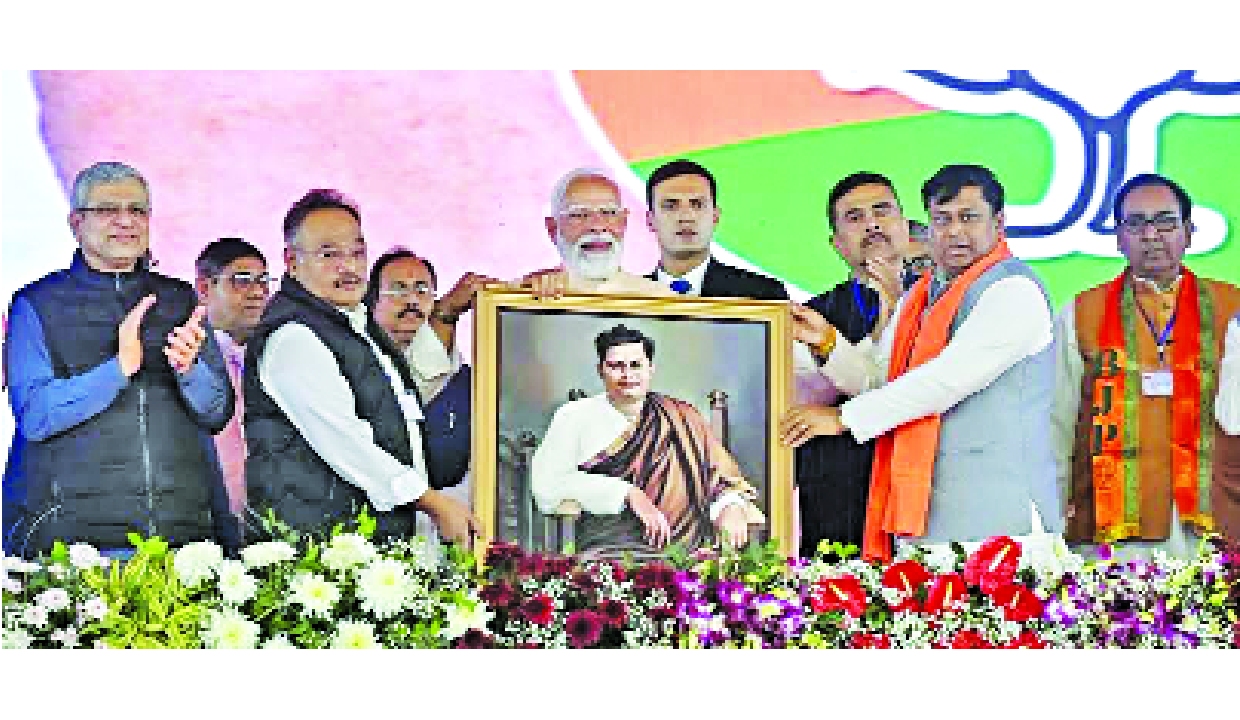
A confident Bengal, firmly anchored in its civilisational heritage and fully aligned with the aspirations of a rising India, would indeed be the finest tribute to the vision of Dr. Syama Prasad Mookerjee and to countless patriots, whose sacrifices and lifelong dedication helped preserve the idea of an indivisible Bharat
History often comes full circle. For generations, many believed that West Bengal, once the intellectual, cultural and nationalist nerve centre of India, had gradually drifted away from the ideals that shaped modern Bharat. Today, with the emergence of the state’s first-ever BJP government in independent India, Bengal stands at the threshold of a historic transformation. For millions of people, this is not merely a change in political leadership; it represents the grand revival of an idea rooted in nationalism, cultural pride and inclusive development.
A new resurgent Bengal has begun to emerge, one that seeks to reconnect with its glorious civilisational heritage while embracing the aspirations of a modern India. The fresh wave of nationalism rising from the eastern frontier of the country is strengthening the spirit of national unity from East to West, reaffirming that India’s unity in diversity is best preserved through a shared commitment to nationhood. For me, this transformation carries a profound personal significance. My hero and dearest father, late Shibendu Sekhar Ray, dedicated his life to the ideals of Dr. Syama Prasad Mookerjee, the visionary founder of the Bharatiya Jana Sangh. He regarded Dr Mookerjee not merely as a political leader but as a statesman who combined intellectual brilliance with extraordinary courage and selfless public service. His unwavering commitment to national integration profoundly shaped my father’s life, which in turn influenced my own understanding of public service and patriotism. Long before the trauma of Partition, Bengal had already endured one of the greatest human tragedies in modern history, the catastrophic Great Bengal Famine of 1943. Millions of hapless, innocent Bengalis perished from starvation and disease. During this period of immense suffering, Dr Mookerjee emerged as one of Bengal’s foremost humanitarian leaders. He organised hundreds of relief camps across undivided Bengal to provide food, shelter and medical assistance to famine-ravaged families. Dr. Mookerjee’s relief initiatives became a lifeline for countless distressed families and demonstrated his unwavering commitment to the welfare of the people. The horrors of the Partition of 1947 inflicted another deep wound upon Bengal. Families were uprooted overnight, communities were divided, and countless innocent people became victims of violence, persecution and displacement. Amidst this tragedy, Dr. Mookerjee emerged as one of the strongest voices advocating the protection of the people of West Bengal and safeguarding India’s national strength. His relentless efforts before the Bengal Boundary Commission ensured that substantial portions of Bengal remained within the Indian Union, thereby preserving not only its territory but also the cultural and civilisational continuity of the nation.
My father played a meaningful role in this historic chapter. At the instance of Dr. Mookerjee, he appeared before the Bengal Boundary Commission both as a Pleader and as a representative of the Hindu Mahasabha alongside the eminent barrister N. C. Chatterjee. Through persuasive legal arguments and careful presentation of demographic, historical and administrative facts, he successfully pleaded for the retention of Malda, then a Muslim-majority district, within the Indian Union. His contribution remains an important yet lesser-known chapter in the constitutional and legal struggle to protect India’s territorial integrity during Partition.
It was therefore deeply moving when India’s longest-serving Prime Minister, Shri Narendra Modi, during his public rally in Malda, acknowledged Dr Mookerjee’s historic contribution and remembered my father for his role during the turbulent years surrounding Partition. Such recognition transcends a single individual or family. It honours thousands of forgotten patriots whose sacrifices strengthened the foundations of an independent and united India. For decades after Independence, many in Bengal believed that the state gradually drifted away from its nationalist foundations. Political priorities shifted, ideological battles intensified, and the cultural confidence that once defined Bengal appeared to diminish. The land that produced Raja Rammohan Roy, Bankim Chandra Chattopadhyay, Swami Vivekananda, Gurudev Rabindranath Tagore, Netaji Subhas Chandra Bose and Hindu icon Dr Syama Prasad Mookerjee increasingly became a theatre of ideological polarisation. Many citizens have also expressed concerns regarding illegal immigration from Bangladesh, demographic changes in border districts, political violence and the weakening of institutions entrusted with preserving Bengal’s rich cultural heritage. These concerns have remained central to public discourses for decades and continue to influence political debates throughout the state.
Supporters of the present political transformation believe that a nationalist government presents an opportunity to address these longstanding challenges through constitutional governance, stronger border management, effective law enforcement, transparent administration and policies that uphold equal justice for every citizen irrespective of religion, caste or community.
West Bengal’s cultural legacy has always transcended narrow identities. It has produced poets, philosophers, scientists, freedom fighters, reformers and educationists whose contributions enriched not merely Bengal but the entire nation. Any meaningful effort to revive Bengal must therefore combine economic development with cultural renaissance, ensuring that future generations remain deeply connected to their civilisational roots while embracing innovation, entrepreneurship and global opportunities. The emergence of new leadership under my dynamic and fearless younger brother, Chief Minister Suvendu Adhikari, has generated hope among many citizens who aspire for transparent governance, industrial revival, employment generation and social harmony. Having known him closely since our college days, I have witnessed his political evolution, his tireless organisational abilities and his unwavering commitment to public service. His leadership symbolises the aspirations of a new generation that believes Bengal can once again emerge as one of India’s foremost states in industry, education, culture and governance. The road ahead, however, remains challenging. Restoring investor confidence, creating sustainable employment, modernising infrastructure, strengthening education and healthcare, improving law and order and rebuilding institutional trust will require sustained effort, efficient administration and active public participation. Political change alone cannot achieve these objectives unless accompanied by accountable governance and a shared commitment to development. Equally important is the need to heal social divisions. Bengal’s greatest strength has always been its tradition of intellectual openness, cultural inclusiveness and peaceful coexistence. Every citizen who respects the Constitution of India and contributes to nation-building deserves equal opportunity, dignity and justice. The enduring philosophy of “live and let live” must continue to guide Bengal’s future. As we look towards the future, Bengal has a historic opportunity to reclaim its rightful place as India’s cultural, intellectual and economic beacon. The state’s exceptional human capital, entrepreneurial spirit, literary tradition, strategic geography and rich heritage can once again make it a gateway for economic growth, regional cooperation and national resurgence.
The generation that witnessed the famine, Partition and displacement must never be forgotten. Their suffering and sacrifice remind us that freedom carries responsibilities alongside rights. Preserving India’s unity, strengthening democratic institutions, promoting constitutional values and protecting our shared civilisational heritage remain enduring national obligations. If this new chapter succeeds in restoring peace, attracting investment, reviving industry, celebrating Bengal’s cultural richness, strengthening social harmony and reaffirming national unity, it will represent far more than a landslide electoral victory. It will mark the renaissance of a state whose contributions have shaped India’s past and whose future can once again illuminate the nation’s path to a Vikshit Bharat.
A confident Bengal, firmly anchored in its civilisational heritage and fully aligned with the aspirations of a rising India, would indeed be the finest tribute to the vision of Dr. Syama Prasad Mookerjee and to countless patriots, including my father, Shibendu Shekhar Ray, whose sacrifices and lifelong dedication helped preserve the idea of an indivisible Bharat.
Bengal’s greatest strength has always been its tradition of intellectual openness, cultural inclusiveness and peaceful coexistence. Every citizen who respects the Constitution of India and contributes to nation-building deserves equal opportunity, dignity and justice
The writer is a prominent BJP leader from the state of West Bengal; Views presented are personal.