Indian higher education: A decade of transformation
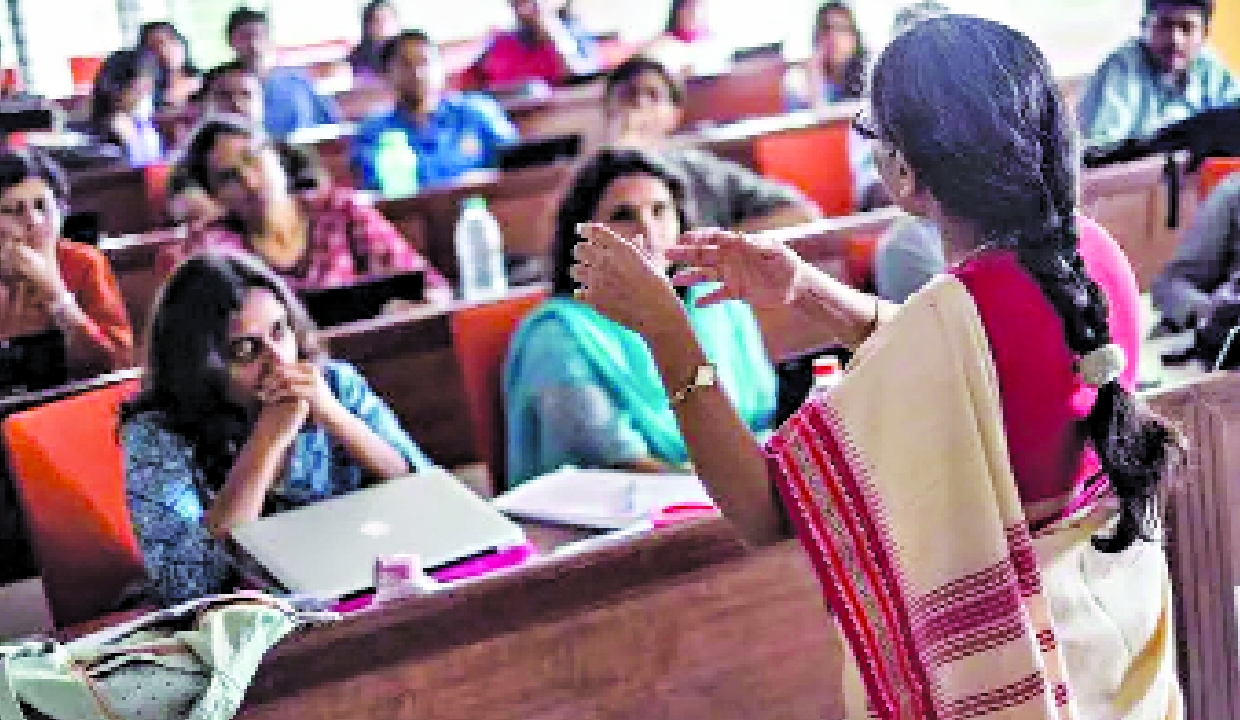
India's higher education system is undergoing one of the most significant transformations in its post-Independence history. Indian higher education system, it is now earning global recognition for its expanding research ecosystem, growing innovation capacity, entrepreneurial culture, and improving academic standards
Ten years ago, an Indian university breaking into the world's top rankings was a rare event worth celebrating. Today, it is closer to routine. When the QS World University Rankings 2027 were released on 18 June 2026, ten Indian institutions had made it into the world's top 500 - the clearest sign yet of a higher education system that has spent a decade quietly reinventing itself. But rankings are only the visible tip of a much larger transformation, one that spans research, innovation, entrepreneurship, access, and, perhaps most tellingly, a renewed argument about what education is actually for. Together, these threads tell the story of a system that has grown not just larger, but more serious about what it owes the students passing through it.
Climbing the Global Ladder
IIT Delhi now stands at 118th globally, India's highest-ranked institution this year, with IIT Bombay, IISc Bengaluru, IIT Madras and other IITs posting sustained gains of their own. What has changed is the breadth of the story. The University of Delhi and Anna University have joined the world's top 500, while the University of Hyderabad, Jamia Millia Islamia, Banaras Hindu University, Jawaharlal Nehru University and Aligarh Muslim University all sit within the top 800 - proof that India's rise is no longer an engineering-and-technology story alone. The numbers underline the shift: just 14 Indian institutions featured in the QS rankings in 2015; 52 do today, making India the fourth most-represented higher education system in the world. Collectively, these gains reflect not one institution's success story but a system-wide rise in quality, research depth and international recognition.
The Research and Innovation Engine
This climb rests on genuine substance. India now ranks third globally in science and engineering publications and sixth in patent filings, with research increasingly steered toward national priorities - clean energy, artificial intelligence, cybersecurity, robotics, semiconductors, quantum technologies and space among them. The Global Innovation Index tells a parallel story: India rose from 81st in 2015 to 38th in 2025 among 133 economies, and now hosts two of the world's top 30 innovation clusters - Bengaluru (21st) and Delhi (26th), per WIPO's 2025 data. Publication volume, though, is not the finish line. Research must still convert into translational outcomes - solutions that solve industry problems, inform public policy, and improve lives - which is exactly why deeper industry-academia collaboration remains the next frontier for Indian HEIs to cross.
From Campuses to Companies
That industry linkage is most visible in the entrepreneurial boom reshaping Indian campuses. Of the country's 1,100-plus incubators, nearly two-thirds sit within HEIs - IITs, IIMs, NITs, and central, state and private universities alike. Government initiatives such as Startup India (2016), the Atal Innovation Mission, and the Ministry of Education's Institution Innovation Council programme, launched in 2018, have pushed entrepreneurship into the academic mainstream, while NEP 2020 has embedded entrepreneurial skills directly into degree curricula. The results speak for themselves: from roughly 450 startups in 2016, India counted more than 2.23 lakh recognised startups by 31 March 2026, generating over 23.36 lakh direct jobs and making the country the world's third-largest startup ecosystem.
Widening the Gate
Quality gains have come alongside a genuine widening of access. Between 2015-16 and 2021-22, the number of HEIs grew by nearly 15.8%, according to AISHE data, while the Gross Enrolment Ratio climbed from 23.7% to 28.4% - millions more young Indians in classrooms than a decade ago. New colleges and universities, digital and open-distance learning platforms, rising participation by women, and NEP 2020's flexible, multidisciplinary programmes have all driven this expansion. That same multidisciplinary turn - letting students range freely across sciences, humanities, arts and vocational tracks - is reshaping how graduates think, building the versatility and problem-solving ability that twenty-first-century challenges demand. NEP 2020 has also, for the first time, brought Indian Knowledge Systems into mainstream curricula, introducing students to the country's scientific, philosophical, linguistic and artistic heritage - yoga, Ayurveda, classical languages and Indian philosophy among them - taught alongside contemporary science rather than instead of it.
Building a Future-Ready Workforce
Skilling has kept pace with all of this. The Skill India Mission has trained more than 60 million people since 2015, while the Pradhan Mantri Kaushal Vikas Yojana has certified over 16 million youth in industry-relevant trades. NEP 2020 has folded Skill Enhancement Courses in AI, data science, cybersecurity, robotics and smart agriculture directly into degree programmes, alongside apprenticeship schemes that pair classroom learning with workplace exposure. The payoff already shows: in the QS World Future Skills Index 2027, India ranked 13th among 89 economies and was named a leading AI-ready economy.
The Gap That Remains
Scale, though, brings its own challenge. India's higher education system now spans over 1,338 universities and 53,354 colleges, serving more than 4.33 crore students - a demographic dividend the country cannot afford to waste. For decades, most academic programmes stayed disconnected from real skill-building, leaving a persistent gap between what graduates know and what industry actually needs. Closing that gap means HEIs must move faster to revamp curricula around societal priorities, industrial demand, and the economy's shifting requirements. Only then can the system deliver the future-ready workforce that the vision of Viksit Bharat@2047 depends on.
Character Before Curriculum
There is an older, simpler idea running underneath all of this: that the true worth of a person is reflected in character and conduct, not credentials alone. Skills, however useful, were never meant to be the whole point of education. Reformers from Swami Vivekananda to Sri Aurobindo to Mahamana Pandit Madan Mohan Malaviya insisted that education's first task is building character - cultivating self-discipline, integrity and social responsibility alongside knowledge. When Malaviya founded Banaras Hindu University in 1916, he made character formation, grounded in Dharma and ethics, a stated objective of the institution itself. That tradition draws on scripture - the Vedas, the Manusmriti, the Bhagavad Gita, the Ramayana - which hold truth, non-violence, self-control, compassion and service among Dharma's essential virtues, and which educators carry a responsibility to instil in their students. NEP 2020 has revived this thread through value-added, multidisciplinary courses that build ethics, empathy and leadership alongside technical learning, though how deeply students absorb these lessons still rests on the integrity and commitment of the teachers delivering them.
The Decade Ahead
Put together, the last decade tells a coherent story: Indian higher education has grown in scale, climbed the global rankings, and deepened its research and innovation base. What remains is to finish what NEP 2020 started - weaving industry-relevant skilling and values-rooted education into a single curriculum, so that India's graduates emerge not merely qualified, but responsible, ethical, and ready to build the nation's future.
Reformers from Swami Vivekananda to Sri Aurobindo to Mahamana Pandit Madan Mohan Malaviya insisted that education's first task is building character - cultivating self-discipline, integrity and social responsibility alongside knowledge. When Malaviya founded Banaras Hindu University in 1916, he made character formation, grounded in Dharma and ethics, a stated objective of the institution itself
The writer is Chancellor, National Institute of Educational Planning and Administration, New Delhi; Views presented are personal.