Beyond the ballot: Does democracy require informed citizenship?
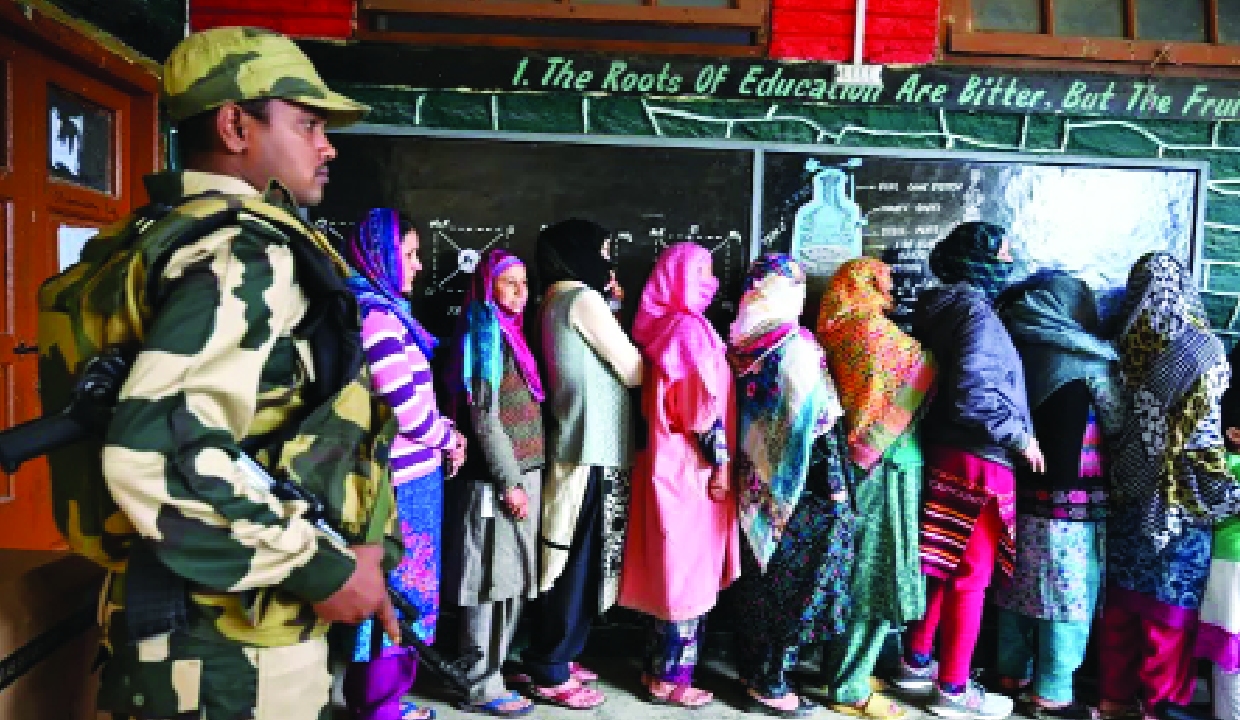
As misinformation and policy complexity grow, India must explore ways to strengthen civic awareness while preserving the constitutional promise of universal suffrage
India’s democracy is founded upon one of the boldest experiments in political equality ever undertaken. At the moment of Independence, despite widespread poverty and low literacy levels, the framers of the Constitution chose to place their faith in the judgment of ordinary citizens. Universal adult franchise transformed voting from a privilege into a right and ensured that every citizen, irrespective of caste, religion, gender, wealth, or educational attainment, possessed an equal voice in shaping the nation’s future.
Yet, as democracies across the world grapple with misinformation, political polarisation, and increasingly complex policy questions, a difficult question occasionally resurfaces: should democratic participation require at least a basic level of civic awareness?
The argument for informed voting
The proposition is neither novel nor entirely without intellectual support. The nineteenth-century philosopher John Stuart Mill, while being a strong supporter of representative government, was concerned that democratic decisions could be influenced by ignorance rather than informed judgment. In his seminal work, “Considerations on Representative Government” (1861), Mill proposed the idea of “plural voting”, under which every citizen would retain the right to vote, but individuals possessing higher levels of education or demonstrated competence would be entitled to additional votes. Mill believed that this arrangement would preserve universal suffrage while ensuring that knowledge and expertise received greater weight in public decision-making. Although the proposal was never adopted and would be considered inconsistent with contemporary notions of political equality, it remains one of the earliest attempts to reconcile democratic participation with informed governance.
More recently, political philosopher Jason Brennan, in his influential work, “Against Democracy” (2016), has questioned whether widespread political ignorance undermines democratic outcomes. Economist Bryan Caplan has similarly argued in “Myth of Rational Voter” (2007) that voters are often influenced by misconceptions, emotional appeals, and cognitive biases rather than evidence and informed analysis. Their central concern is not hostility to democracy, but the possibility that uninformed electoral choices may affect the quality of governance and public policy.
These concerns acquire particular relevance in the digital age. Electoral campaigns today unfold in an environment saturated with information, misinformation, and competing narratives. Social media platforms have significantly enhanced access to information but have simultaneously accelerated the spread of rumours, half-truths, and deliberate falsehoods. Complex issues relating to artificial intelligence, climate change, economic regulation, data protection, national security, and international trade increasingly influence electoral choices. It is therefore legitimate to ask whether democracy can flourish without a reasonably informed citizenry.
Constitutional concerns and democratic Equality
At the same time, any proposal linking voting rights to educational qualifications or knowledge assessments immediately encounters serious constitutional objections. The right to vote in India is not merely an administrative entitlement; it is an essential feature of representative democracy and equal citizenship. Conditioning the exercise of that right upon a test of knowledge risks creating distinctions among citizens that are fundamentally inconsistent with democratic equality.
The Indian constitutional experience points in a different direction. The framers consciously rejected literacy and property qualifications despite knowing that a large portion of the population lacked formal education. Their decision reflected a profound belief that political equality must precede social and educational advancement, not follow it. Democracy, in their vision, was not a reward for education but a means of empowerment.
Lessons from the American experience
History offers a powerful warning. Literacy tests were employed in several Southern states of the United States from the late nineteenth century until the enactment of the Voting Rights Act of 1965. Following the end of Reconstruction in 1877, states such as Mississippi, Alabama, Louisiana, Georgia, South Carolina, and Virginia introduced literacy tests, poll taxes, and similar devices as part of what became known as the Jim Crow system. The Mississippi Constitution of 1890 is often regarded as a watershed moment in institutionalising such measures. Although ostensibly designed to ensure an informed electorate, these tests were frequently administered in a discriminatory manner and were used to disenfranchise African Americans and poor voters. Their use was effectively prohibited by the Voting Rights Act, 1965, which sought to eliminate racial barriers to voting. What appeared reasonable in theory became exclusionary in practice. The lesson is clear: any mechanism that permits the State to determine who is sufficiently informed to vote carries the potential for misuse.
The Indian way forward
This does not mean, however, that concerns regarding voter awareness should be ignored. The real challenge lies in improving the quality of democratic participation without restricting democratic rights. Instead of debating voter qualification tests, India may benefit from a national effort aimed at strengthening civic literacy. Public awareness programmes conducted by the Election Commission, schools, universities, civil society organisations, and media institutions can play an important role in familiarising citizens with constitutional values, governmental institutions, electoral processes, and the critical evaluation of information.
A democracy as large and diverse as India cannot depend solely upon periodic elections. It must also cultivate a culture of informed citizenship. Civic literacy should be viewed not as a prerequisite for participation but as a democratic responsibility that strengthens participation itself. The objective should be to create citizens who are better equipped to assess competing political claims and hold public institutions accountable.
Proceeding with caution
If any discussion regarding civic assessments is ever contemplated, it must proceed with extreme caution. Any such proposal would have to begin with the recognition that voting is a constitutional manifestation of political equality and not a privilege to be earned through educational achievement. Consequently, civic assessments should never operate as barriers to voting, nor should they create classes of citizens possessing unequal political rights. Any framework that seeks to promote informed participation must be designed and supervised by independent constitutional authorities, made accessible in all recognised languages, and subjected to rigorous judicial scrutiny to prevent abuse. Above all, the principle of universal adult suffrage must remain inviolable. The purpose of any reform should be educational rather than exclusionary; otherwise, the cure may prove more damaging than the disease.
Building democracy through civic awareness
Ultimately, the debate raises a larger question: is the answer to voter ignorance fewer voters or better-informed voters? India’s constitutional tradition strongly favours the latter. The remedy for misinformation is not disenfranchisement but education; not exclusion but empowerment. A democracy’s strength lies not only in the number of citizens who vote, but also in the quality of public understanding that informs those choices. The case for civic literacy is compelling. The case for restricting the franchise is not. India’s challenge in the coming decades will be to cultivate an informed electorate while preserving the equal political voice that remains the defining achievement of the Republic. In that endeavour, democracy and civic education must be viewed not as competing ideals, but as indispensable partners. An informed citizenry is not a substitute for democracy; it is one of its strongest safeguards.
Democracy and civic education must be viewed not as competing ideals, but as indispensable partners. An informed citizenry is not a substitute for democracy; it is one of its strongest safeguards
The writer is a Senior Judge, District and Sessions Court, Agra; Views presented are personal.