Predatory Jihadis on the move: ‘Secularists’ in denial mode
One of the most enduring pastimes of India’s self-styled ‘secularists’ is the relentless sermonising on Hindu-Muslim ‘unity’ or the importance of ‘Ganga-Jamuni tehzeeb’. Yet, despite decades of such moral posturing, their project has yielded little beyond a bloody partition and rhetorical fatigue. Predictably, the blame is routinely shifted onto the RSS-BJP, accused of fuelling latent tensions. This diagnosis is not merely shallow-it is wilfully dishonest.
The very ideological fraternity that preaches harmony to society is often the first to brand a Hindu as ‘bigoted’ simply for exercising caution in selecting tenants based on past experiences or perceived risks. Yet, they turn a blind eye when far more alarming criminal activities surface-organised Muslim gangs systematically targeting Hindus to force them into converting to Islam. It’s a regular phenomenon, threatening social harmony.
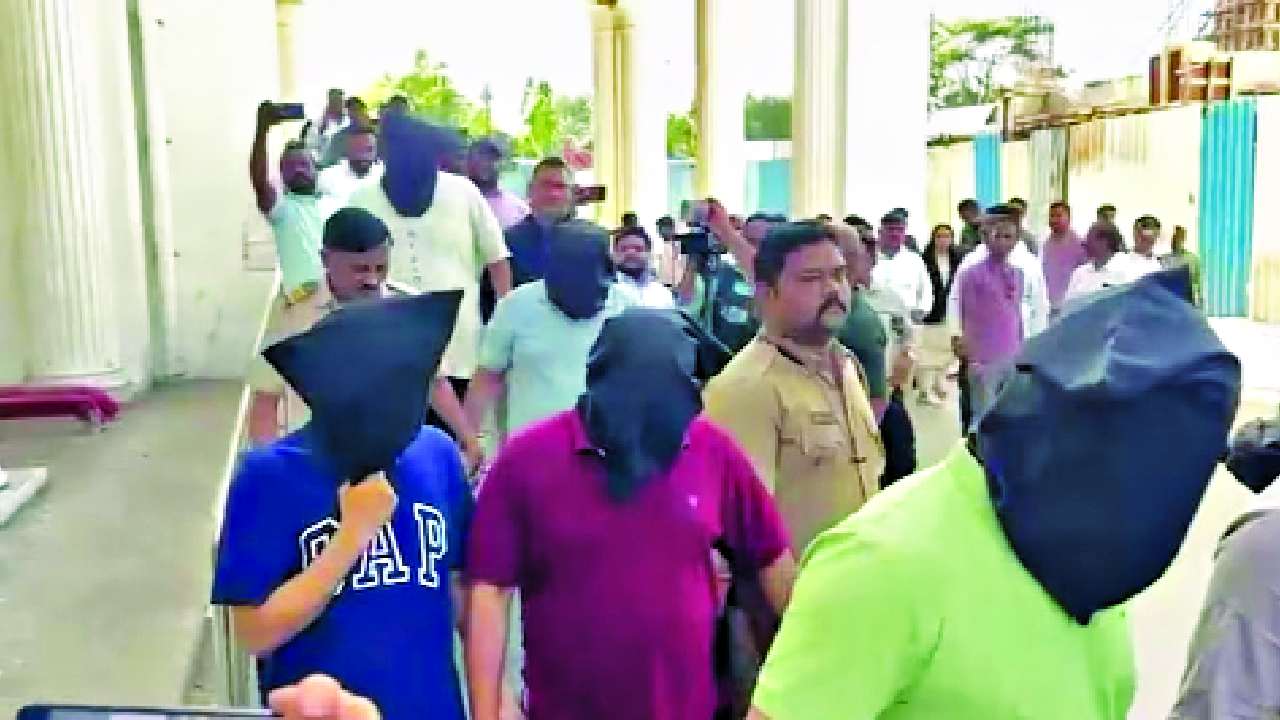
The recent case from Maharashtra’s Nashik illustrates this troubling pattern. As the investigation expanded, more victims came forward, resulting in at least nine FIRs and the arrest of several accused individuals. Muslim men and women working at a business process outsourcing (BPO) unit linked to Tata Consultancy Services were pressuring Hindus, especially economically vulnerable women, to convert to Islam. The HR official Nida Khan, dubbed the “lady captain”, has come under scrutiny amid allegations pointing to a deeply rotten nexus of workplace coercion and conversion-linked pressure.
This isn’t an isolated case or an aberration-a result of some indiscretion by misguided individuals. It’s an old tactic, rooted in theology, aimed at altering the demographics of the subcontinent. Such cases-either under investigation or judicial process-collectively indicate a common modus operandi involving deception, exploitation, and coercion.
In Lucknow, for instance, a son-father-mother trio-Dr Rameezuddin, Salimuddin, and Khateja-was booked for allegedly entrapping Hindu women, subjecting them to sexual exploitation, coercing abortions, and exerting pressure for religious conversion.
A similarly troubling case has emerged from Dehradun in Uttarakhand, where a Muslim girl, Mubina Yusuf, stands accused of pressuring her Hindu classmate to convert to Islam and marry a Muslim man.
In Karnataka’s Belagavi, a married Dalit woman has accused Rafiq and his wife Kausar of orchestrating a brutal cycle of exploitation and coercion. In Mirzapur, police sealed multiple gym centres after complaints that women were befriended during training sessions, exploited, filmed, and coerced into religious change. In Aligarh, a gym operator, Raza Khan, was booked for trapping and raping a Hindu woman after concealing his true identity.
Similarly, in Noida, a trainer named Haroon, along with associates, was accused of exploiting a widow, recording objectionable videos, and extorting money while allegedly coercing her to change her religion. In Surat, Kausar Ali was arrested for allegedly manipulating a married woman into a live-in relationship under false promises of marriage, accompanied by repeated sexual assault and threats. Recently, in Maharashtra’s Amravati, Mohd Ayaz was arrested for allegedly exploiting 180 minors (mostly Hindus) and recording large volumes of explicit material.
In 2025, UP police exposed the conversion network of Jalaluddin alias Chhangur Baba, allegedly involving nearly a thousand operatives. Hindu girls, including minors, were reportedly lured through relationships and pushed towards conversion, with fixed monetary incentives. With foreign funding of around ?500 crore under scrutiny, the case points to a structured, well-funded network.
The 1992 Ajmer serial rape case remains one of the most calculated displays of organised depravity in modern India. Led by Farooq and Nafees Chishti, a predatory syndicate transformed a pilgrimage city into a hunting ground, systematically shattering the lives of hundreds of schoolgirls-some as young as 11.
This was no mere scandal; it was a cold-blooded industry of exploitation where girls were lured through social manipulation, assaulted in isolation, and then weaponised against themselves. By photographing the crimes, the perpetrators used the victims’ own trauma as atool for blackmail, forcing them into a horrific cycle of silence or the unthinkable task of recruiting their own peers to feed the network.
Justice, however, proved as stagnant as the crime was prolific. For 32 years, the survivors lived under the weight of their trauma while the legal system stalled and political influence shielded the guilty. It took until August 2024 for a POCSO court to finally deliver life sentences to six of the men involved, including Salim Chishti and Iqbal Bhati.
It would, however, be historically inaccurate to assume that concerns surrounding such patterns emerged only in recent decades. Their roots can be traced back to the repeated Islamic invasions and British India. Gandhiji himself acknowledged the disturbing nature of such incidents.
Speaking in Rawalpindi on February 5, 1925, Gandhiji observed: “Sometimes Muslims kidnap a woman and make her embrace Islam… If someone abducts my wife and she reads the Kalma, then I can no more live in this world. Either I would seek your help [in defending her] or beg you to take her back into the Hindu fold. I would be a coward if I did not act in this manner.” Gandhi’s words were not rhetorical flourish; they reflected a lived reality that deeply unsettled inter-community relations.
The March 5, 2026 column titled ‘Open Letter to Justice Ujjal Bhuyan’ examined the controversy surrounding the film ‘The Kerala Story 2: Goes Beyond’, which brought forward testimonies of women recounting physical abuse, coercion, and forced consumption of beef after marriage-an act carrying profound civilisational significance for many Hindu women.
Nor is this phenomenon confined to India. The ‘grooming gang’ scandal in the United Kingdom exposed systematic exploitation of minor girls, including trafficking, repeated assault, and organised abuse. In this scandal, all the convicted men were Muslims. Recently, in London, a 14-year-old Sikh girl was reportedly entrapped, abducted, and assaulted by a ‘grooming gang’. These cases underline that the intersection of identity, exploitation, and power is not geographically confined.
In his paper ‘Demographic Islamisation: Non-Muslims in Muslim Countries’, Philippe Fargues examines how demographic change in Muslim societies has, in part, been shaped by intermarriage. He concludes: “Love was now playing the same role in the continuing process of Islamisation that coercion played in the remote past.”
Extending this line of argument, Christian C Sahner, in ‘Christian Martyrs under Islam: Religious Violence and the Making of the Muslim World’, observes: “Islam spread through the Christian world via the bedroom.”
Taken together, these perspectives suggest that intermarriage, beyond being a social institution, has been closely linked with processes of religious transmission and, over time, demographic change. However, a segment of India’s so-called ‘secularists’ continues to trivialise or outright deny these patterns, branding any discussion as communal or regressive. This reflexive denial does not promote harmony; it hinders it.
A society that refuses to confront uncomfortable truths condemns itself to perpetual discord. If “secularism” is to retain any credibility, it must rest on intellectual honesty-recognising that communal tensions are not manufactured in a vacuum but are often sustained by denial masquerading as virtue.
All such loathsome characters can be called jihadists, who usually operate underground, out of the public eye.
Most self-proclaimed secularists are the overt face of the same sordid phenomenon. It wouldn’t be surprising if all these heinous crimes are theorised and ultimately justified by the ‘secular pack’ on some ideological grounds. Didn’t this pack work for and rationalise the partition of the country?
The writer is an eminent columnist, former Chairman of the Indian Institute of Mass Communication (IIMC), and the author of ‘Tryst with Ayodhya: Decolonisation of India’ and ‘Narrative ka Mayajaal’ ; views are personal